How to Choose the Right Japanese Shears for Your Workflow
A practical decision framework covering blade length, handle design, steel, and budget for Australian professionals.
Start with how you cut
Before you browse catalogues, map out the way you work:
- Average clients per day?
- Service mix (precision bobs, balayage, fades, curly work)?
- Existing pain points (wrist fatigue, folding hair, drag during slide cuts)?
Your answers dictate the blade length, edge type, and steel you should target.
Step 1: Choose the right length
| Length | Use case | Notes |
|---|---|---|
| 4.5”-5.25” | Detail work, fringes, short styles | Maximum control; best for small hands |
| 5.5”-6.0” | Everyday salon cutting | Balanced length for blunt, point, and light slide work |
| 6.5”-7.5” | Barbering, scissor-over-comb | Longer stroke speeds up tapering; heavier blades suit coarse hair |
Measure from the tip to the finger hole (exclude the tang). The blade tip should reach the middle finger when rested on your palm.
Step 2: Match the handle to your body
- Offset: Default ergonomic option. Reduces thumb travel and wrist strain.
- Crane: Drops the elbow and shoulder, great for long days or taller clients.
- Swivel: Rotating thumb for stylists rehabbing RSI. Requires practice.
- Classic: Symmetrical; nostalgic but less ergonomic. Use occasionally, not all day.
Ensure finger holes fit snugly. Use inserts to customise if needed.
Step 3: Pick the blade and grind
- Convex edge: Smooth, silent, ideal for precision and slide cutting. Needs skilled sharpening.
- Hybrid convex/bevel: Balanced feel, more forgiving for everyday salon work.
- Micro-bevel: Crisp, tactile feedback. Suits blunt lines and barbering.
- Micro-serrated: Grips hair for trainees or dry cutting; avoid for slide work.
Step 4: Select steel that fits your budget and maintenance plan
| Steel | Typical brands | Edge life | Ideal buyer |
|---|---|---|---|
| 440C / Aichi stainless | Mina, Ichiro entry sets | Shorter | Apprentices, backup kits |
| VG-10 / VG-10W | Ichiro premium, Juntetsu, Kasho | Medium-long | Stylists upgrading from training tools |
| ATS-314 (cobalt) | Yasaka, Yamato, Joewell ranges | Long | Busy stylists needing reliability |
| Nano Powder / proprietary cobalt | Mizutani, Hikari | Longest | Masters and dry-cut specialists |
Harder steels hold a sharper edge but insist on Japanese-trained sharpeners.
Step 5: Align brand support with expectations
| Need | Recommended tiers |
|---|---|
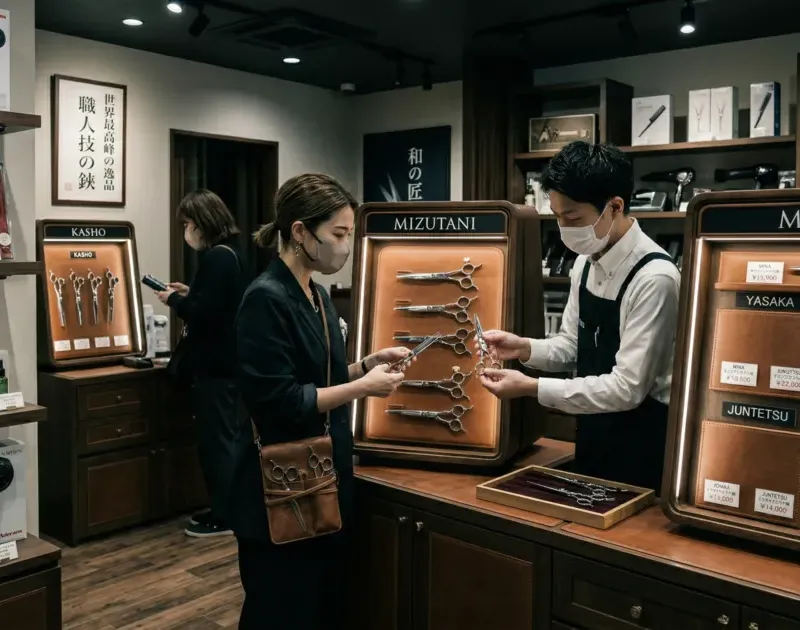
| In-salon demos & lifetime servicing | Hattori Hanzo |
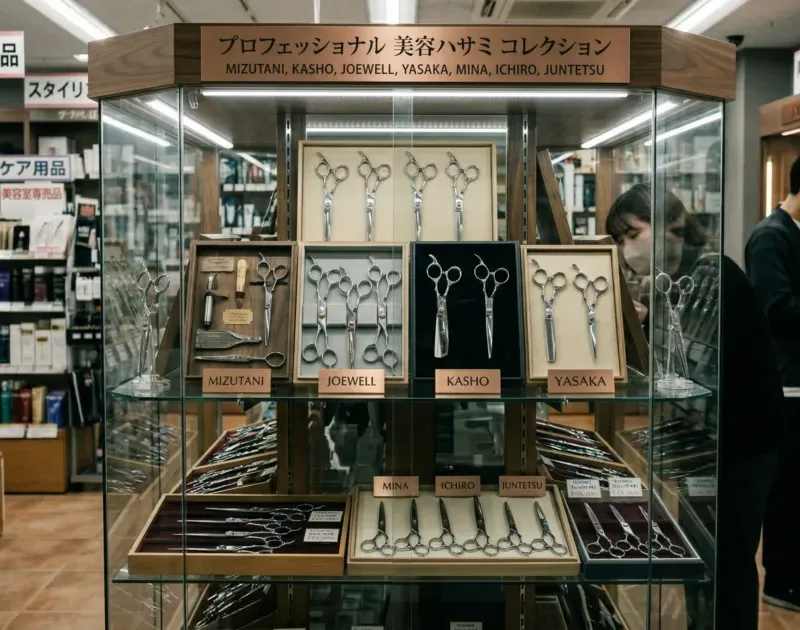
| Premium craftsmanship & custom handles | Mizutani, Hikari |
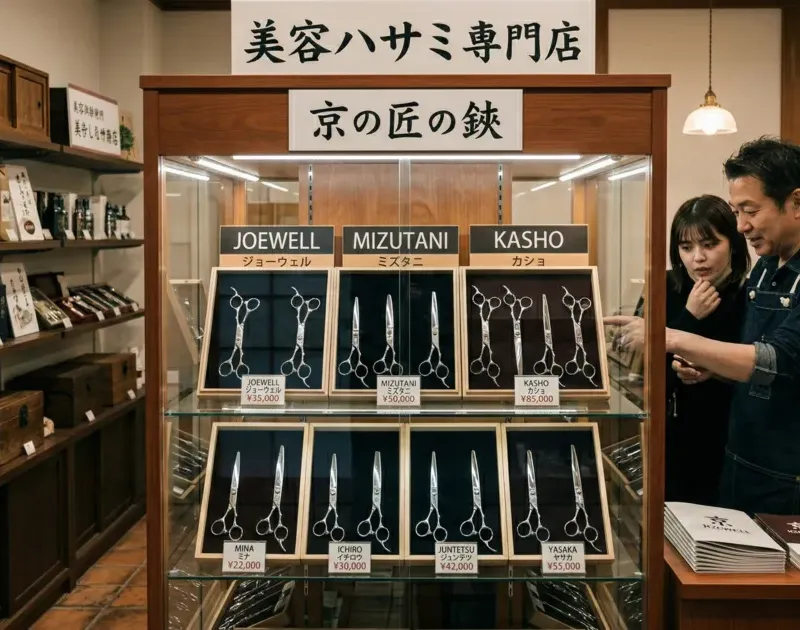
| Consistency and easy servicing | Yasaka, Joewell, Kasho |
| Budget-friendly training kits | Mina, Ichiro |
| Stylish mid-tier | Juntetsu, Kamisori |
Verify serial numbers, inspection slips, and authorised distributors before buying.
Step 6: Budget for upkeep
- Sharpening: Plan for service every 6-12 months depending on workload and blade type.
- Maintenance kit: Oil, cloth, tension key, holster.
- Backup shear: Keeps you working while the primary pair is serviced.
Common mistakes to avoid
- Buying too long, too soon: Master control with 5.5”-6.0” before upgrading to 7” blades.
- Ignoring ergonomics: Hand pain is expensive. Offset and crane handles prevent downtime.
- Skipping verification: Counterfeit shears flood marketplaces. Always confirm authenticity.
- Mixing mismatched sets: Ensure cutting and thinning shears share similar steel and tension feel.
Example kits by career stage
- Apprentice: Mina Timeless Set (cutting + thinner) plus a training mannequin.
- Newly qualified stylist: Yasaka Offset 5.5” + Yasaka 30T thinner; add Ichiro Matte Black as backup.
- Senior stylist: Mizutani ACRO Type-K for detail, Joewell FX Pro 6.0” for everyday, Fuji MoreZ texturiser for debulking.
- Barber: Fuji MoreZ GGF 7.0” sword blade + Juntetsu Chomper 16 tooth texturiser.
Final checklist before purchase
- Confirm length and handle feel with an in-person test or a return policy.
- Document warranty, sharpening contacts, and expected service intervals.
- Add finger inserts, oil, and storage to your order if not included.
- Schedule a tension check and cleaning routine from day one.
Pick the shear that solves a problem, fits your hand, and has a support plan. The right tool will pay for itself in confident cuts and healthier hands—reach out if you want me to sanity-check your shortlist before you buy.
Stay sharp — join the list
New product drops, maintenance tips, and member-only deals delivered to your inbox.