Powder Damascus: Core, Layers and Cutting Edge
Understand layered construction without treating a pattern as a steel test.
By JapanShears EditorialUpdated
On this page
Keep the core, layers and edge separate
A patterned blade can combine more than one material. The core may reach the cutting edge while other layers form the visible sides. That is one construction to understand; the word Damascus alone does not establish every blade’s structure or production route.
“Powder” and “layered” also describe different questions. A powder-metal statement concerns material production. A layered statement concerns how materials are arranged in the blade. Use the maker’s full description before combining them into “Powder Damascus”.
A real layered model
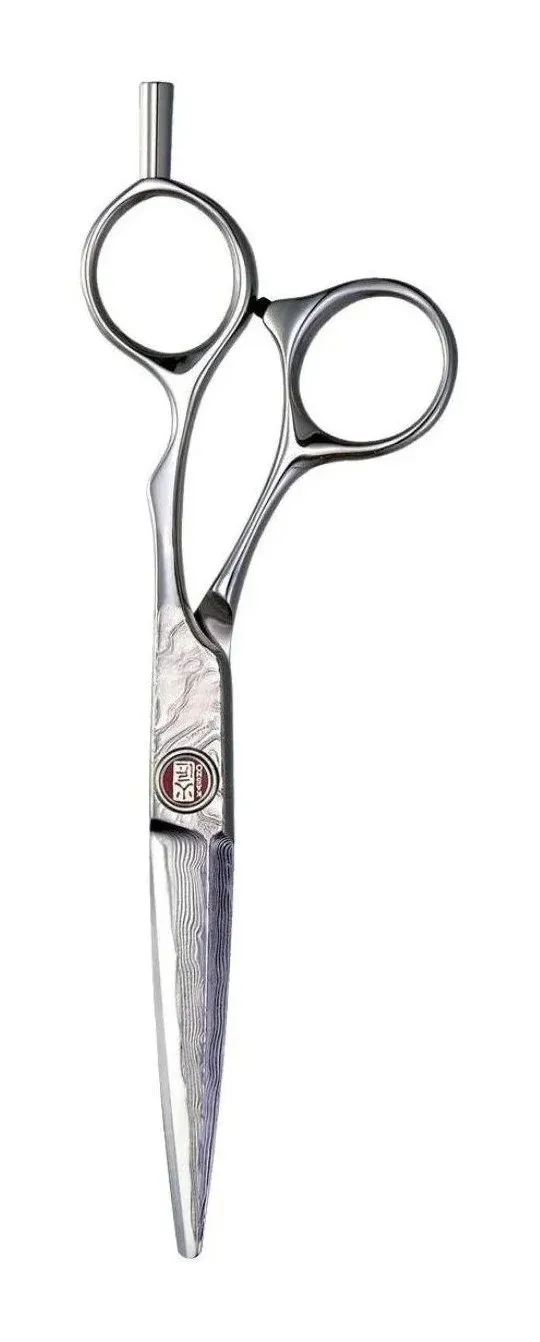
The Kasho Damascus Offset 5.5 is an actual layered example, with VG-10W in the local material specification. KAI Europe’s Damascus explanation describes visible layers combined with a core steel, then lists the offset handle, ball bearing and adjustable flat-head screw separately.
Those details give you several fields to compare. The surface pattern does not reveal the pivot, the tool’s blade length or whether its material was produced through powder metallurgy.
 Open illustration at full size
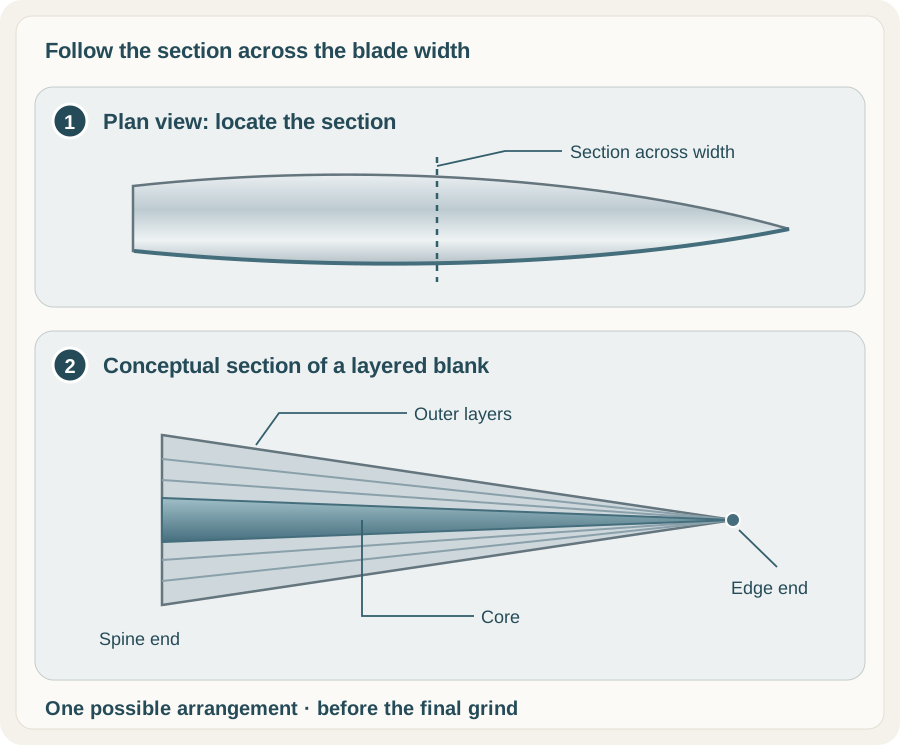
- Plan viewThe dashed line locates a section across blade width; it is separate from the blade’s length and tip shape.
- Section across the widthThis drawing shows the core reaching the edge end, with other layers around it. The final grind and actual arrangement depend on the model.
This generic section of a layered blank before final grinding gives the terms a place. It does not count the Kasho model’s layers or show a microscopic sample of its steel. Read the actual product and maker statement for the named construction.
Four useful terms
| Term | What you are asking |
|---|---|
| Core | Which material forms the working edge in this construction? |
| Layers | How are the other materials arranged around or through the blade? |
| Pattern or finish | What is visible on the surface, and what does the maker say produced it? |
| Edge | What grind and blade line does the complete cutter have? |
A curved cutting line is another shape, distinct from a cross-section approaching the edge. The blade vocabulary guide keeps those views separate. A photo can show the outline and visible pattern while leaving the core’s material unstated.
Use the patterned-photo guide to read a gallery without turning the pattern into an alloy identification test. For production terms, use the powder-metal guide.
Give the pattern a sensible place in the choice
Once hand, reach, blade and handle fit your brief, liking the finish is a fair reason to prefer one suitable tool. The finish becomes a poor shortcut when it stands in for the task.
The Damascus-versus-sintered comparison shows what changes between two actual offset cutters. The detail-work brief starts from tip access and the cutting movement instead. Both are more useful than assigning all patterned blades one role.
Before paying more, identify the feature you will use through the premium checklist. The steel library connects this construction question to separate grade and alloy-family explanations.
Describe the whole blade for service
Keep the tool clean, dry and protected using its model’s instructions. When arranging service, supply the model, selected option, stated edge and any patterned finish. Ask what work is proposed for the edge and how the other surfaces will be treated.
The service preparation guide helps turn those details into an enquiry. It avoids asking a technician to sharpen “a Damascus shear” without identifying which blade they will be working on.