Japanese Shear Authenticity: What You Can Check
Build a clear model and seller record, and know the limits of a visual check.
By JapanShears EditorialUpdated
On this page
An engraving gives you something to record. It does not prove who made the shear, how it reached the seller or whether that seller is authorised. A useful authenticity check puts the model, purchase and maker information together, then leaves unresolved questions with the party able to answer them.
Establish which model is being offered
Save the listing and selected option: maker, full model name, SKU, nominal size and hand. For a thinner, record the model code and tooth count. For a set, identify the cutter and thinner separately. Compare the specification with the maker’s description where available; a broad brand name is not enough to settle a model difference.
Keep size terms separate. An inch label usually describes the nominal tool size, while a blade measurement describes a different span. Our size guide explains that distinction. A difference between those two numbers is not automatically evidence of a false product.
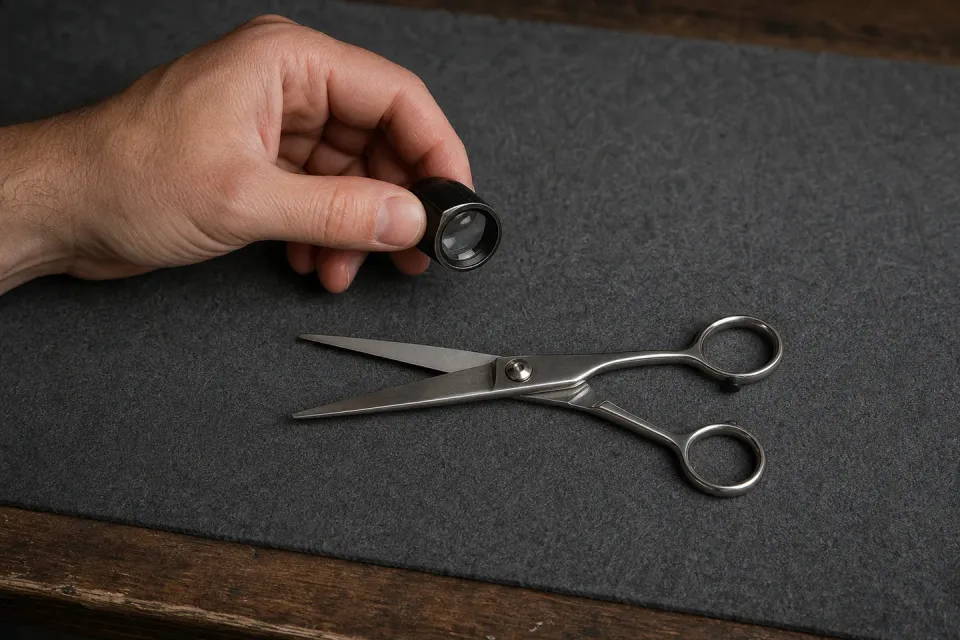
Compare the supplied items with what the listing promises. A branded case, finish colour, steel marking or price can form part of the record, but none is a complete authentication method. Use a genuine maker reference for a named model; a generic editorial illustration or photograph is there to explain a subject.
Identify the seller and support route
Check who is selling the product, how you can contact them and what order record you will receive. Read the current returns and fault process before purchase. For JapanShears orders, those details are on our Returns and Warranty pages.
If authorised dealer status matters, check the maker’s current information or ask the maker directly about the seller and model. Do not infer authorisation from a logo on a website or from a care article linking to the maker.
Yasaka’s notice dated 31 July 2026 warns about counterfeit and copycat products using its logos, images and descriptions. It advises buying through authorised channels and contacting Yasaka if authenticity is in doubt. The notice does not verify the status of an individual retailer; that is a separate enquiry.
Keep the delivery record intact
When the parcel arrives, photograph the contents, markings and labels before use or adjustment. Match the delivered option to the order and record any serial number that is actually present. Keep the receipt, listing and packaging while a question is being resolved.
Use the arrival inspection guide for visible condition, tips, pivot and set contents. Condition and identity are related questions, but a shear can match a photograph without that photograph establishing its supply history.
Ask a specific question when something does not match
Send the maker or seller the model, selected option, purchase details and clear photographs. Explain the discrepancy in plain terms: a different hand option, an unexpected model code, missing listed contents or a marking you cannot match to the maker’s record. Avoid trying to prove authenticity by taking the pivot apart, sharpening the edge or making a destructive test.
For a JapanShears listing or order, use our contact form. We can work from the information about the purchase and the question you raise. For confirmation of a maker’s model or dealer record, ask that maker rather than treating an internet checklist as a certificate.