JapanShears Editorial · Published · Updated
10 Things to Check When Your Hair Scissors Arrive
Inspect a new shear against the exact product and variant ordered, then record its condition before cutting or adjusting the pivot.
On this page
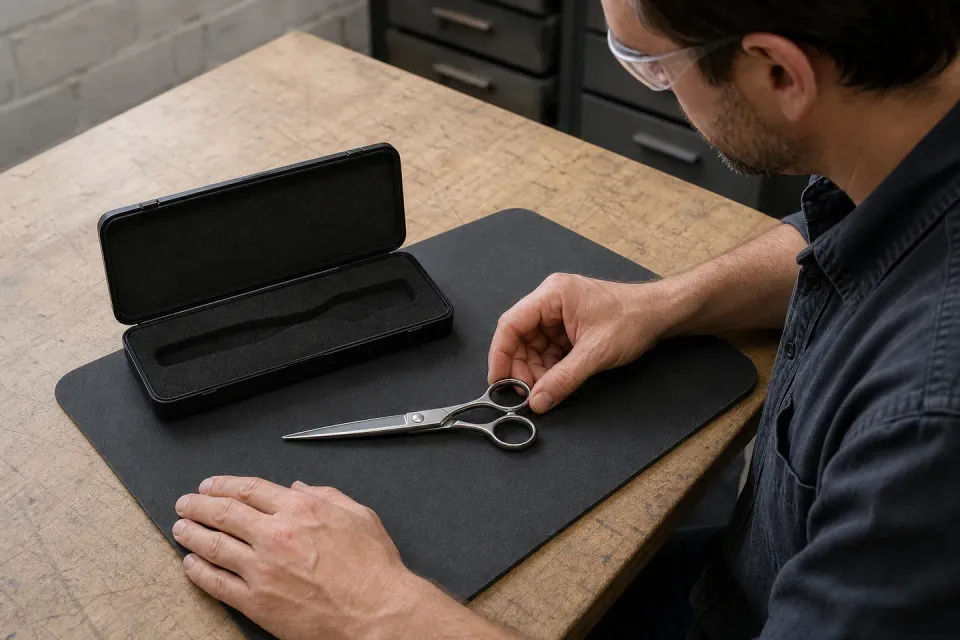
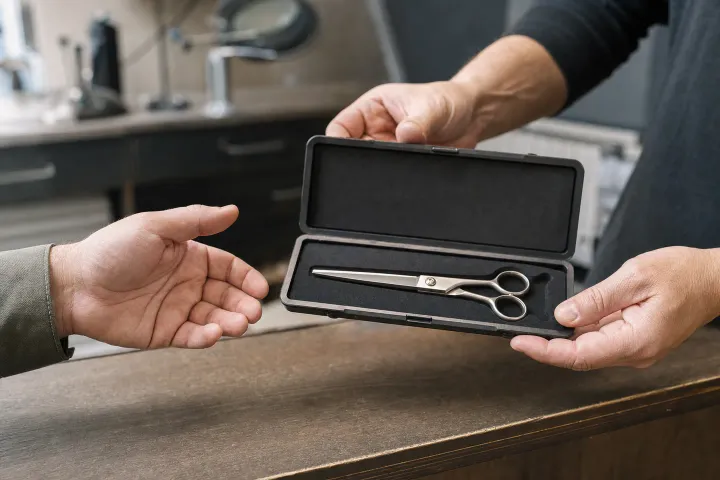
A new shear deserves a quiet check before its first appointment. Keep the order open beside you, lay the contents on a clear surface and record how the tool arrived. Do this before cutting hair, changing the tension or arranging sharpening.
The aim is to catch a mismatch or visible problem while the starting condition is easy to explain. A tidy box or an engraved blade does not, on its own, settle an authenticity question.
Ten checks before the first cut
| Check | What to compare or record |
|---|---|
| 1. Parcel condition | Photograph apparent damage before discarding the packaging. |
| 2. Order identity | Keep the receipt, order number and selected SKU beside the contents. |
| 3. Maker and model | Match the supplied tool and labels with the exact ordered model. |
| 4. Cutting hand | Check the selected hand option and supplied model information. |
| 5. Nominal size | Compare the ordered size with the tool’s label or model record. |
| 6. Cutter and thinner | Give each component of a set its own identity and condition check. |
| 7. Included accessories | Compare the written contents with the case, cloth and other supplied items. |
| 8. Blades and tips | Look in good light for apparent damage without touching an edge. |
| 9. Pivot and handles | Look for loose or damaged parts; try gentle movement only if the tool appears sound. |
| 10. Photographs and records | Keep clear views and any supplied care or serial information with the receipt. |
If something does not match or appears damaged, keep the tool unused and contact the seller with the order details and photographs. The checks below help you describe the question clearly before adjusting, cutting or returning anything.
Match the option, then the contents
Start with the confirmation and selected SKU. Check the maker and model, nominal length, hand option and whether you bought one shear or a set. Compare supplied cases, cloths and other items with what the listing actually included. A family photograph can show an example option; the order record tells you which option should be in your parcel.
For a set, write down both tools separately. The Mina Sakura II 5.5-inch set, for example, pairs a 5.5-inch cutter with a fixed 6.0-inch, 30-tooth thinner. A 5.5-inch choice does not make both tools that length. Our set comparison explanation shows how to read those two records.
Photograph the parcel if it is damaged, then the contents and any labels. Keep the packaging while an arrival question is being resolved. Record a serial number if one is present; leave that field blank if it is not.
Look at the blade, pivot and handles
Use good light and hold the tool by its handles. Inspect the tips and visible cutting lines without running a finger along an edge. Look for an apparent chip, bend, loose piece or damage that you can photograph. Check the finger rest and bumper, where fitted, against the model’s construction.
If you see apparent damage or a loose piece, leave the shear unused, protect it and contact us with photographs. Do not keep moving the blades to investigate it.
When there is no visible problem, open and close the shear gently. If it catches or grinds, stop at that point; repeated force will not give the store a clearer account of the problem. Record what you noticed rather than trying to decide whether the cause is tension, alignment or the edge.
Inspect a thinner as its own tool. Look along the tooth line and at the opposing blade, as well as the tips and pivot. The cutter being sound does not tell you the condition of the thinner beside it.
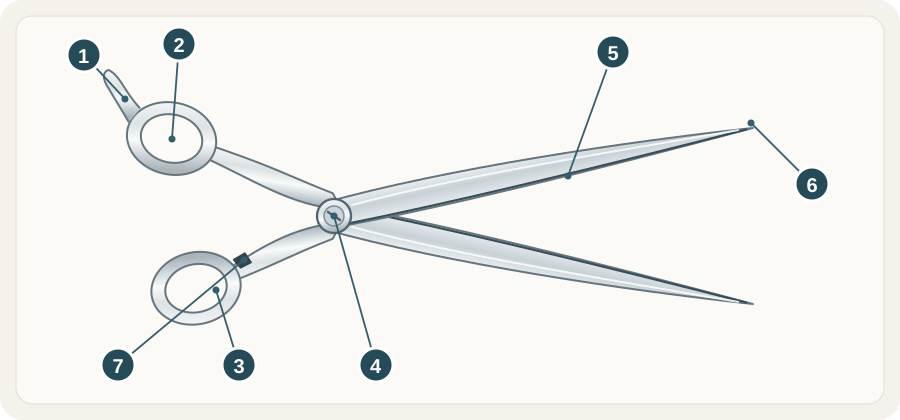 Open illustration at full size
- Finger restAlso called the tang; the small extension beside the finger ring.
- Finger ringThe bow on the handle opposite the thumb ring.
- Thumb ringConnected to the blade moved by your thumb.
- PivotThe joint where the two halves turn; tension hardware varies.
- Cutting edgeThe sharpened inner border where the blades meet.
- TipsThe ends of the blades. Compare their shape on the actual model.
- BumperA small stop between the handles, sometimes called a silencer.
Photograph a question before changing anything
A complete view of each side gives context. Add a close view of the tip or pivot if that is where you see the problem. Keep the images sharp and evenly lit; a reflection across polished steel can hide the detail you want to show. Photograph the model marking too, where present.
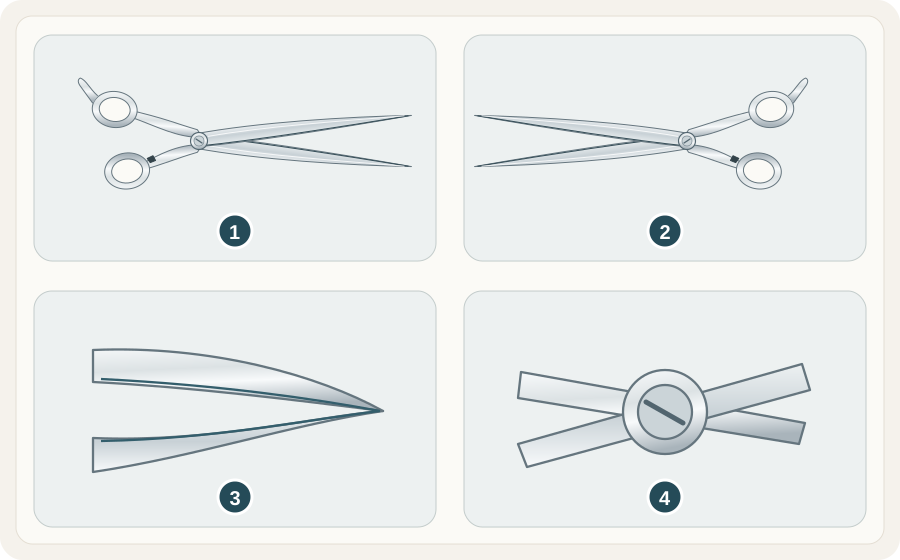 Open illustration at full size
- One complete sideInclude the whole tool, rings, rest, blades and any visible model marks.
- The other sideTurn the whole tool over gently and photograph its other face.
- Tip detailUse good light to show the tips and any visible concern without touching the edges.
- Pivot detailShow the intact hardware. Do not dismantle the joint to take a photo.
For a mismatch or possible fault, leave the shear unused and send the order number, selected SKU, photographs and a short description through our contact form. “The order is for the left-handed option; the delivered label says right-handed” gives us a useful starting point. Wait for the next step before returning the tool. The Returns page and Warranty page explain the relevant store processes.
For uncertainty about a maker’s marks or seller status, follow the authenticity checklist. A visual inspection records condition; it cannot prove the full supply history.
Start a record before the first client
Once the option and condition are clear, keep the receipt and arrival photographs with a tool passport. For a set, create one record per shear under the same order number.
Before first use, follow the instructions supplied for the model and your workplace hygiene procedure. Use the working care routine to organise cleaning, drying and protected storage around those instructions. Your arrival record then gives you a starting point if the action or cut changes later.
For the days after the parcel is opened, see 10 tips for your first week with new shears.
A closer look at shears
Comparing two models? Send us their names or SKUs and the cutting work you have in mind.
Latest blog posts
Read all blog posts
13 places to buy professional hair scissors online
Thirteen websites that sell professional hair scissors, listed A to Z, with a short box of things to check before you buy.
10 Christmas Gift Ideas for Hairdressers and Barbers
Ten gift ideas for a hairdresser, barber or apprentice, by situation: gift card, case, holster, care kit, combs, razor blades and a first-kit contribution.