Service enquiries
Japanese shear sharpening advice
A useful service enquiry starts with the actual blade. Tell us what the shear is doing and which model it is, and we’ll discuss the next step.
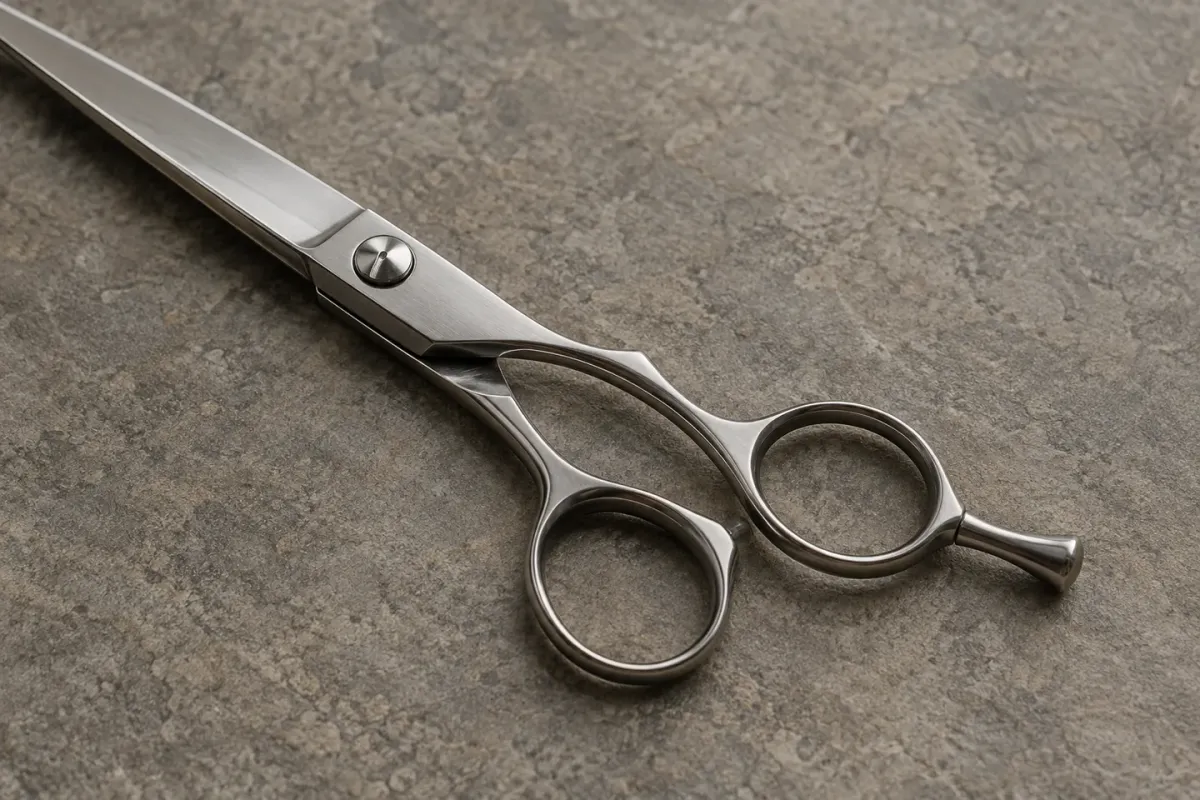
Preserve the blade geometry
Different grinds and tooth designs call for different sharpening methods. A convex edge, a bevel and a thinner should not be treated as interchangeable.
How to ask for help
Name the exact tool
Send the maker, model, selected size and cutting hand. Say whether it is a cutter or thinner; include the tooth count or edge type if known.
Discuss the edge
We’ll help identify an appropriate sharpening or service path for its grind and condition.
Pack only when instructed
Agree the service path first. Wait for the receiving technician’s address and packing instructions before posting a shear.
Check the tool on return
Follow the maker’s and technician’s return checks before regular use. Report any remaining change in movement or cutting action to the technician.
Confirm the proposed work and its terms with the chosen provider. Wait for their receiving and packing instructions before posting a shear.
Prepare a clear description
Note whether hair catches, folds or pushes, and whether it happens near the heel, middle or tip. Include any drop, visible damage or previous service. These observations help explain the problem without guessing its cause.
Keep photos of both complete sides, the pivot and any visible damage ready for the conversation. Photograph the tool as it is; leave dismantling and edge work to the technician.
Read how to prepare for service, or use the two-page tool and service record (PDF) to keep the model, observations and work done together.