Japanese Shear Care: A Working Routine
Keep the blades clean and know when to seek service.
By JapanShears Editorial Updated
On this page
Good care protects the cut and makes edge problems easier to recognise. Start with the maker’s instructions for your exact shear, then keep the routine simple.
After use
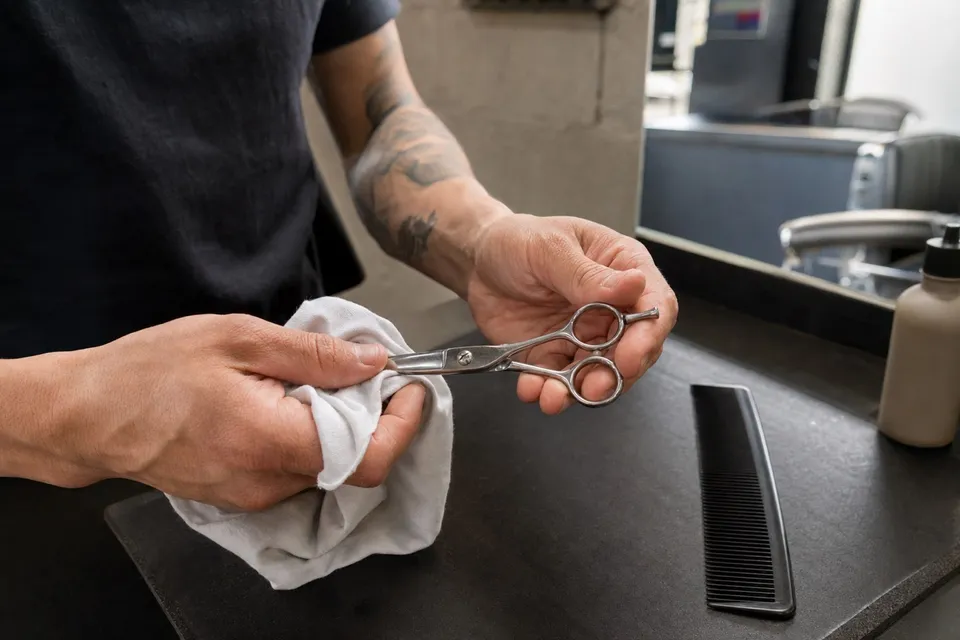
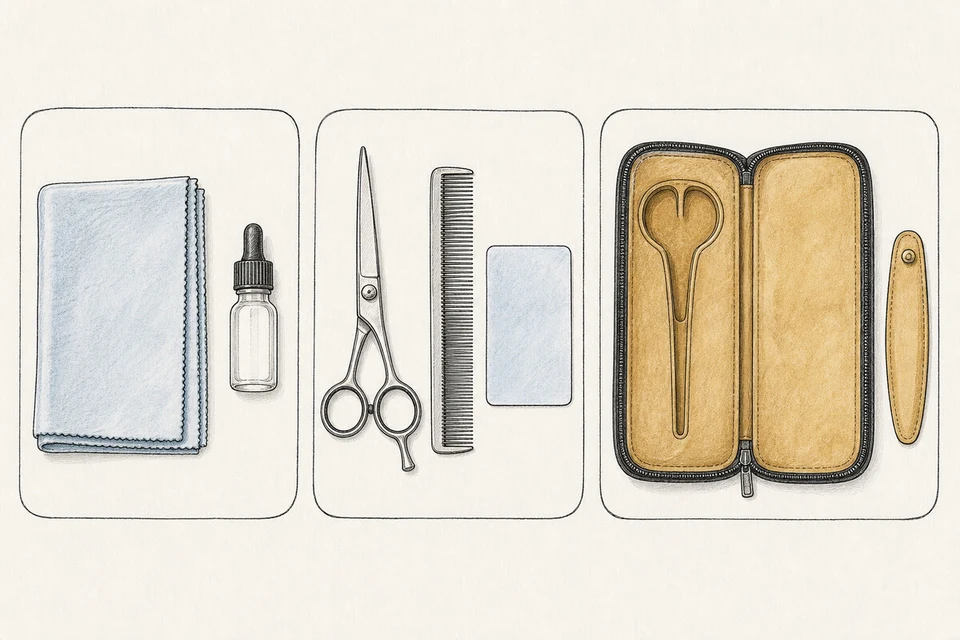
Wipe away hair and product residue, dry the blades and oil the pivot where recommended. Open and close the shear gently to distribute oil, then wipe away excess. Clean thinner teeth carefully without forcing anything between them. Store each tool closed and protected from knocks.
When the cut changes
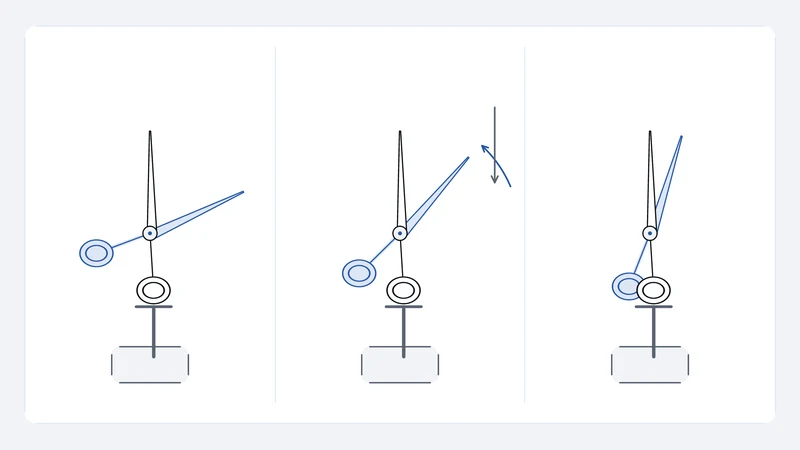
If hair folds, pushes or catches, clean the blades first. Check whether the pivot feels unusually loose or tight. Do not keep squeezing through a cut to compensate. If the problem remains, stop using the shear and ask a technician familiar with its edge to inspect it.
A sharpening date cannot be set from steel alone. Your work, edge geometry and maintenance all affect wear. Record the symptom and any service in a simple maintenance log.
Before service
Tell the technician the exact model, edge type and what changed in the cut. Note any drop or tip damage. Our sharpening preparation checklist covers what to send with the shear.