JapanShears Editorial · Published · Updated
Salon Shear Audit: A Practical Checklist
Record who uses each shear, its condition and service status, then check whether the available cutters and thinners cover the salon's work.
On this page
A salon can own plenty of shears and still lack the right backup for tomorrow’s bookings. A left-handed cutter away for service cannot be covered simply by counting another right-handed pair in the drawer. Audit the available tools by their users and jobs, then decide what needs attention.
This is a kit and coverage check. Individual cleaning and service details belong in each tool’s record, so the team list can stay short.
Start with what is actually in the salon
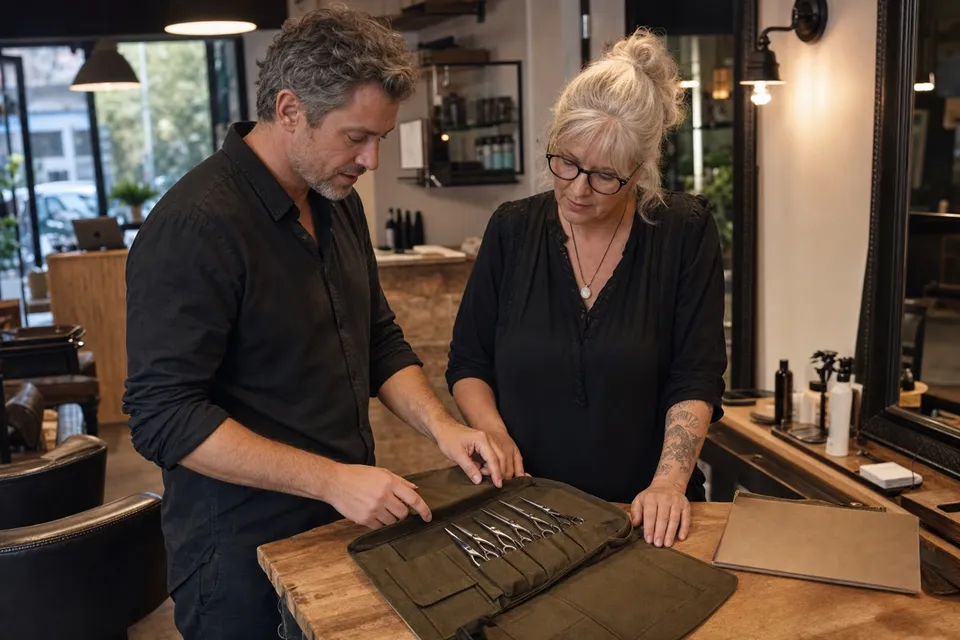
Gather the shears that are available, and list those away for service separately. Note whether each is salon-owned or personally owned before arranging work on it. Give each tool an ID, current user and usual storage place. Record the model, hand, nominal length and tool type; for a thinner, include the tooth count and model code.
| Tool | User and location | Current status | Next action |
|---|---|---|---|
| Model, hand and size | Responsible person; case or station | Available, awaiting assessment, away for service or retired | Named person and an agreed next step |
The status needs to reflect the tool, rather than the drawer it came from. A shear awaiting advice should not appear as an available backup. Keep its passport and maintenance log with the purchase and service records.
Ask the user, then inspect the condition
Ask whether the cut or closing action has changed. Where does it catch? Did that start after a drop, a knock or a recent service? Record the user’s observation without labelling every poor cut as a dull edge.
Following the model’s care instructions and workplace hygiene procedure, remove ordinary hair and residue so the tool is visible. Look over the tips, cutting lines, thinner teeth and fitted hardware. Note apparent damage or an unusual closing action. Avoid trying to repair the edge as part of an inventory check.
Keep a damaged tool out of client work. If a poor cut persists after appropriate routine care, mark it for assessment and use the symptom guide to write a clear account. The service preparation page covers photographs and the questions to ask a provider.
Check coverage by hand, tool and job
Look at the upcoming work with the stylist who will do it. A useful backup needs the appropriate hand, the right tool type and a length and construction they can work with. A thinner covers a texture job; it does not replace a cutter for setting a perimeter.
For example, if a left-handed stylist’s longer cutter is away, first check whether there is another available left-handed cutter that suits their comb work. A spare right-handed thinner fills neither requirement. Discuss a suitable temporary tool or bookings before deciding a purchase is necessary.
For a two-tool set, check coverage for the cutter and thinner separately. Their status and service needs can differ. Make any purchase shortlist around the missing job using the Shear Finder, then compare the exact option’s hand, length and price. The buyer guide helps with construction differences that remain after those requirements are set.
Finish with an owner and a next step
Put one person’s name beside each action: contact a service provider, confirm a personal tool’s owner agrees, update a storage label or compare a backup. Give the team a clear way to see when an unavailable shear returns and has been checked before use.
Use a check when the kit changes, a tool leaves for service or coverage becomes uncertain. Set a regular review only if it helps the salon; a calendar entry is useful when somebody acts on it. Keep the ownership hub close to the list for the care, arrival and service resources the team needs next.
A closer look at shears
Comparing two models? Send us their names or SKUs and the cutting work you have in mind.
Latest blog posts
Read all blog posts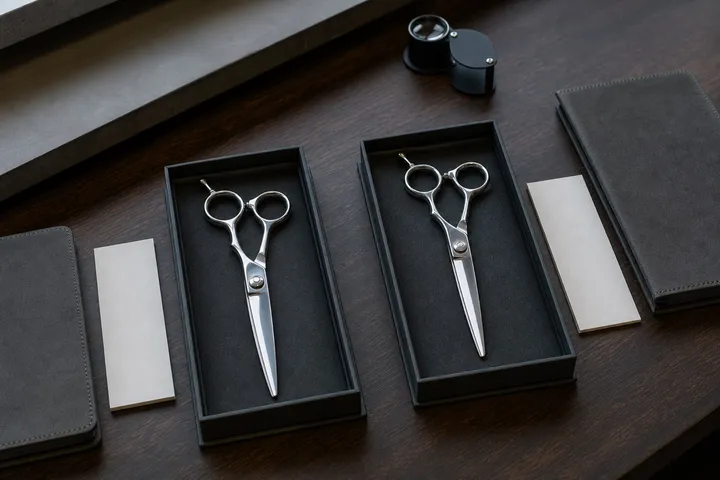
13 places to buy professional hair scissors online
Thirteen websites that sell professional hair scissors, listed A to Z, with a short box of things to check before you buy.
10 Christmas Gift Ideas for Hairdressers and Barbers
Ten gift ideas for a hairdresser, barber or apprentice, by situation: gift card, case, holster, care kit, combs, razor blades and a first-kit contribution.