A Simple Maintenance Log for Japanese Shears
A practical way to record cleaning, tension changes, damage and sharpening for the shears you use every day.
Keep one line per event
A useful shear log tells you what changed and when. It does not need a complex spreadsheet. A note on your phone or a shared salon sheet works if everyone uses it.
| Record | Example |
|---|---|
| Shear | Brand, model and size |
| Date | When you checked or serviced it |
| Action | Cleaned, oiled, tension adjusted or sharpened |
| Observation | Hair folding, tip snag, loose pivot or normal feel |
| Service | Technician and work completed, if applicable |
Use a serial number if your shear has one. Add a photo after a drop or before sending it for repair.
Log the changes that matter
Cleaning after use is routine; a brief note is enough. Record an adjustment when tension feels different, and describe where a problem appears in the cut. “Folds at the tip on dry hair” helps more than “not sharp.”
After sharpening, note whether the shear closes and cuts as expected. Keep the service receipt with the entry. Your log then gives the next technician a clear history without guessing at a fixed sharpening schedule.
Keep the routine light
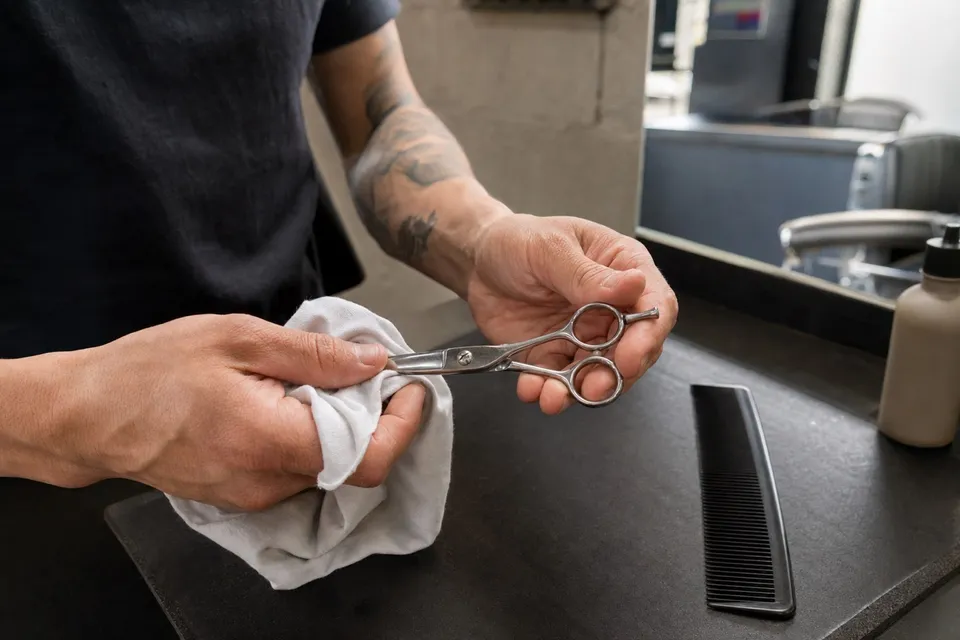
Wipe and dry the blades, add oil where the maker recommends, and store the shear closed and protected. If it falls, catches or starts pushing hair, stop and inspect it before the next client. See the maintenance guide for the care routine and sharpening prep checklist before a service appointment.
A closer look at shears
Comparing two models? Send us their names or SKUs and the cutting work you have in mind.