Mina Black Diamond Set: What to Compare
By JapanShears EditorialUpdated
On this page
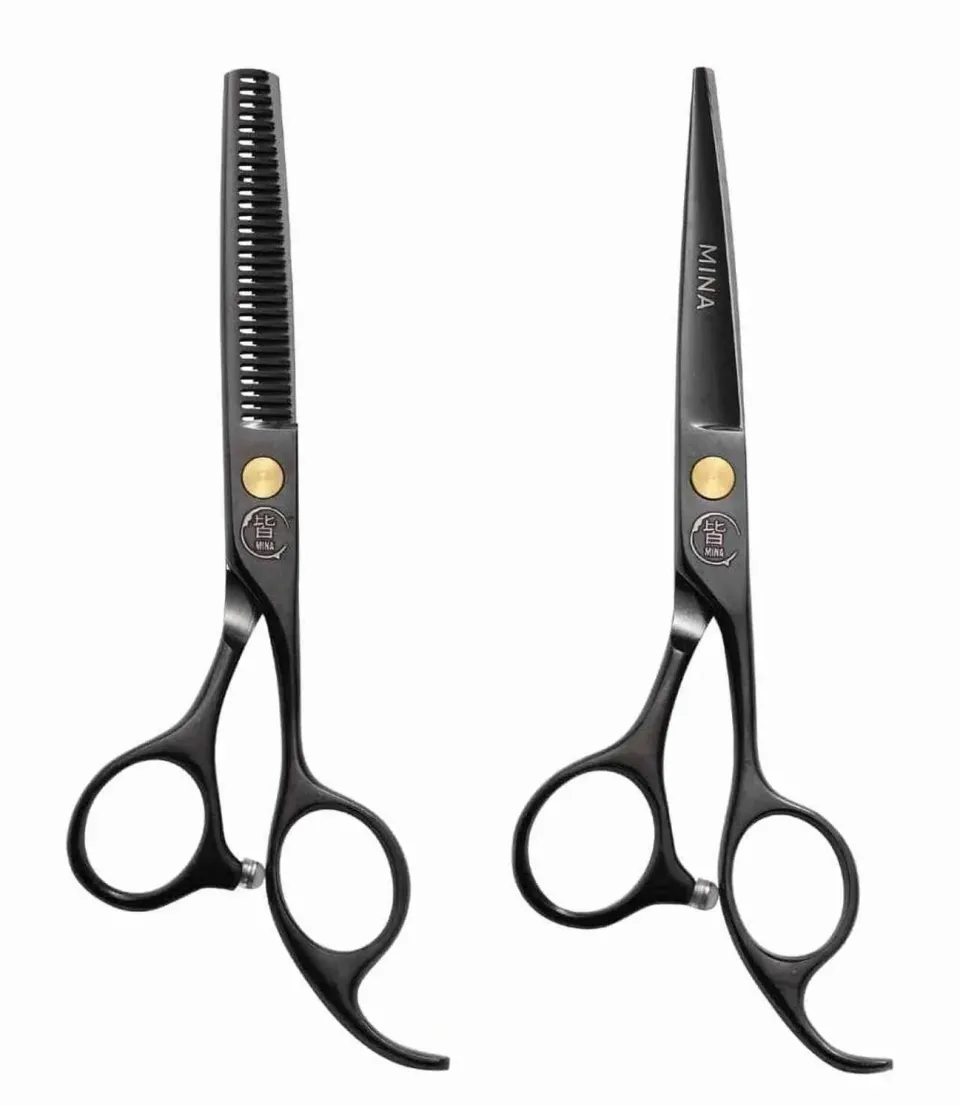
The Black Diamond kit pairs a flat-bevel cutter with a six-inch, 30-tooth thinner. Both are right-handed, use SUS440C steel and have offset handles in a black finish. Your cutter length changes with the option; the thinner stays fixed.
That gives the comparison a clear starting point. Decide which cutter size belongs in your kit, then ask whether you also need the included toothed tool. The shared finish is easy to see, but it cannot answer those two questions.
What changes across the two options?
| Selected kit | Cutting shear | Thinning shear |
|---|---|---|
| MIN-BDMD-S55 | 5.5 inches, flat bevel | 6.0 inches, 30 teeth |
| MIN-BDMD-S60 | 6.0 inches, flat bevel | 6.0 inches, 30 teeth |
Compare a familiar nominal size first. Moving between the two kits changes the cutter’s length, not the thinner’s. The barber reach guide explains why an inch label does not give a published blade span or a universal control ranking.
Put the edge beside another actual pair
The Timeless six-inch pair also has a fixed six-inch, 30-tooth thinner, but its cutter is convex. Both examples keep Right hand and those nominal component sizes steady, leaving a useful cutter-edge difference to discuss.
A bevel has a flat facet near the edge; a convex grind curves outward. Ichiro’s blade terminology explains those shapes. The edge guide brings them back to named options. Do not use the shared tooth count to assume the two thinners are identical or predict the hair removed.
Which cutter length for which work?
The kit’s two options cover different working reaches. Choose the one that matches most of your appointments.
| Option | Typical work | Keep in mind |
|---|---|---|
| 5.5 inches | Detail, fringes, shorter shapes | Less blade for wide sections |
| 6.0 inches | Mixed salon cutting | A middle reach for most sections |
If comb work is your main job, the 6.0-inch kit has the longer blade; plan how you will finish around the ears and neckline.
Working with a flat-bevel cutter
A flat-bevel edge is ground with a straight facet. It suits work where the blades close fully: perimeter lines, square layers and scissor-over-comb. A few habits help with any cutter of this kind.
- Close to the tips at the end of each blunt cut, so the line finishes cleanly.
- Hold even tension on the section, wet or dry.
- Keep the still blade steady and move only the thumb blade.
- Check both sides before moving on.
For slide cutting, compare a convex cutter instead. The edge guide explains how makers describe convex edges for that movement.
Looking after the black finish
Wipe both tools with a soft cloth after each client and dry them fully. Brush hair from the thinner’s teeth before storing it. Keep the cutter and thinner closed and apart in a case, so neither knocks the other.
The black finish is a surface treatment. It does not describe the steel or the edge, and it makes no promise about wear.
When the cutter goes for service, tell the sharpener it has a flat-bevel edge. The listed edge is the detail they need, and the finish name gives them nothing to work from.
Choose the purchase that covers your work
If the existing kit already includes a suitable thinner, the Black Diamond six-inch cutter is a separate single purchase. The Timeless review helps with its alternative pair and singles; the similar-name guide keeps family words and finish separate from actual construction.
Read the selected price and current contents together. The Diamond name does not identify a diamond blade or a coating process. Keep both tools dry, protect their edges and teeth separately, and use the care hub for a service question.