Barber Shear Reach: Look Beyond the Inch Label
Compare the blade you can place beside your guide.
By JapanShears EditorialUpdated
On this page
Before adding an inch to your next cutter, name the place where your present reach falls short. Is the tip awkward to place near an outline? Do you want more blade beside a longer comb guide? That answer gives the size comparison a purpose.
The inch label is a useful way to browse. Your working reference is the actual blade, the guide and the hand that holds the tool.
Two six-inch cutters, two published blade lengths
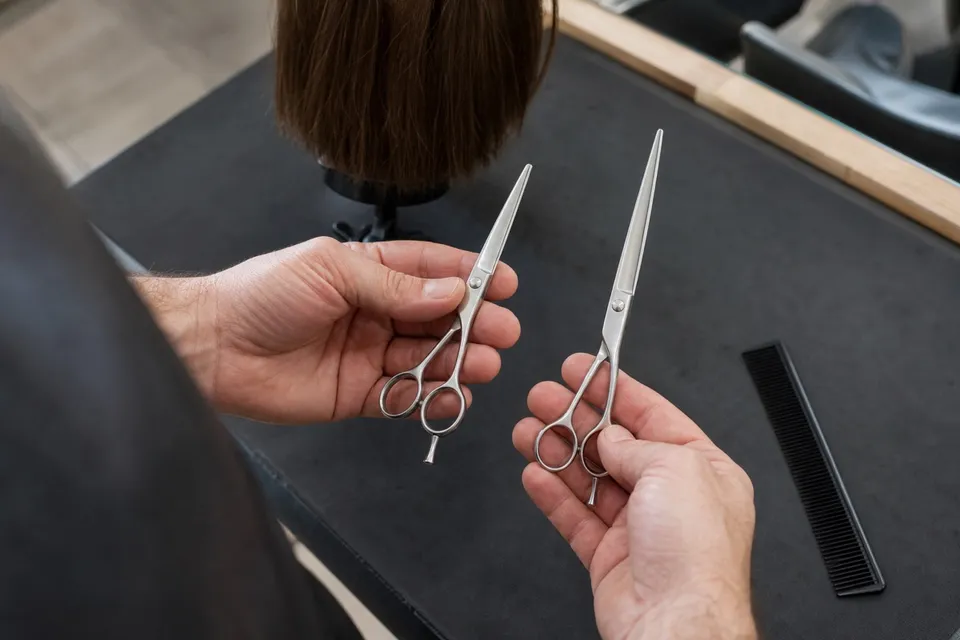
A nominal six-inch shear does not have a six-inch cutting blade. Makers can list the blade measurement separately, and two tools with the same nominal label can differ.
These two right-handed Joewell options make that visible:
| Exact option | Nominal size | Maker’s published blade length | Other construction to compare |
|---|---|---|---|
| Classic PRO 600 | 6.0 inches | 68 mm | Symmetric handle, Convex Shape Blade and precision flat screw |
| FX-PRO 60 | 6.0 inches | 63 mm | 3D offset handle, Sword & Flat Blade and dry-bearing screw |
Joewell publishes those figures on its Classic PRO and FX-PRO model pages. The five-millimetre difference is a useful shortlist detail. The handles, blades and pivots also change, so assess the complete tool alongside the number.
Use the maker’s measurement convention when reading a specification. Keep a measurement of your own tool labelled with its endpoints; do not treat it as interchangeable with an unspecified catalogue convention. A photograph can help you see the shape, but cannot supply an accurate length from an unscaled image.
Follow the blade beside your guide
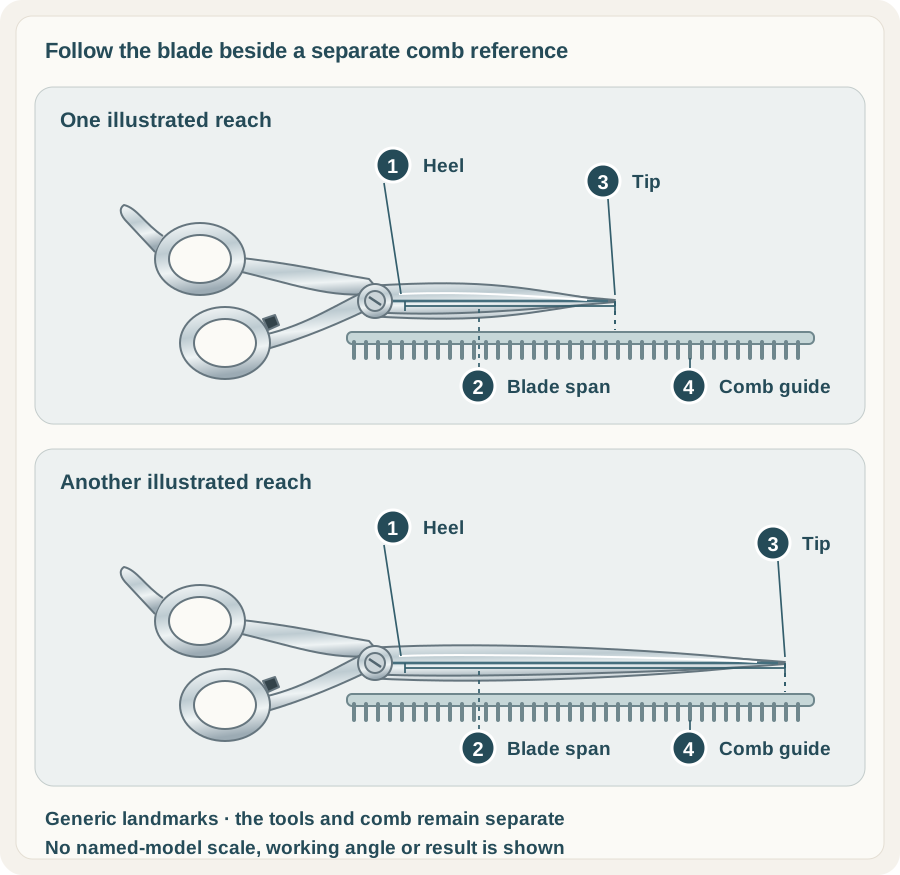
The heel near the pivot, the span along the blade and the working tip are useful landmarks. The comb gives you a separate reference for where the blade will work.
 Open illustration at full size
 - HeelThe blade area near the pivot, separate from the handle and rings.
- Blade spanFollow the blade towards its tip. The drawn bracket is illustrative, not a maker measurement.
- Working tipCompare where you can place and see the tip against the guide in your actual work.
- Comb guideA separate working reference. Its shape and illustrated position do not establish the method for a haircut.
Compare where you can see and place the tips with your familiar grip. Then consider the part of the blade you use beside the guide. A longer blade may offer additional reach; whether that reach helps depends on the task, the handle and how you use the tool. The technique-to-tool guide connects those construction questions with specific cutting movements.
During training, take that observation to your educator. The existing practice brief lets you record the chosen task and feedback. Use the fit guide if the difficulty concerns ring position or grip as well as reach.
Keep the cutting hand fixed
For a left-handed long cutter, the Joewell LSF 7.0-inch option has an 85 mm blade figure on Joewell’s LSF model page. Its semi-offset handle and Convex Shape Blade belong in that comparison too. This is a separate left-handed model; the two right-handed cutters above do not fill its role.
The left-handed shortlist offers other builds to compare. Stay within the correct hand when you move between lengths.
Decide whether the kit needs another reach
If your current cutter suits one job and another length fills a clear gap, the two-length kit guide shows how to read actual multi-tool configurations. A same-length second cutter can also be an intentional backup.
Return to the barber shortlist or barber collection with three notes: the job, the cutting hand and the blade or nominal length you want to compare. Use the size guide for the remaining measurement questions, then check the full selected option before buying.