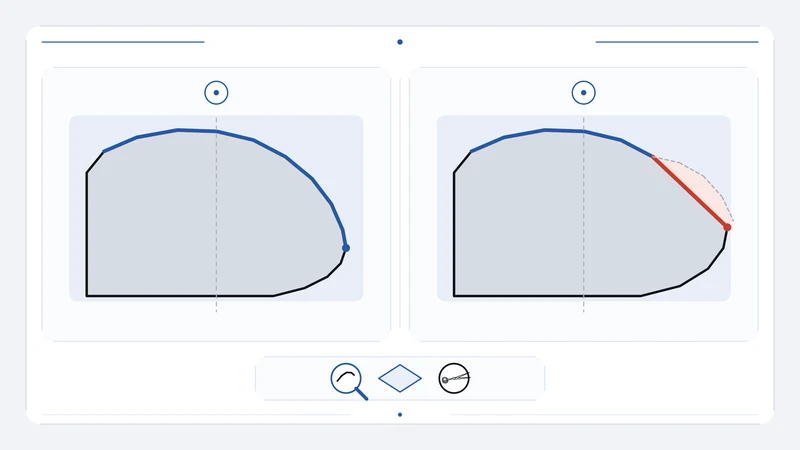
Convex Edge Shears: How to Compare Them
A clear explanation of convex edge shape, how it differs from tooth or bevel designs, and what to check before buying.
By JapanShears Editorial Updated
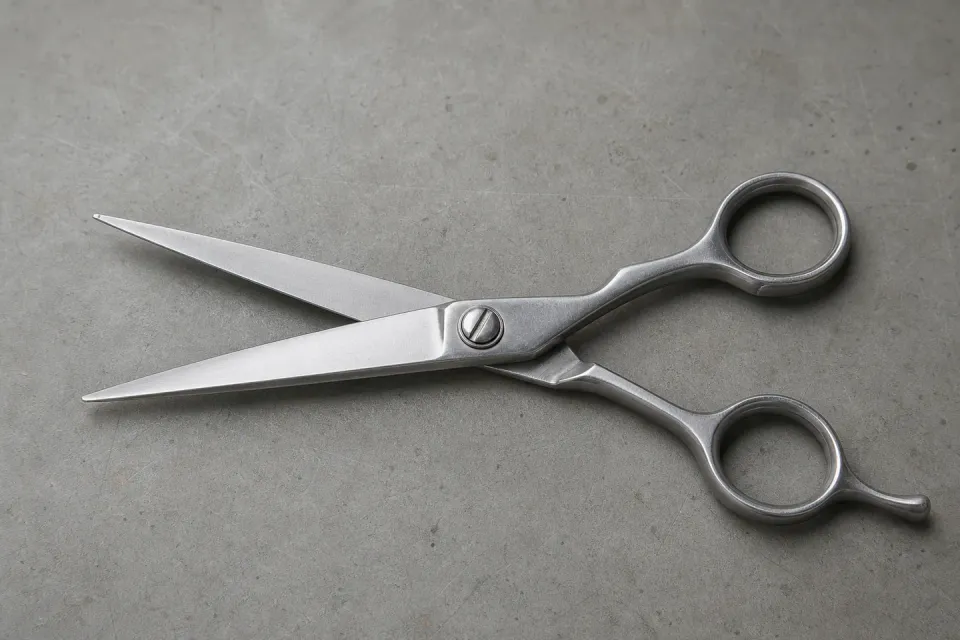
What “convex” describes
A convex edge curves toward the cutting line rather than ending in a broad flat bevel. It is one part of the shear’s construction. Blade length, handle position, pivot and maintenance condition still affect how the tool behaves in your hand.
Some product pages pair “convex blade” with “slice edge.” Read both labels together: the first describes the grind, while the second describes the intended cutting action. The steel library explains material terms separately.
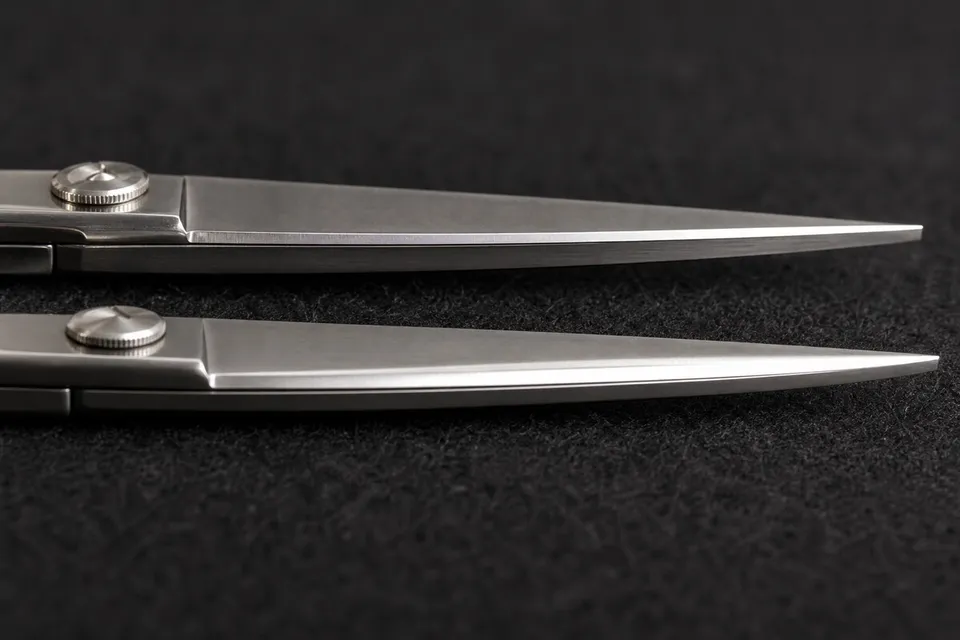
When to compare a convex cutter
A clean convex edge is a useful option when you draw the shear through a section or need controlled tip work. Compare it with a micro-serrated or bevelled cutter if you prefer more grip as the blades close. No edge replaces section control: start lightly and watch how the chosen shear meets the hair.
Browse cutting shears by the model’s exact edge, size and hand. A 5.5-inch convex cutter and a 7.0-inch convex cutter share a grind label but offer different reach.
Care for the actual edge
Remove hair and product residue, dry the blades and keep the edge protected in storage. If the shear begins to push or fold hair, check for debris and a changed pivot feel. Avoid improvised tests on foil or other hard material. A professional technician familiar with the maker’s grind can assess an edge that still cuts poorly.
The maintenance guide covers the routine. For movement examples, continue to the technique hub.