How to Choose Japanese Shears for Your Work
Choose blade length, handle shape and cutting edge around the services you perform most. A short buying guide for Australian stylists and barbers.
Start with your busiest service
A shear should fit the cut you repeat all day. List your main services, then choose the tool that handles those cuts comfortably. A beautiful finish or exotic steel matters less if the length and handle fight your technique.
Length: control versus reach
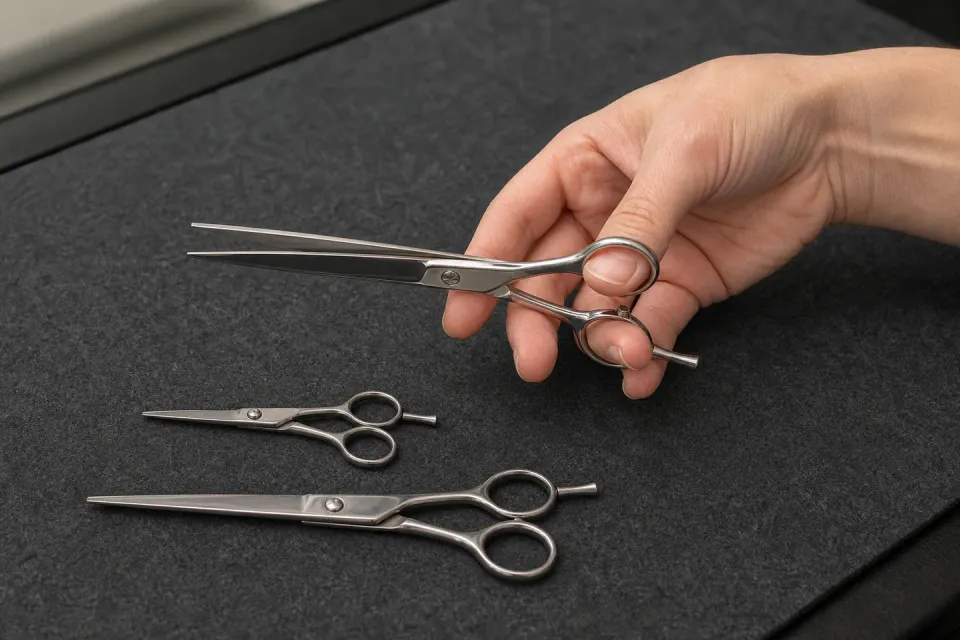
| Length | Where it helps |
|---|---|
| 5–5.5 inches | Fringes, detail and close precision work |
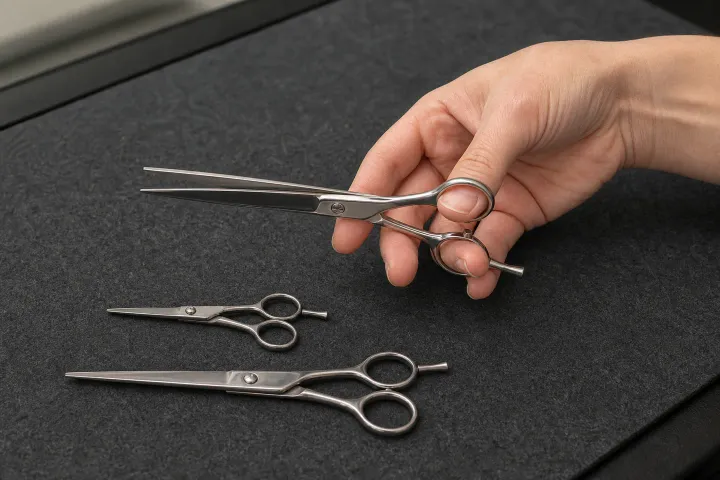
| 5.5–6 inches | Versatile salon cutting and point work |
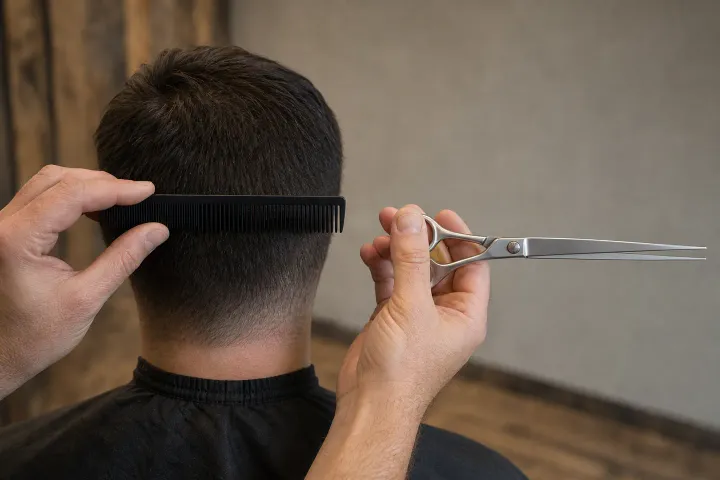
| 6.5–7 inches | Longer strokes and scissor-over-comb work |
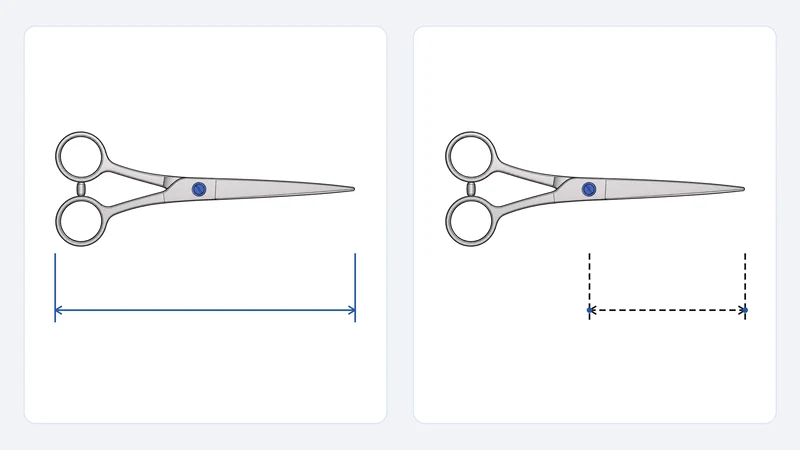
These are starting points, not rules. Check the listed size for the exact model and compare it with a shear you already handle well.
Handle: feel it through a full cutting motion
An offset handle keeps the thumb in a more open position for many stylists. A crane handle changes the hand and elbow position again. A swivel thumb allows more movement but takes time to learn. Neither a handle label nor a product photo can promise comfort: think about grip, finger-hole fit and how the shear sits when you cut at different angles.
Edge: match the technique
Convex edges suit smooth slicing and detailed work when maintained correctly. A bevelled edge gives firmer feedback on a straight line. Tooth count matters on a thinner: more teeth usually mean a softer, more gradual blend; fewer, wider teeth remove weight more visibly. Read the product’s actual edge and tooth specification instead of assuming every Japanese shear cuts the same way.
Steel: one part of the decision
Steel names such as 440C, VG-10 and ATS-314 help you compare models, but grind, tension, heat treatment and sharpening also affect the cut. Pick a shear you can maintain and a sharpener who understands its edge. Keep a working backup if you rely on one pair for every client.
A quick shortlist
- Choose the length you can control for your most frequent cut.
- Compare handle shapes with your current shear.
- Decide whether you need a cutter, a thinner, or both.
- Check the exact variant, edge and included items on the product page.
- Plan how you will clean, store and service it.
For a matched cutter and thinner, explore the Ichiro Offset set or Joewell New Era set. For a broader comparison, use the Japanese shear buyer’s guide.
A closer look at shears
Comparing two models? Send us their names or SKUs and the cutting work you have in mind.