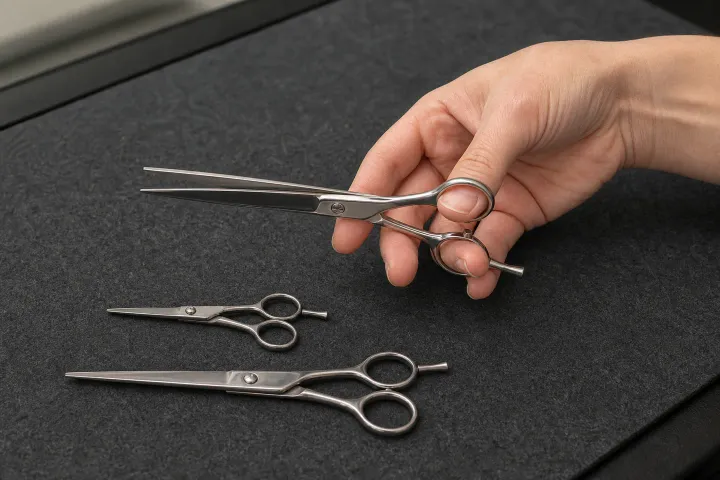
ATS-314 vs ZA-18 Shear Steel
What ATS-314 and ZA-18 steel names can tell you, and which shear details matter more when choosing a tool.

Steel is a useful clue, but the grade printed on a shear is not a cutting test. ATS-314 and ZA-18 are two names you may encounter in professional Japanese shear ranges. Compare the complete models before deciding between them.
Start with the exact shear
Our Yasaka listings include ATS-314 models. Look at their blade length, edge, handle and thinning options together; the alloy name alone cannot tell you whether the tool fits your work. See the Yasaka brand page for the range.
If you are considering a ZA-18 model, ask for the maker’s specification for that particular shear. A steel label does not reveal its heat treatment, grind, balance or pivot feel.
What to compare
| Question | Why it matters |
|---|---|
| Is the blade the right length? | Reach and control change with size. |
| What edge does the model use? | Convex and bevelled edges feel different through a cut. |
| Does the handle suit your grip? | Fit matters on a full day of cutting. |
| Who can service the edge? | Good sharpening preserves the intended geometry. |
Choose by the cut you need and the model you can maintain. The ATS-314 guide, ZA-18 guide and steel library explain the terms without treating one grade as an automatic winner.
A closer look at shears
Comparing two models? Send us their names or SKUs and the cutting work you have in mind.