Japanese Shear Blades and Edges Explained
A plain-language guide to convex, bevelled and sword-profile blades and the cuts each can support.
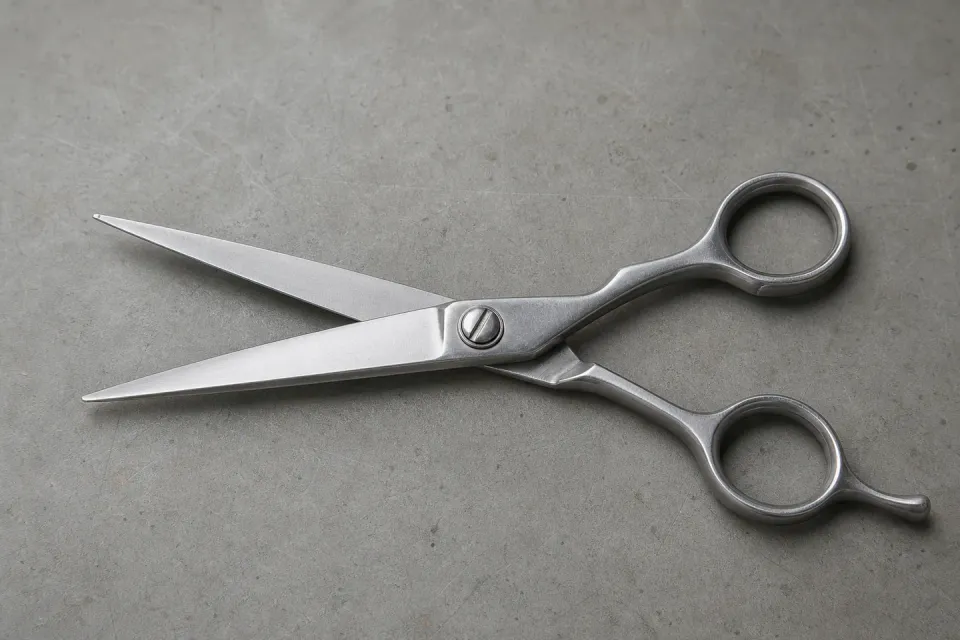
The blade is more than the steel name stamped on it. Its profile and cutting edge affect how it moves through hair.
Edge shape
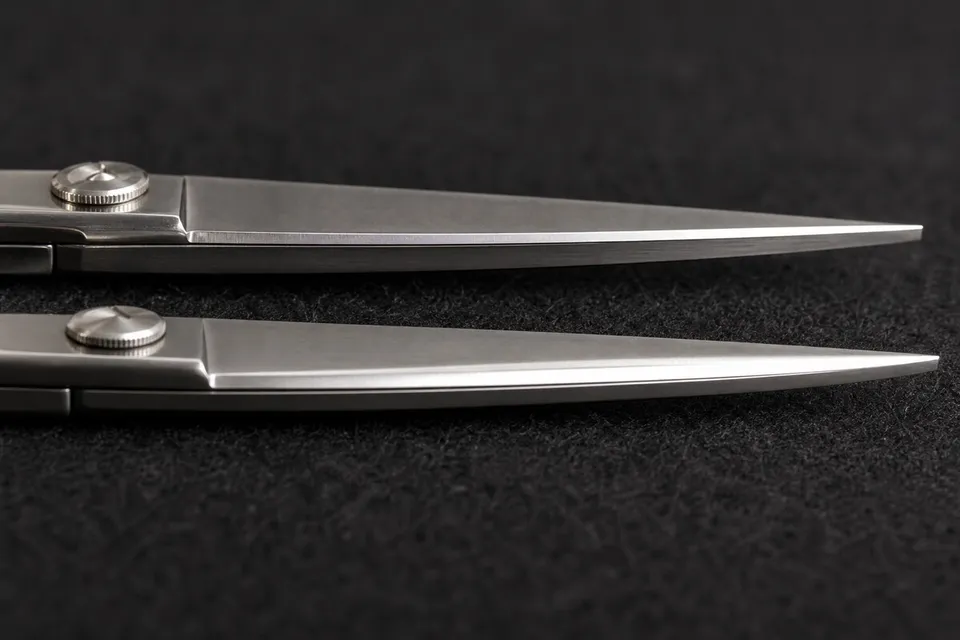
A convex edge is shaped for a smooth, fine cut. It can suit slicing and detailed work, but its finish needs the right sharpening method. A bevelled edge has a firmer cutting feel and can suit straight-line work. Some models combine features of both. Check the particular shear rather than treating an entire brand as one edge type.
A micro-serrated edge grips hair as the blades close. That can help with controlled blunt cuts, while it is a poor match for free sliding techniques. A serrated pattern needs a technician who can service it correctly.
Blade profile
| Profile | What to notice |
|---|---|
| Slim blade | Access for detail work and close sections |
| Wider blade | A more substantial feel through a straight cut |
| Sword profile | A raised spine that changes rigidity and balance |
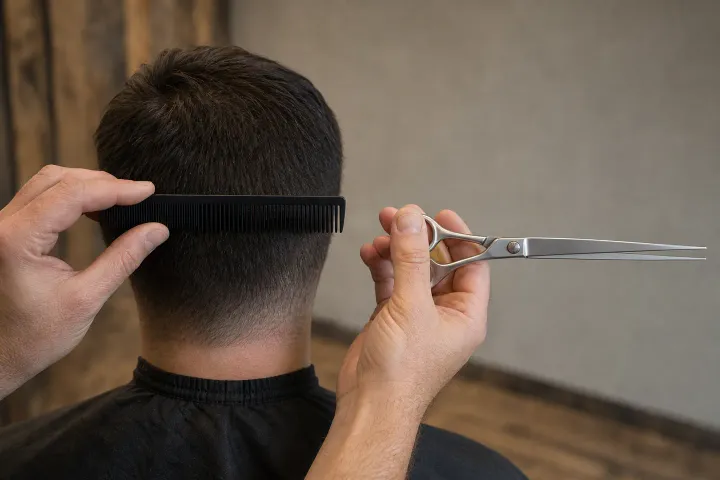
A sword blade is not automatically the right barber shear. Choose its length and weight for your scissor-over-comb technique and hand.
Make a useful comparison
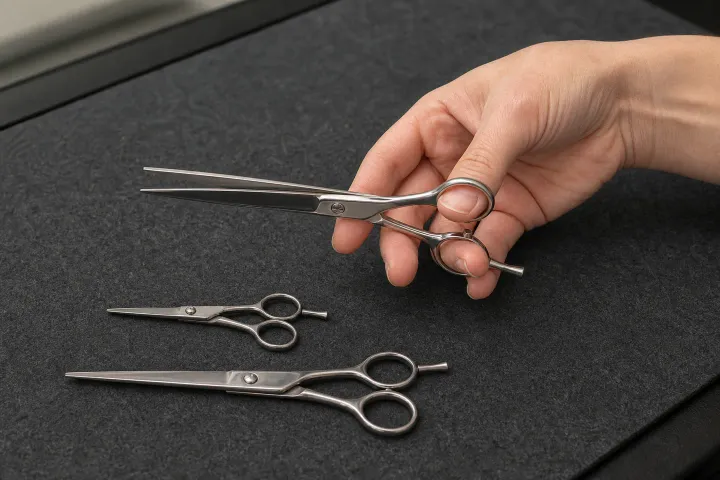
Take two shears through the same cut. Notice whether hair slips, whether the tip catches, and how the handle sits when you open and close. Then compare the stated edge, blade length and tension. Steel matters, but it is only one part of that feel.
Clean and protect the edge after use. When it needs service, tell the sharpener the model and original edge type. See our convex edge guide and maintenance guide for more detail.
A closer look at shears
Comparing two models? Send us their names or SKUs and the cutting work you have in mind.