JapanShears Editorial · Published
Cutters for Dry Cutting: 8 Listed for Slicing and Finishing
Eight Japanese-brand cutters whose records name a dry-finishing blade, a slide-cutting blade or a convex slice edge, with the trade-off of each.
On this page
No cutter is made for dry hair alone, and any clean, correctly adjusted shear can cut it. What a few listings do name is a blade or edge meant for drawing along the hair: a curved dry-finishing blade, a slide-cutting blade or a convex slice edge. Those are the eight below.
Short answer. For dry cutting, look for a stated blade line or edge made for slicing and finishing, and keep a standard shear for the lines where a straighter blade suits better. The listings below name the feature; none states a result on dry hair.
How this list was chosen
On 4 November 2026 we read the cutting-shear records in the JapanShears range for the words dry, slide and slice, and for a stated blade line or edge made for drawing movements. Eight Japanese-brand cutters named one of those. We did not test any of them, and we do not claim that any performs better on dry hair; this is a comparison of what the records say. The order moves from the most specialised blade shapes to plainer slice edges. It is not a ranking.
JapanShears sells every cutter below and links to its own product pages. Yasaka, Juntetsu, Joewell, Ichiro and Kasho are independent brands, not JapanShears brands. JapanShears is a member of the ShearAlliance and is run by the same seller as four other Australian ShearAlliance stores. Our editorial policy explains how we compare products.
Why the blade line matters on dry hair
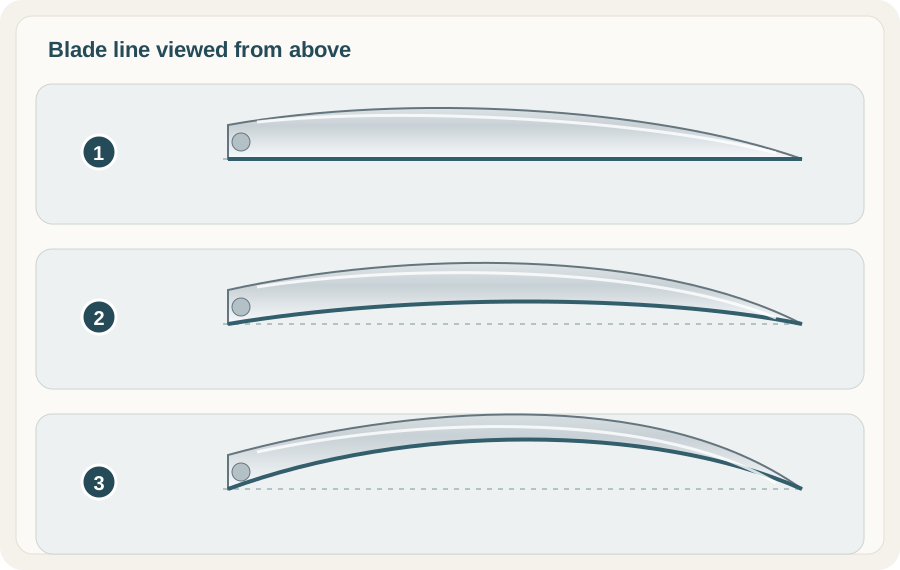
Cutting dry hair lets you see how it falls and moves as you work. That asks for control and a clean edge more than any particular tool. Blade outline, edge and movement are three separate things: a bamboo-leaf outline describes shape, a convex edge describes the surface that cuts and a slide or slice movement describes technique. Our blade and edge explainer separates them.
 Open illustration at full size
- Straighter lineA cutting line with less curve in this view.
- Moderate curveA different line while keeping the same end-to-end reference.
- More curved lineInvestigate the maker’s intended use for the complete model, including its line and edge.
Compare the eight
| Cutter | Sizes | What the record names | Handle |
|---|---|---|---|
| Yasaka Dry Cut | 5.5, 6.0 | Wide curved bamboo-leaf blade | Not stated |
| Yasaka Dry W | 5.5, 6.0 | Clam-shaped convex edge | Hennessy |
| Joewell Bamboo | 5.0 to 6.0 | Bamboo-leaf blade line | Classic or offset |
| Cobalt Vertex | 5.5 to 6.5 | Slide-cutting blade, 45° convex | Offset |
| Black Damascus | 6.0 | Convex slicing edge | 3D offset |
| Kasho Chrome Offset | 5.5, 6.0 | Semi-convex hollow-ground blade | Offset |
| Ichiro Tokei | 5.5, 6.0 | Convex slice edge | Offset |
| Ichiro Ergo | 5.5 | Convex slice (5.5 option) | Offset |
1. Yasaka Dry Cut: a curved blade for dry finishing
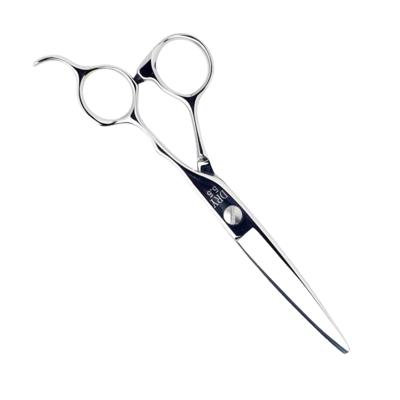
Verdict: the most specialised blade in the list. Suits: stroke cutting and surface texture on dry hair, where a curved blade is the point. Deciding fields: a wide, curved bamboo-leaf blade in 5.5 or 6.0 inches, right-handed. Trade-off: it feels different from a straight everyday cutter, so keep a standard shear for lines where that shape suits less.
2. Yasaka Dry W: a different grip and edge
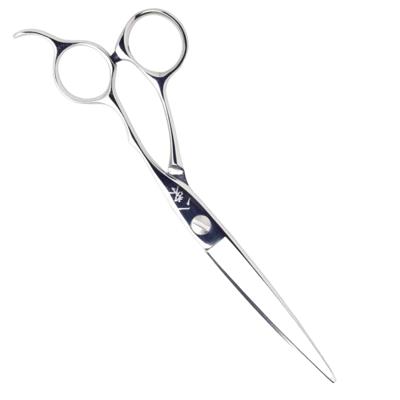
Verdict: the Dry family with a changed handle. Suits: a stylist who wants slicing and detail work with a more angled grip. Deciding fields: a Hennessy handle that raises the finger ring and lowers the thumb ring, and a clam-shaped convex edge, in 5.5 or 6.0 inches. Trade-off: the grip needs time to become familiar, and it is a different shape from the bamboo-leaf Dry Cut.
3. Joewell Bamboo: a curved line from a maker’s reference
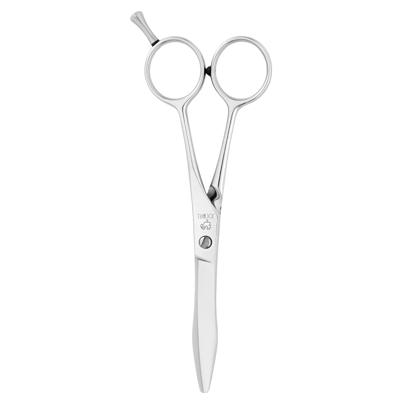
Verdict: a bamboo-leaf blade line with a published use. Suits: a stylist who knows they want a curved cutting line for drawing cuts. Deciding fields: Joewell names the NB series among its curved-line recommendations in its slide-cut reference; there are five choices across 5.0, 5.5 and 6.0 inches, Classic or Offset. Trade-off: bamboo-leaf describes the outline, not the edge or steel, and the 6.0-inch choice is Classic only.
4. Juntetsu Cobalt Vertex: a slide-cutting blade
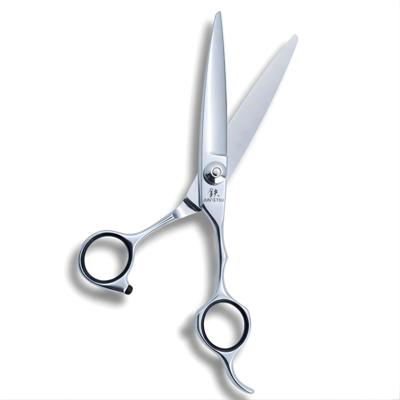
Verdict: a cutter whose blade is listed for slide cutting. Suits: a stylist whose finishing draws the blade along the hair. Deciding fields: Takefu VG-10 cobalt steel, a 45° convex edge, an offset handle and click-adjust ball-bearing tension in 5.5, 6.0 or 6.5 inches. Trade-off: the listing names the use, not a performance result, and the pivot is a system to learn.
5. Juntetsu Matte Black Damascus: one length, a slicing edge
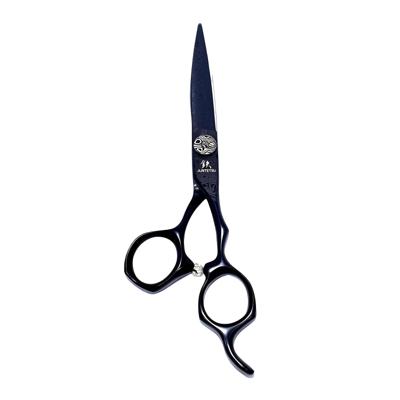
Verdict: a single-length cutter for controlled slide work. Suits: someone who wants a mid-length cutter with a convex slicing edge. Deciding fields: VG10 steel, a 3D offset handle and a matte black Damascus-pattern finish, 6.0 inches, right-handed. Trade-off: one length only, and the pattern is a finish, not a performance claim.
6. Kasho Chrome Offset: a hollow-ground slicing feel
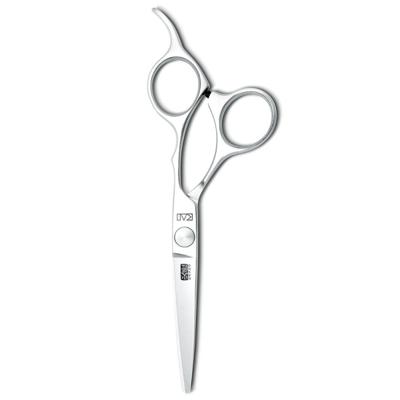
Verdict: a plain, silver cutter built around its blade. Suits: controlled slicing with a lower thumb position than a straight grip. Deciding fields: a semi-convex hollow-ground blade and an offset handle in 5.5 or 6.0 inches. Trade-off: no specialist curve, and the record gives the steel only briefly, so ask if material matters to you.
7. Ichiro Tokei: the simple slice option
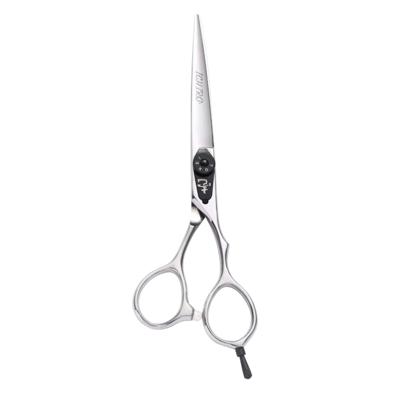
Verdict: a two-length cutter with a stated slice edge. Suits: an apprentice or stylist who wants a convex slice edge without a specialist outline. Deciding fields: a convex edge listed for slice cutting, an offset handle and a polished finish in 5.5 or 6.0 inches. Trade-off: if you need more than 6.0 inches, the listing points to another Ichiro model.
8. Ichiro Ergo: check the variant name
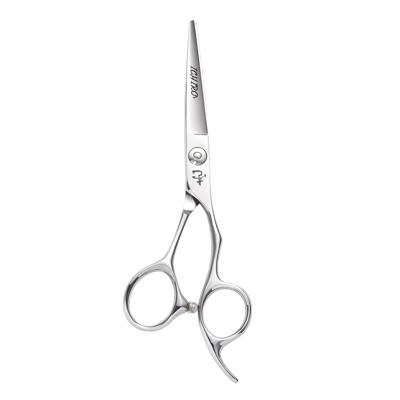
Verdict: an apprentice-line cutter with a catch. Suits: a learner practising drawing or slicing cuts. Deciding fields: the 5.5-inch option is the convex slice cutter. Trade-off: the 6.0-inch option is micro-serrated instead, so choosing the longer tool changes the edge.
What did not make the eight
Kasho Sagano Offset, listed at a higher price, describes a slice edge too; it is on the list of cutters from A$600. Most other cutters in the range say “dry” only in a care sentence about drying the blades. For jobs beyond dry work, see cutters by job.
What would change this list
A record change, a new model with a clearer blade statement or your own technique would change it. If dry cutting is only part of your day, the question list before buying is a better start. Compare all options in cutting shears and read the knowledge base for wider context.
Questions people ask
Do I need special scissors to cut dry hair? No. A clean, correctly adjusted shear can cut it. The cutters above are the ones whose records name a blade line or edge made for drawing movements.
Is a bamboo-leaf blade the same as a convex edge? No. Bamboo-leaf describes the outline and convex describes the edge. A listing can have one, both or neither.
Further reading
- Scissorpedia, an information website on scissors in general.
Scissorpedia is a fellow member of the ShearAlliance; see ShearAlliance.
A closer look at shears
Comparing two models? Send us their names or SKUs and the cutting work you have in mind.
Latest blog posts
Read all blog posts
10 Japanese Shear Myths and What Is Actually True
Ten common beliefs about Japanese shears, from blade length to steel and origin, with a plain correction and a way to check each one.

10 Mistakes to Avoid When Buying Shears Online
Ten online-buying mistakes that cost stylists time and money, from trusting the family photo to skipping the returns terms, with a fix for each.