JapanShears Editorial · Published
Japanese Cutters by Job: 9 Starting Points
Nine Japanese-brand cutters, each matched to one job: close detail, slide cutting, a curved blade, a gripping edge, small rings, reach or the left hand.
On this page
Pick the job first and the cutter second. Nine jobs below each have one cutter whose own record names the feature that job needs, whether that is a short reach for detail, a slide-cutting blade, a left-handed build or a moving thumb. They are starting points for a comparison, not a ranking.
Short answer. A cutter earns its place when a named feature matches a named job. Choose from the feature column of the table, then check hand and length against the tool you already use.
How this list was chosen
On 4 November 2026 we read the cutting-shear records in the JapanShears range for features that map to a clear job: a stated blade line, edge, handle mechanism, hand or reach. We picked nine from Japanese brands that differ on that feature, and left out Kamisori, a Canadian brand with Japanese-inspired designs, to keep this page to one claim. We did not test any cutter. This is a comparison of listings, and the order follows the jobs, not quality. Each card shows its option’s current price from the product record.
JapanShears sells every cutter below and links to its own product pages. Ichiro, Yasaka, Joewell, Juntetsu, Kasho and Mina are independent brands, not JapanShears brands. JapanShears is a member of the ShearAlliance and is run by the same seller as four other Australian ShearAlliance stores. Our editorial policy explains how we compare products.
Compare the nine
| Job | Cutter | Sizes | Deciding field |
|---|---|---|---|
| Close detail | Ichiko Precision | 4.5, 5.0 | Short reach, convex slicing blade |
| Slide cutting | Cobalt Vertex | 5.5 to 6.5 | Slide-cutting blade, 45° convex edge |
| Curved blade line | Joewell Bamboo | 5.0 to 6.0 | Bamboo-leaf blade line |
| Gripping edge | Classic Serrated | 4.5 to 5.5 | Micro-serrated edge |
| Small ring openings | Ergo ZII | 5.5, 6.0 | Small finger holes |
| Moving thumb | Sakura Double Swivel | 5.5 to 6.5 | Movable thumb assembly |
| Long reach | Yasaka SK | 6.0, 7.0 | 7.0-inch option, convex edge |
| Left hand | Design Master Lefty | 5.5, 6.0 | Left-handed offset build |
| Plain straight rings | Yasaka SA Classic | 5.5, 6.0 | Classic handle, convex edge |
1. Close detail: Ichiko Precision
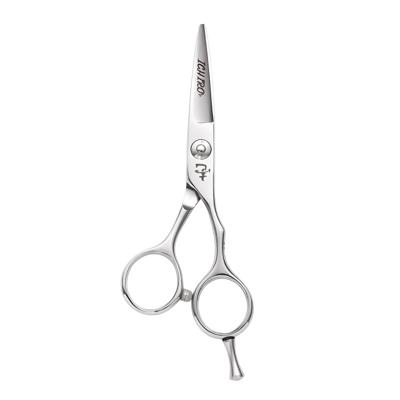
Verdict: the shortest reach in this list. Suits: work close to the fingers, where the tip needs to sit near your hand. Deciding fields: 4.5 or 5.0 inches, a convex slicing blade, 440C steel listed at 58 to 60 HRC and an offset handle. Trade-off: for broad sections or comb work, a longer shear is the tool to compare. It is right-handed only.
2. Slide cutting: Juntetsu Cobalt Vertex
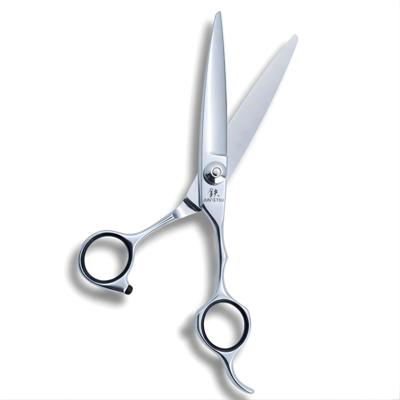
Verdict: a cutter whose blade is listed for slide cutting. Suits: a stylist whose technique draws the blade along the hair. Deciding fields: Takefu VG-10 cobalt steel, a 45° convex edge, an offset handle and click-adjust ball-bearing tension in 5.5, 6.0 or 6.5 inches. Trade-off: the listing names the use but not a performance result; the neighbouring Cobalt Apex has a reinforced tip for detail instead.
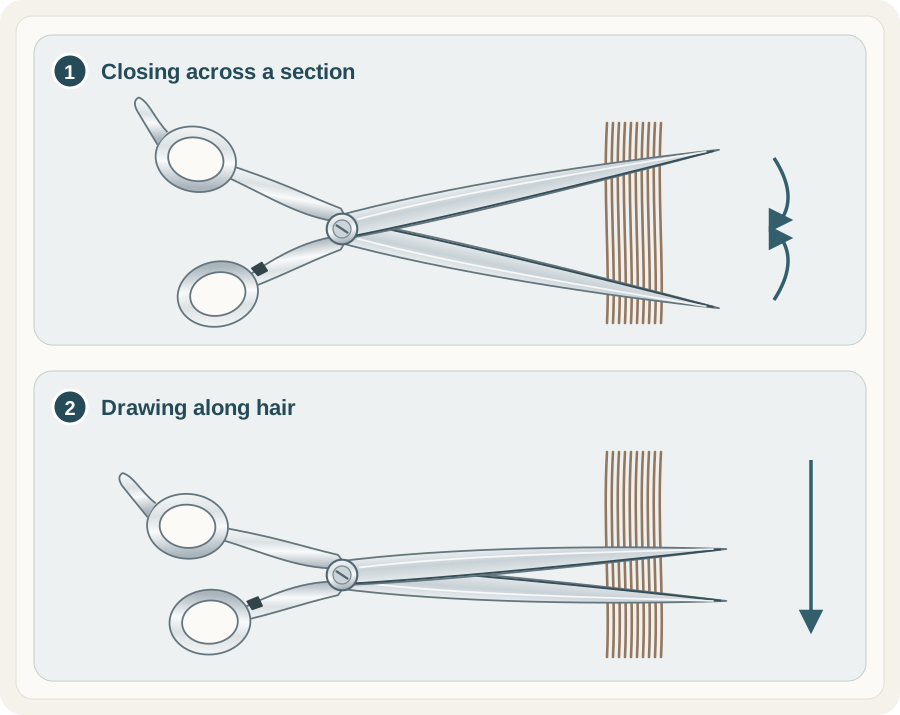 Open illustration at full size
- Closure across a sectionThe blades close across the hair to establish or alter a line.
- Drawing along hairThe tool travels along a section. Blade line, edge condition, intended design and technique all matter.
3. A curved blade line: Joewell Bamboo
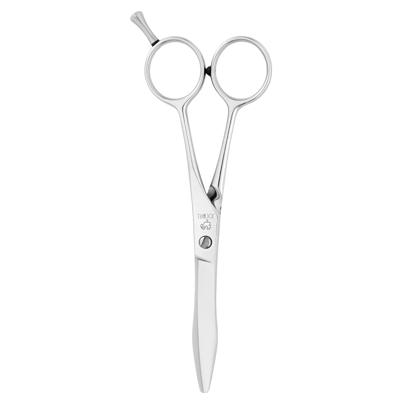
Verdict: a bamboo-leaf blade line chosen for drawing cuts. Suits: a stylist who already knows they want a curved line. Deciding fields: Joewell names the NB series among its curved-line recommendations in its slide-cut reference; handle choices are Classic or Offset at 5.0 and 5.5, and Classic only at 6.0. Trade-off: it is a specialist shape, and bamboo-leaf says nothing about edge grind or steel.
4. A gripping edge: Joewell Classic Serrated
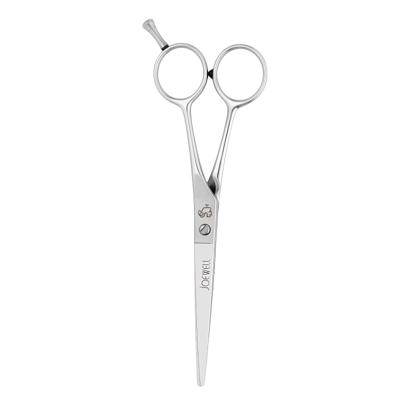
Verdict: a plain Classic with a micro-serrated cutting edge. Suits: deliberate line cutting where you want the blades to hold hair as they close. Deciding fields: micro-serration, traditional opposing rings, a removable finger rest and 4.5, 5.0 or 5.5 inches. Trade-off: if drawing the blade through hair is central to your work, compare an edge and blade line chosen for that movement.
5. Small ring openings: Joewell Ergo ZII
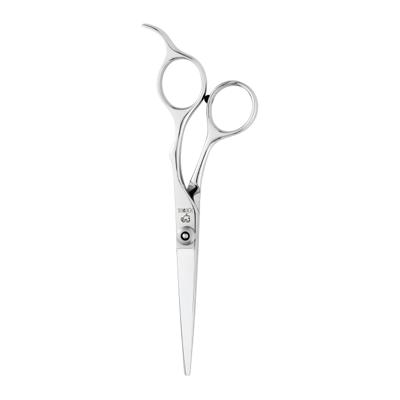
Verdict: a fitting answer, not a feature list. Suits: someone whose current rings feel too open. Deciding fields: small finger holes, an offset layout, a permanent finger rest and a Convex Shape Blade, in 5.5 or 6.0 inches. Trade-off: a smaller opening may leave less space than you want, and the rest is permanent, so try the handle against a familiar tool.
6. A moving thumb: Mina Sakura Double Swivel
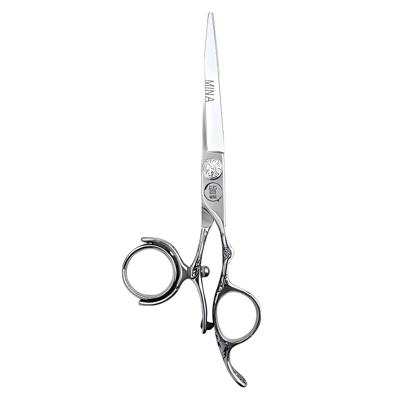
Verdict: a convex cutter with a separate movable thumb assembly. Suits: a stylist who wants to compare a swivel thumb with a fixed one. Deciding fields: SUS440C steel, a convex edge and 5.5, 6.0 or 6.5 inches. Trade-off: it is a second moving part to learn and care for; the fixed versus swivel guide shows the two joints.
7. Long reach: Yasaka SK
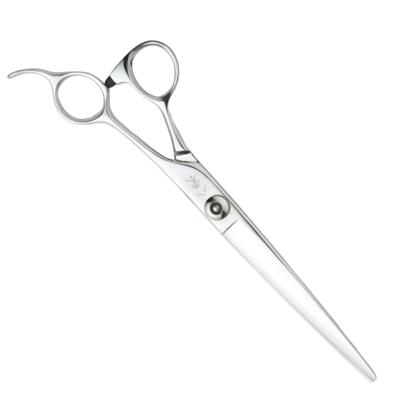
Verdict: two lengths, one of them 7.0 inches. Suits: long sections and scissor-over-comb work. Deciding fields: an offset handle and a clam-shaped convex edge in 6.0 or 7.0 inches. Trade-off: only two sizes, and the two list different screw formats, so check the selected option. Our list of long cutters for comb work compares more.
8. The left hand: Kasho Design Master Lefty
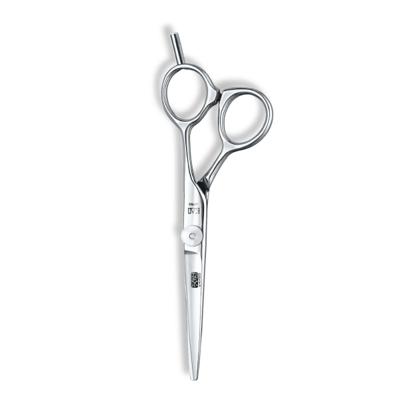
Verdict: a true left-handed build, not a reversed right-handed one. Suits: a left-handed stylist comparing offset cutters. Deciding fields: hollow semi-convex blades, VG-10W steel and a satin finish in 5.5 or 6.0 inches. Trade-off: two lengths only. The left-handed shortlist covers other builds.
9. Plain straight rings: Yasaka SA Classic
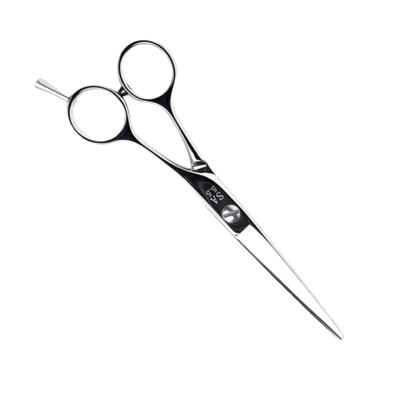
Verdict: the reference point for the rest. Suits: someone who wants level rings and a convex edge listed for slice cutting. Deciding fields: a classic handle and a clam-shaped convex edge in 5.5 or 6.0 inches. Trade-off: no lowered thumb position; the Yasaka Offset cutter is the comparison if you want one.
What did not make the nine
A job list could go on for pages. Dry finishing is covered by the dry cutting list, apprentice upgrades by the second-pair shortlist, and every texturiser by the texturiser list. For a broad mix across hands and sizes, see top 10 professional hair cutting scissors.
What would change this list
A change to a record, a new model with a clearer feature for one of these jobs or a different job in your own work would change it. If you are unsure which job is yours, ten questions before buying Japanese shears starts there. Browse all options in cutting shears or use the shear finder.
Questions people ask
Do I need a different cutter for every job? No. One cutter you control well covers most work. Add another when a job keeps missing, and name the job first.
Is the feature in the table a performance result? No. It is what the product record states. None of these records gives a test result.
Further reading
- The knowledge base for the full set of buying and care guides.
- Scissorpedia, an information website on scissors in general.
Scissorpedia is a fellow member of the ShearAlliance; see ShearAlliance.
A closer look at shears
Comparing two models? Send us their names or SKUs and the cutting work you have in mind.
Latest blog posts
Read all blog posts
10 Japanese Shear Myths and What Is Actually True
Ten common beliefs about Japanese shears, from blade length to steel and origin, with a plain correction and a way to check each one.

10 Mistakes to Avoid When Buying Shears Online
Ten online-buying mistakes that cost stylists time and money, from trusting the family photo to skipping the returns terms, with a fix for each.