JapanShears Editorial · Published
Long Cutters for Comb Work: 8 With a 7.0-Inch Option
Eight right-handed cutters from Japanese brands with a 7.0-inch option for scissor-over-comb work, compared by edge, blade shape, tip and size menu.
On this page
A longer cutter can span more of the comb or the section, and it also moves the tip further from your hand. Eight cutters below offer a 7.0-inch option. Choose by what the blade shape, tip and edge do for your placement, and treat the inch label as a starting point only.
Short answer. Seven inches is the nominal length of the whole tool, not the blade. Compare the edge, the blade outline and the tip, and check that you can place the tip accurately before you commit to the longest size. Every option below also comes in shorter lengths.
How this list was chosen
On 4 November 2026 we read the cutting-shear records in the JapanShears range and kept right-handed cutters from Japanese brands that list a 7.0-inch option. From those we picked eight that differ on edge, blade outline, tip or the size menu around the 7.0-inch choice. We did not test any of them. This is a comparison of listings, not a hands-on review, and the order is by maker, not quality. Each card shows its option’s current price from the product record. For barber cutter families in general, see top 10 barber scissors; this list is narrower and only about the 7.0-inch choice.
JapanShears sells every cutter below and links to its own product pages. Juntetsu, Yasaka, Ichiro, Mina and Joewell are independent brands, not JapanShears brands. JapanShears is a member of the ShearAlliance and is run by the same seller as four other Australian ShearAlliance stores. Our editorial policy explains how we compare products.
Read the reach before the label
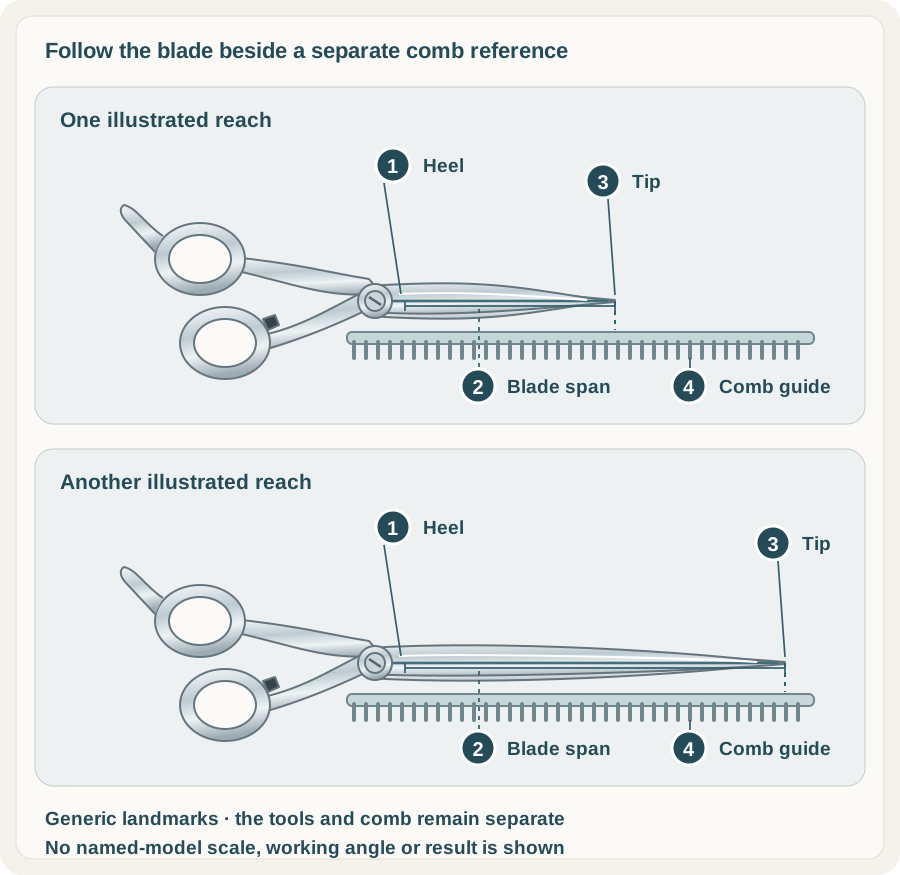
A nominal seven-inch shear does not have a seven-inch blade, and two tools with the same label can differ. Where a maker publishes the blade length, use that figure. The landmarks below, the heel, blade span and working tip, help you describe the part of the blade you use beside the guide; our barber reach guide works through the comparison.
 Open illustration at full size
- HeelThe blade area near the pivot, separate from the handle and rings.
- Blade spanFollow the blade towards its tip. The drawn bracket is illustrative, not a maker measurement.
- Working tipCompare where you can place and see the tip against the guide in your actual work.
- Comb guideA separate working reference. Its shape and illustrated position do not establish the method for a haircut.
Compare the eight
| Cutter | Sizes | Blade or edge | Tip |
|---|---|---|---|
| Juntetsu Ergo Barber | 6.0, 6.5, 7.0 | Convex edge, VG10 | Not stated |
| Juntetsu Moonlight Sword | 6.0, 6.5, 7.0 | Convex slice edge, VG10 | Not stated |
| Juntetsu Master Flow | 6.0, 6.5, 7.0 | Sword profile, VG10 | Blunt |
| Juntetsu Tsunami Elite | 6.0, 7.0 | Sword-shaped convex, VG10 | Pointed |
| Yasaka SK | 6.0, 7.0 | Clam-shaped convex | Not stated |
| Ichiro Precision Master | 5.5 to 7.0 | Convex; semi-sword at 7.0 | Fine point |
| Mina Black Diamond | 5.5, 6.0, 7.0 | Flat bevel, SUS440C | Not stated |
| Joewell Classic | 4.5 to 7.0 | Standard flat single bevel | Not stated |
1. Juntetsu Ergo Barber: convex edge, three long sizes
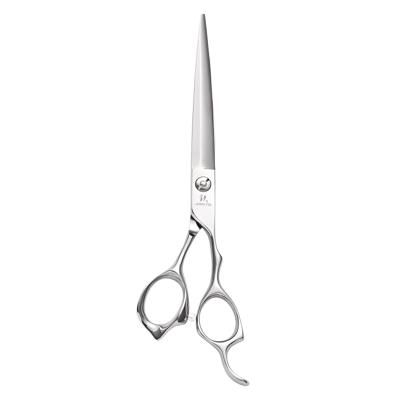
Verdict: a plain long cutter with a clear size ladder. Suits: a barber or stylist moving from 6.0 to longer reach in steps. Deciding fields: a convex edge, VG10 steel and an offset handle in 6.0, 6.5 or 7.0 inches. Trade-off: the listing treats reach as the main comparison; a barber label does not require the largest size.
2. Juntetsu Moonlight Sword: a slice edge at length
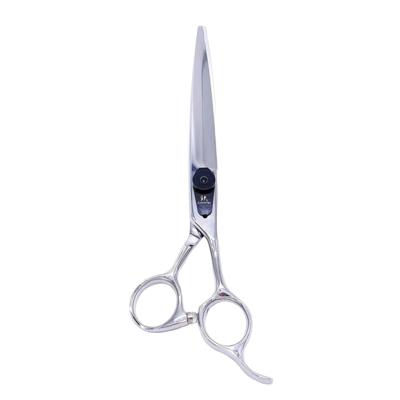
Verdict: a longer cutter with a stated slice edge. Suits: comb work that also involves drawing cuts. Deciding fields: VG10 steel, a convex slice edge and an offset handle in 6.0, 6.5 or 7.0 inches. Trade-off: the record describes a progression of lengths and does not give a blade measurement.
3. Juntetsu Master Flow: reach without a pointed tip
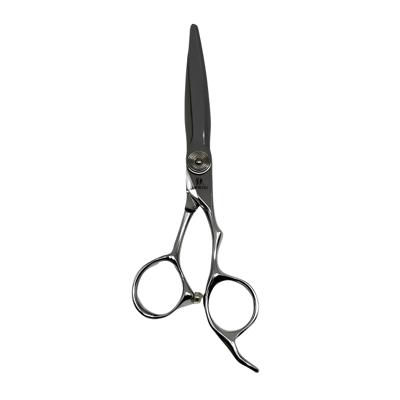
Verdict: a long sword-profile blade with a blunt tip. Suits: work near the skin or a guide where you prefer a less pointed blade end. Deciding fields: weight-reducing blade contours, a mirror finish, VG10 steel and a hand-adjustable tension screw. Trade-off: compare a pointed tool if fine detail is the main job.
4. Juntetsu Tsunami Elite: the pointed alternative
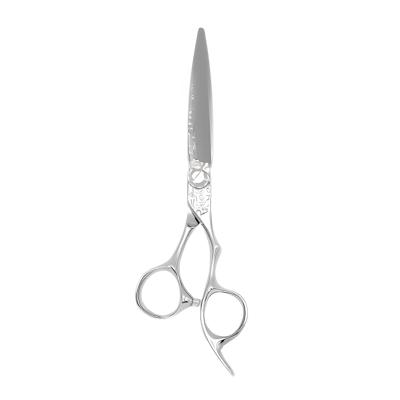
Verdict: a sword-shaped convex blade with a sharp-point tip. Suits: a stylist who wants length and a fine tip together. Deciding fields: VG10 steel, an offset handle and a micro-adjustment pivot in 6.0 or 7.0 inches. Trade-off: only two sizes, and the tip needs deliberate use and protected storage.
5. Yasaka SK: two lengths for long sections
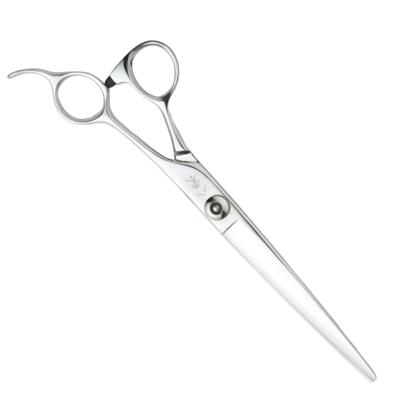
Verdict: a two-size menu built around the jump from 6.0 to 7.0. Suits: long sections and scissor-over-comb work. Deciding fields: an offset handle and a clam-shaped convex edge, right-handed. Trade-off: the two sizes list different screw formats, so check the selected option if pivot hardware matters to you.
6. Ichiro Precision Master: the 7.0-inch has a different blade
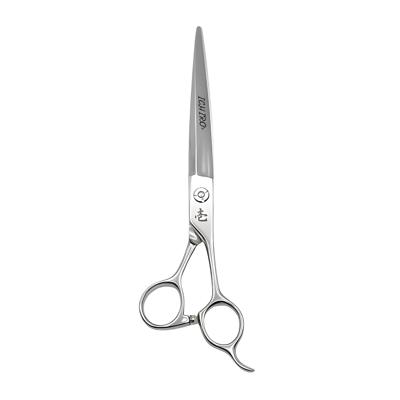
Verdict: a four-size menu where the longest size changes shape. Suits: someone who wants the same cutter at several lengths and a fine point. Deciding fields: a convex edge and a classic even handle; the 7.0-inch has a semi-sword profile and the shorter sizes have standard blades. Trade-off: the 7.0-inch is not just the same blade longer, so check the exact variant.
7. Mina Black Diamond: a flat bevel in black
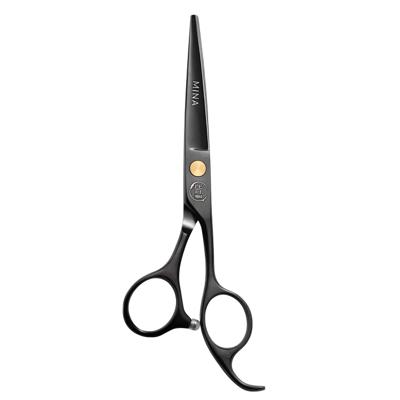
Verdict: the plainest edge description here. Suits: a buyer who wants a smooth flat-bevel edge at long reach. Deciding fields: a flat-bevel cutting edge, SUS440C steel, an offset handle and 5.5, 6.0 or 7.0 inches. Trade-off: the seven-inch option is a separate choice from the two smaller sizes, and there is no 6.5.
8. Joewell Classic: six lengths, opposing rings
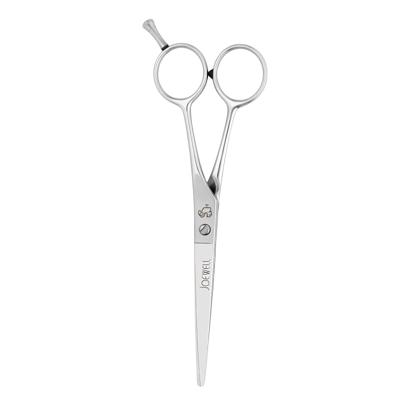
Verdict: the only opposing-ring handle in this list. Suits: a stylist who wants level rings at 7.0 inches. Deciding fields: Joewell’s Standard blade, a flat single bevel, a precision flat screw and a removable finger rest. Trade-off: Classic does not mean convex, and the opposing rings place the thumb differently from an offset handle.
For the left hand
All eight are right-handed. The Joewell LSF left-handed cutter comes in 6.5 or 7.0 inches, and Joewell publishes an 85 mm blade figure for the 7.0-inch option on its LSF model page. See the left-handed shortlist for other builds.
What did not make the eight
Juntetsu Yuki and Zenith both have a 7.0-inch option and sit close to the Juntetsu entries above on steel and edge. Ichiro’s Katana and Tsurugi, and Yasaka Barber, are covered in the barber list. The premium Juntetsu Mastersmith is on the list from A$600.
What would change this list
A record change, a new 7.0-inch model or a clearer maker blade measurement would change it. If you are still deciding on a job, see cutters by job. Compare all options in cutting shears and the barber collection, and use the knowledge base for wider guidance.
Questions people ask
Is a 7.0-inch cutter better than a 6.0-inch one? Not better, only longer. It adds nominal reach and moves the tip further from your hand, so choose the length you can place accurately.
Does 7.0 inches mean a 7-inch blade? No. It is the nominal size of the whole tool. Look for the maker’s blade measurement and note which endpoints it uses.
Further reading
- Scissorpedia, an information website on scissors in general.
Scissorpedia is a fellow member of the ShearAlliance; see ShearAlliance.
A closer look at shears
Comparing two models? Send us their names or SKUs and the cutting work you have in mind.
Latest blog posts
Read all blog posts
10 Japanese Shear Myths and What Is Actually True
Ten common beliefs about Japanese shears, from blade length to steel and origin, with a plain correction and a way to check each one.

10 Mistakes to Avoid When Buying Shears Online
Ten online-buying mistakes that cost stylists time and money, from trusting the family photo to skipping the returns terms, with a fix for each.