Mina Sakura II Set: Does the Fixed Thinner Fit Your Kit?
By JapanShears EditorialUpdated
On this page
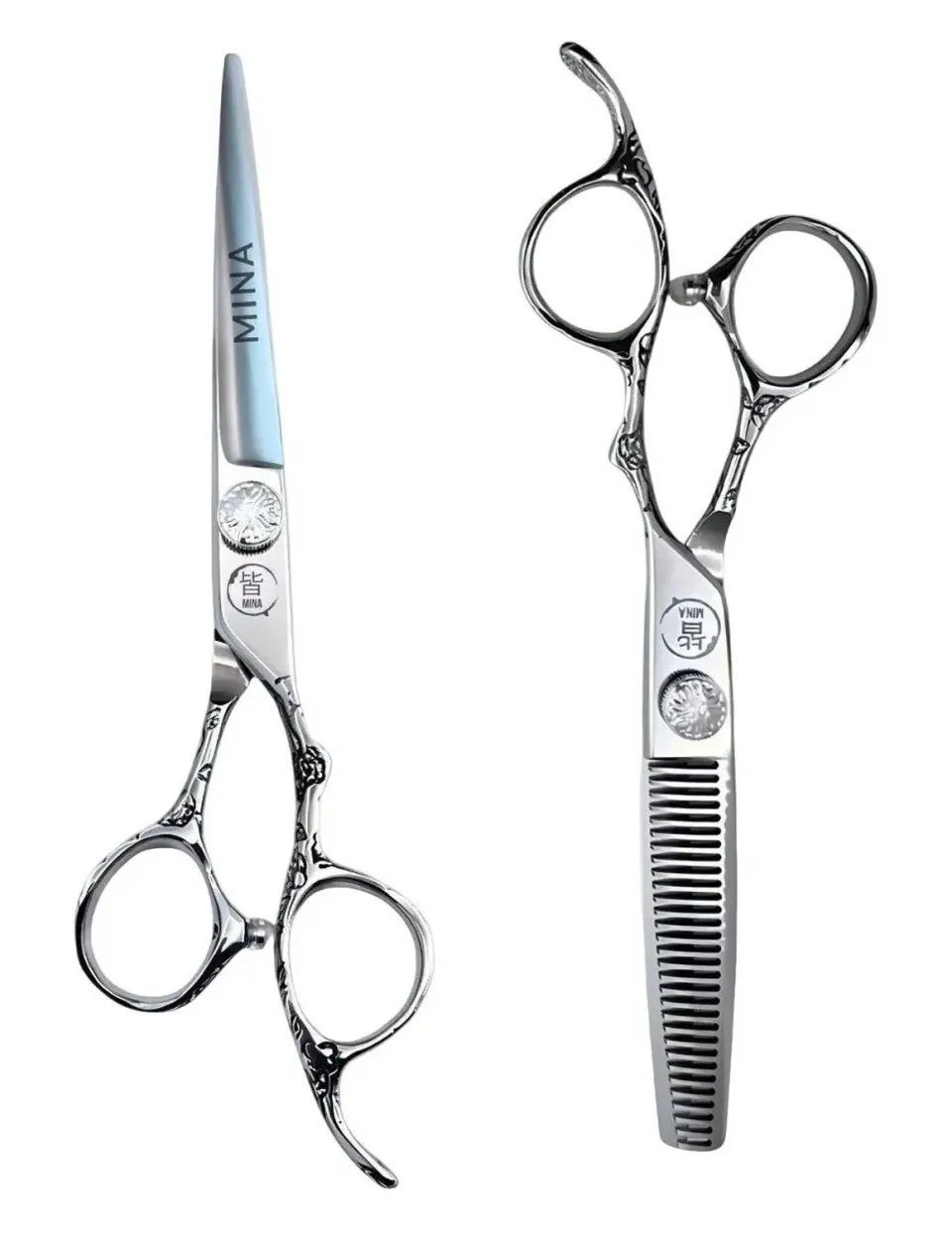
Choose the thinner as well as the cutter
The Sakura II menu changes the cutter’s length. Its thinner stays at 6.0 inches with 30 teeth. That makes the first buying question simple: do you want this fixed thinner as well as the selected cutter?
Both tools are right-handed with offset handles and Sakura engraving. The cutter has a convex edge and establishes the line or shape. Give the toothed tool its own job, such as a planned weight adjustment or transition, before deciding the pair belongs in your kit.
Read two selected options side by side
The 5.5-inch set and 7.0-inch set show what changes:
| Selected option | Cutter | Included thinner |
|---|---|---|
| MIN-SAK-S55 | 5.5 inches, convex edge | 6.0 inches, 30 teeth |
| MIN-SAK-S70 | 7.0 inches, convex edge | 6.0 inches, 30 teeth |
The listing also offers 5.0, 6.0 and 6.5-inch cutters. Choosing a longer cutter gives you a different nominal reach; it does not lengthen the thinner or change its tooth count. Use your familiar cutter and the size guide to decide which cutter length you want.
On the product page, Tools in this option in Specifications shows the selected cutter and fixed thinner separately, beside the set name and SKU. Reread it after changing size. Use Description for other construction details and accessories.
Give the 30 teeth a proper comparison
Thirty teeth identify part of the thinner’s construction. They do not establish a fixed removal rate, a universally gentle result or suitability for every fine-haired client. The section, planned shape and complete tooth design still belong in the decision.
Read the actual product gallery for the layout and use the tooth anatomy guide to name the features you are comparing. Another 30-tooth model’s published percentage does not become a specification for this Sakura thinner. The cut-ratio guide explains that boundary; the same-count comparison shows why two equal counts can describe different tools.
If you can compare a training tool or authorised sample, take a specific brief to your educator. The supervised observation guide keeps the intended change and retained shape in view.
Decide whether the bundle answers both needs
If you need a cutter and a thinner, and both these constructions fit the work, the set is a useful candidate. Read its selected price and included items on the product page.
If your cutter is already suitable, compare individual thinners before replacing it to get a matching finish. If you need a different thinner layout or length, choose that component deliberately rather than assuming the bundle must be the right pair. Our set guide helps you read both jobs separately.
The Sakura II set is right-handed. A left-handed kit needs its own dedicated cutter and thinner; browse the left-handed collection and check the hand of both tools in a pair.
A separate Sakura thumb mechanism
This Sakura II pair has fixed handles. The separately listed Sakura Double Swivel pair with a six-inch cutter adds a movable thumb assembly on each tool, with a six-inch, 30-tooth thinner beside its selected cutter. Shared engraving does not establish the same handle construction. Use the fixed-versus-swivel guide when the mechanism is the difference you want to compare; keep the tooth tool’s separate job in view.
Keep separate records for the two tools
Record the cutter’s selected length and the thinner’s fixed size and teeth individually. Store them in protected spaces so their blades cannot meet. Follow each tool’s instructions and the care guide if its action changes. A shared finish does not make the two jobs or their condition the same.