Same Tooth Count, Different Thinning Shears
Compare the full 30- or 40-tooth build before choosing.
By JapanShears EditorialUpdated
On this page
Two thinners with 30 teeth can have different tooth designs and maker cut-rate statements. Two 40-tooth tools can also change handle, blade and pivot. Matching the count gives you one field to hold steady; it does not finish the comparison.
Start with what the count leaves out
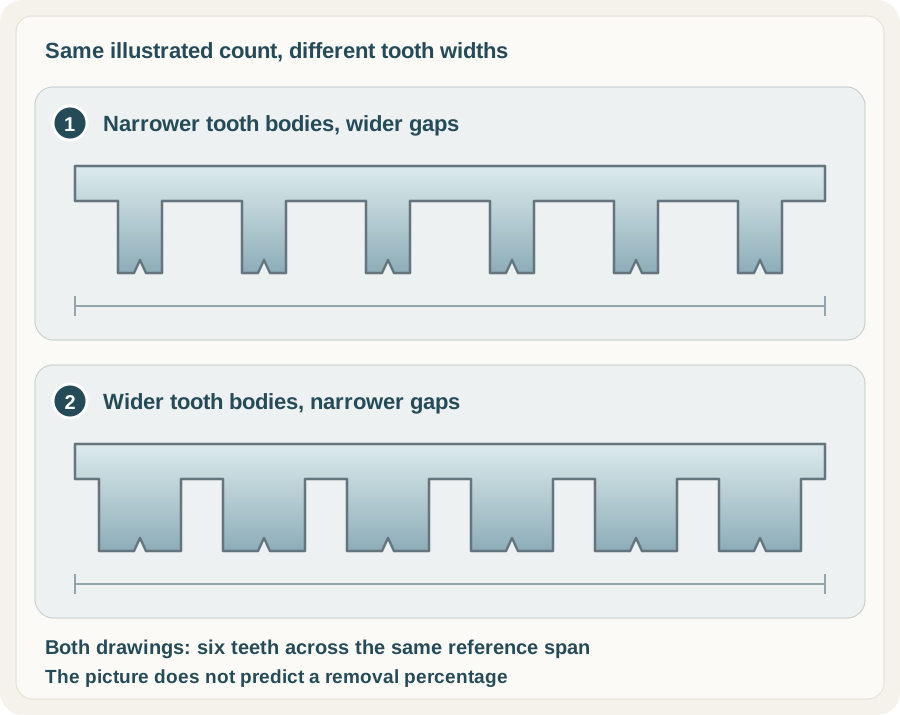
Count does not measure tooth width, the gaps between teeth or the shape of a tip groove. The anatomy guide gives those features a name so you can read a close-up without guessing its effect on hair.
 Open illustration at full size
 - Narrower bodies and wider gapsCount stays the same while the drawn tooth width is smaller.
- Wider bodies and narrower gapsThe same count can coexist with a different tooth body and gap arrangement. Read the exact model’s tip design too.
The drawing is a generic comparison of tooth layouts. Use the named maker’s specification for an actual tool; the illustrated widths and gaps do not describe the models below.
Three Yasaka options with 30 teeth
The separate Yasaka YS-30 listing contains 30S, 30W and 30T options. All three are right-handed, nominal 6.0-inch thinners with a traditional straight handle and ATS314 cobalt stainless steel. Retain the suffix when ordering or recording the tool.
Yasaka’s own 30S, 30W and 30T references supply these figures. Each lists 155 mm full length and a flat screw. The blade measurement is a separate span from the nominal six-inch whole-tool label.
This is a useful same-count comparison: the maker distinguishes three designs and three cut-rate ranges. It does not let us predict the percentage removed from a particular section. Use the cut-ratio guide for that distinction before treating a number as a technique instruction.
These suffix options are also separate from the YS 16-, 20-, 30- and 40-tooth listing. A 30T suffix is not another name for every Yasaka tool with 30 teeth.
Forty teeth in different Joewell builds
The E-40 and FX-PRO 40 are both right-handed 40-tooth tools. Their other construction fields differ.
| Field | E-40 | FX-PRO 40 |
|---|---|---|
| Nominal whole-tool size | 5.6 inches | 6.0 inches |
| Maker blade measurement | 61 mm | 61 mm |
| Blade term | Standard JOEWELL Blade | Sword & Flat Blade |
| Handle | Symmetrical | 3D offset |
| Pivot | Precision flat screw | Dry-bearing system |
| Maker cut-ratio statement | 35% | 35% |
Joewell’s E-series reference and FX-PRO reference support that comparison. The same stated blade length and ratio do not establish identical ring position or blade construction. If you want to change the grip, describe that change separately from the teeth through the fit guide.
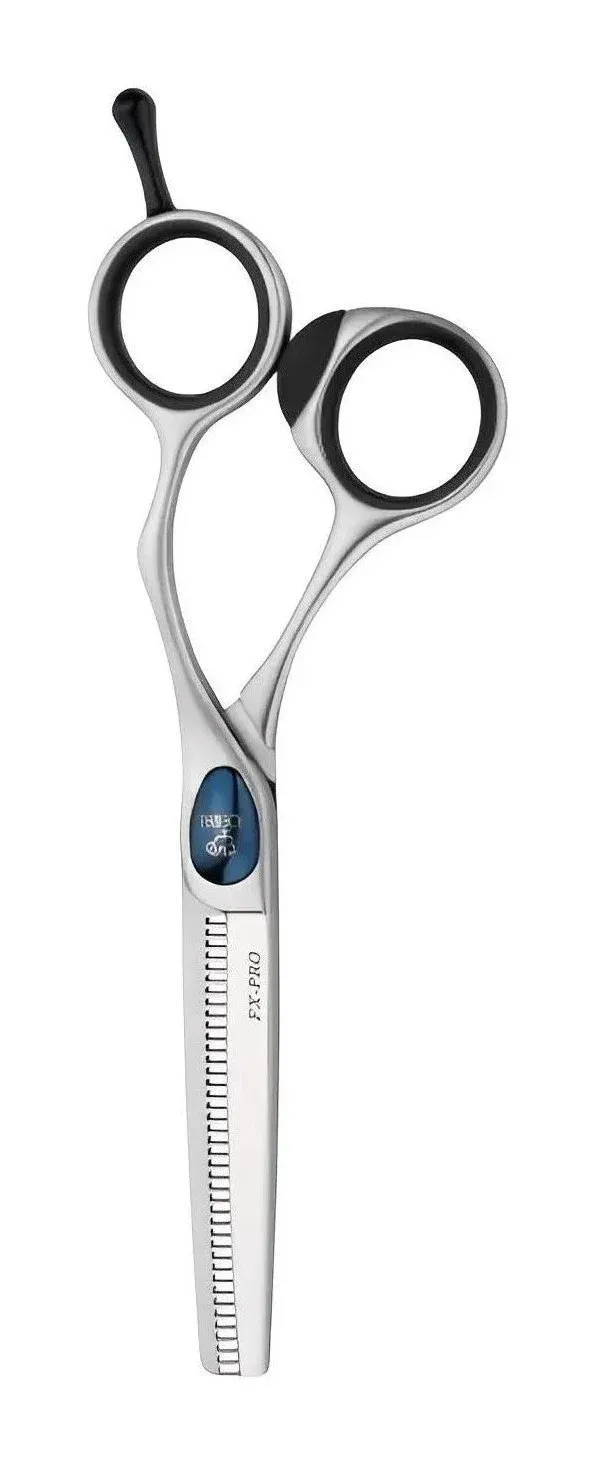
The right-handed SNT-40 adds another contrast. Joewell’s 2024 catalogue, printed page 35 specifies 40 teeth, 5.9 inches, tiny tip grooves, a dry-bearing system and a cut ratio of less than 5%. Its stated rate differs from E-40 despite the shared count. Keep that model-specific description intact rather than transferring an E-series figure to it.
Give the second tool a clear reason
You might be comparing a different tip design, a handle layout or a separate stated cut-rate range. Name that difference beside the job you want it to cover. “Another 30-tooth thinner” is too broad a brief to explain what your kit would gain.
Take the named options into a supervised comparison when you are learning their use. Your educator sets the placement and sequence; record the tool and feedback rather than applying a count-based rule to every section.
For the wider choice, the ten-layout map includes other counts and construction families. The thinning hub brings that choice back to the role, correct cutting hand and useful size for your working kit.