JapanShears Editorial · Published · Updated
Top 10 Thinning and Texturising Scissors to Compare
Compare ten real thinning and texturising constructions by tooth layout, hand, size, handle and maker cut-ratio statement, with the selected AUD price.
On this page
- Ten real layouts at a glance
- 1. Kasho Design Master 15T: compare the actual tooth layout
- 2. Kasho Design Master 38T: hold the series and size steady
- 3. Joewell E-30: a traditional-handle thinner
- 4. Joewell E-40: more teeth, a higher stated ratio
- 5. Joewell FX-PRO 40: change the grip and mechanism
- 6. Joewell SNT-40: a specific grooved-tip design
- 7. Joewell JGC-12: the maker’s Cut & Thinning tool
- 8. Yasaka YS-30S: keep the S suffix with the tool
- 9. Yasaka YS-30W: a different same-count option
- 10. Yasaka YS-30T: the T design’s own statement
- Read the tooth before repeating a pass
Choose a thinning or texturising scissor for the change you want to make, then compare the actual tooth design. The same count can appear on different tools, and more teeth does not always mean the maker states a smaller cut ratio.
These ten right-handed selections come from the JapanShears range. They include distinct designs within a series where the teeth or maker description change, rather than ten finishes of one tool. The numbers organise the comparison; they are not a performance ranking. Each card shows the selected listing and AUD price. Family photographs illustrate the models, while written specifications establish teeth, hand and size.
Ten real layouts at a glance
| Model or design | Teeth and nominal size | Useful construction difference |
|---|---|---|
| Kasho Design Master 15T | 15; 6.0 inches | Fifteen-tooth layout with an offset grip |
| Kasho Design Master 38T | 38; 6.0 inches | Another tooth arrangement in the same series |
| Joewell E-30 | 30; 5.6 inches | Traditional handle; maker states 15% |
| Joewell E-40 | 40; 5.6 inches | Same nominal length; maker states 35% |
| Joewell FX-PRO 40 | 40; 6.0 inches | 3D offset handle and dry-bearing system |
| Joewell SNT-40 | 40; 5.9 inches | Grooved tooth tips; maker states less than 5% |
| Joewell JGC-12 | 12; 6.2 inches | Maker’s Cut & Thinning design; stated 80% |
| Yasaka YS-30S | 30; 6.0 inches | S design; maker states 7–10% |
| Yasaka YS-30W | 30; 6.0 inches | W design; maker states 20–25% |
| Yasaka YS-30T | 30; 6.0 inches | T design; maker states 30–35% |
These percentages are attributed model statements. They are not predictions of how much of your next section will disappear in one closure. Section, placement and method remain part of the working decision.
1. Kasho Design Master 15T: compare the actual tooth layout
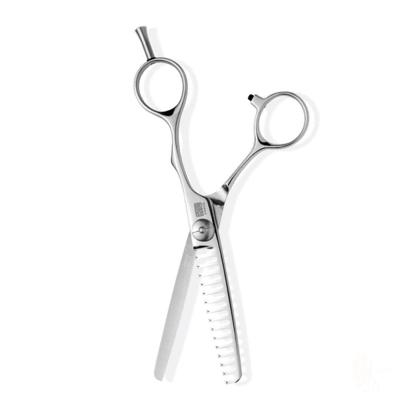
The selected Design Master is a right-handed six-inch texturiser with 15 teeth and an offset handle. It introduces a visibly different tooth arrangement from the 38-tooth model beside it, while keeping the family and nominal length useful for comparison.
Kasho’s Design Master reference identifies the series’ toothed options. Fifteen is a construction count, not a removal percentage or a universal instruction to make a particular texture. Choose the effect and established method before treating a lower count as the answer.
2. Kasho Design Master 38T: hold the series and size steady
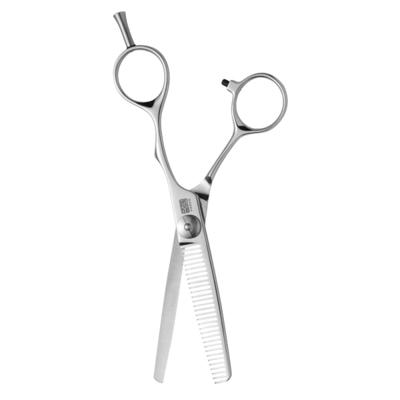
This right-handed six-inch Design Master has 38 teeth, an offset handle and listed semi-convex construction. Put it beside the 15T when you want to examine tooth arrangement without changing maker, nominal length and handle family at once.
The count difference cannot tell you which model will make the lighter change in every section. Inspect tooth form and gaps, then ask how that model fits the task. The satin cutting shears in the same series are separate tools; their blade description does not make them thinners.
3. Joewell E-30: a traditional-handle thinner
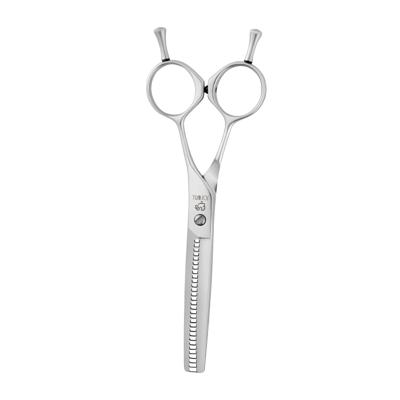
E-30 is a right-handed 5.6-inch, 30-tooth thinner with symmetric rings, the Standard JOEWELL Blade and a flat screw. Joewell’s E-series reference states a 15% cut ratio for this model.
It gives you a clear construction to compare when you prefer a traditional handle. That stated ratio remains attached to E-30; it cannot be assigned to every other 30-tooth tool. If the handle or a particular tooth-tip feature is your requirement, inspect those fields as well.
4. Joewell E-40: more teeth, a higher stated ratio
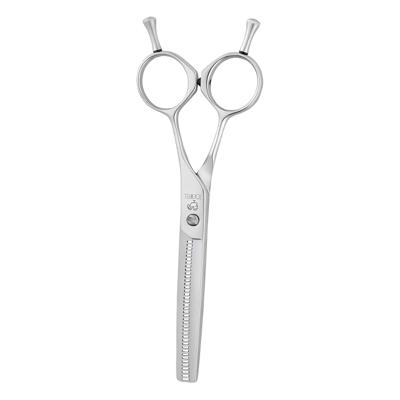
E-40 keeps the E family’s right-handed 5.6-inch nominal length and traditional layout, with 40 teeth. Joewell’s E-series reference states 35% for it, compared with 15% for E-30.
That is a useful counterexample to the shortcut that more teeth always means less removal. The ratio distinguishes two particular models; it does not prescribe the passes or placement for your haircut. Choose between them with the intended weight or texture change already in mind.
5. Joewell FX-PRO 40: change the grip and mechanism
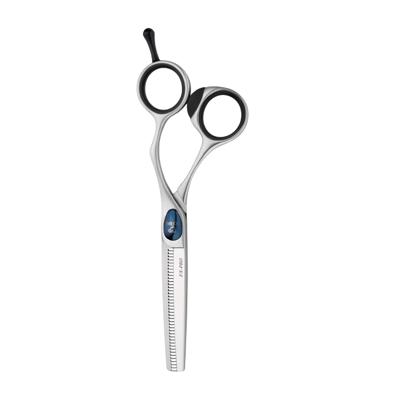
FX-PRO 40 is a right-handed six-inch, 40-tooth tool with a 3D offset grip, Sword & Flat blade and dry-bearing screw system. Those details come together in Joewell’s FX-PRO thinner reference.
It belongs beside E-40 when a different complete handle and mechanism are part of the buying brief. Their shared 40-tooth label does not establish the same design or action. Use the supplied model directions for care rather than borrowing the pivot routine from another Joewell.
6. Joewell SNT-40: a specific grooved-tip design
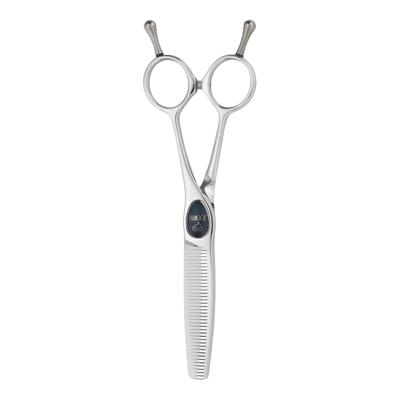
SNT-40 adds tiny grooves at the tooth tips. Joewell’s 2024 catalogue, printed page 35 identifies the 40-tooth model at 5.9 inches with a cut ratio of less than 5%.
The point of comparison is that named tooth-tip design and its maker statement. It is a different 40-tooth choice from E-40 or FX-PRO 40, rather than evidence that all high-count thinners behave lightly. Keep the purpose precise, particularly when deciding how much weight you want to retain.
7. Joewell JGC-12: the maker’s Cut & Thinning tool
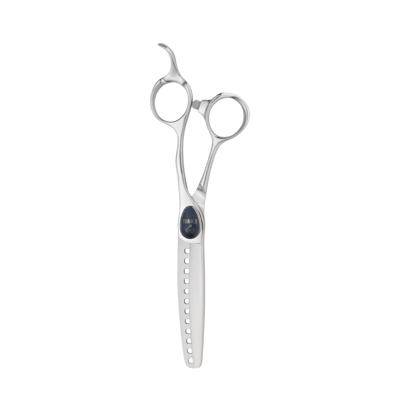
JGC-12 is a right-handed 6.2-inch, 12-tooth model with a dry-bearing system. The JGC reference describes its Cut & Thinning role and states an 80% cut ratio.
That places it in a different buying discussion from SNT-40. Do not select it simply because twelve teeth sounds similar to another texturiser’s count. Read the maker’s intended role and use the method you have learned for that construction; a general blending-tool brief is too vague to settle this choice.
8. Yasaka YS-30S: keep the S suffix with the tool
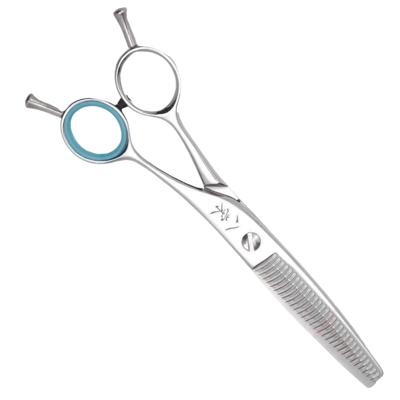
YS-30S is a right-handed six-inch, 30-tooth design. Yasaka’s 30S specification states a 7–10% cut rate. The S suffix is part of the actual model choice, not decoration after a generic YS-30 name.
It gives you one of three same-count designs to compare when the intended change differs. Keep the selected S option visible in the product card and order. A family image or a shared count will not distinguish the W or T tool for you.
9. Yasaka YS-30W: a different same-count option
The selected YS-30W also has 30 teeth and a six-inch nominal length in a right-handed build. Yasaka’s 30W reference states a separate 20–25% cut rate.
The useful difference is the actual W design and maker statement while the count stays constant. This comparison is why a tooth-count filter is only a starting point. Keep the expected task and amount of weight you want to retain beside the model; the published range is not a personalised cutting result.
10. Yasaka YS-30T: the T design’s own statement
YS-30T completes the same-count comparison. It is another right-handed six-inch, 30-tooth tool, with Yasaka stating 30–35% for this particular design.
Choose it because that model fits a defined working brief, rather than because it sits tenth in this article or has the largest stated range within these three examples. The S, W and T choices are distinct constructions in one listing. Keep the exact suffix with any enquiry, order or care record.
Read the tooth before repeating a pass
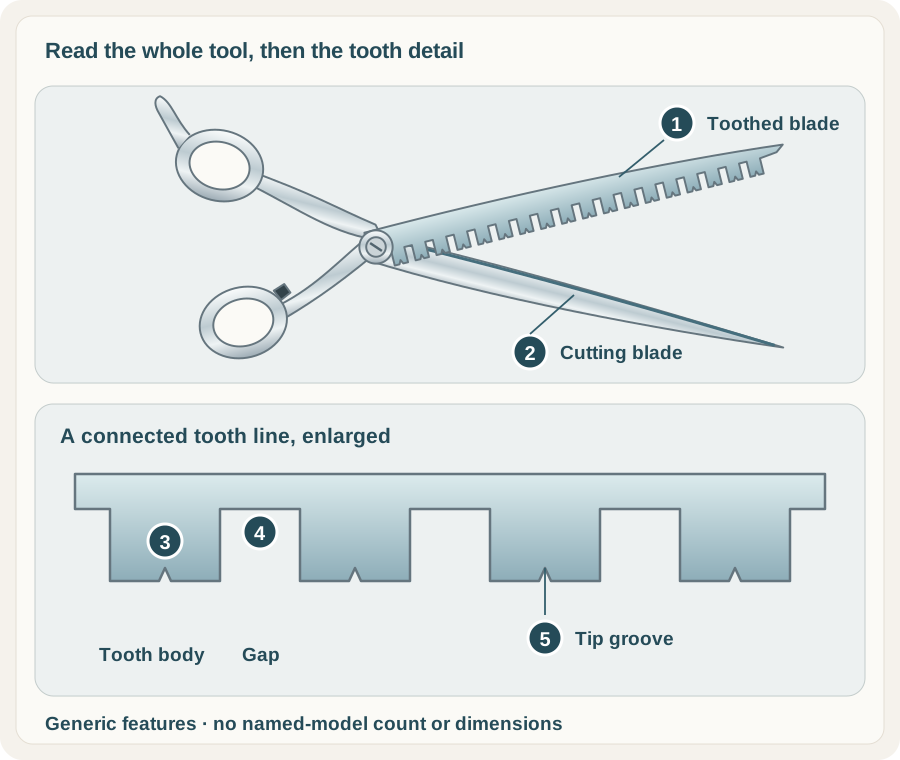 Open illustration at full size
- Toothed bladeThe blade carrying the row of teeth. Look at the complete layout as well as the count.
- Cutting bladeThe opposing continuous blade closes against the toothed construction.
- Tooth bodyThe metal projection joined to the blade’s continuous base. Width and shape are separate from count.
- GapThe space between adjacent tooth bodies. Compare its shape and spacing.
- Tip grooveA feature at this illustrative tooth tip. Other models may use different grooves or a flat tip.
A tooth body, gap and tip feature describe different parts of the tool. Use actual model specifications and clear photographs to compare them, then keep the count with the complete design. The same-count guide walks through the Yasaka options and different 40-tooth Joewell builds.
If your cutting hand is left, start with a confirmed left-hand tool. The Rose Lefty thinner is a separate six-inch, 30-V-tooth choice; these right-handed selections are not a substitute.
Use the thinner buying questions to name the job first. The cut-ratio explanation keeps maker numbers in context, and a supervised comparison brief gives an educator a specific result to review before you add another tool.
A closer look at shears
Comparing two models? Send us their names or SKUs and the cutting work you have in mind.
Latest blog posts
Read all blog posts
9 Professional Hair Scissor Stores to Compare in Australia
Compare Australian buying routes for professional hair scissors, with range differences, delivery-policy links, return conditions and a clearly labelled publisher entry.
10 Scissor Cases, Wallets and Holsters to Compare
Compare ten different scissor storage layouts, from a single-tool case and paired pouch to fold wallets, larger cases and working holsters.