JapanShears Editorial · Published · Updated
Reading a Three-Shear Kit: Two Cutters and a Thinner
Read a real Ichiro Offset Master option component by component, separating cutter sizes, the fixed thinner and each tool’s stated material.
On this page
Read the kit one tool at a time
A material preference cannot tell you how many working tools you need. Start with the cutter’s job, then decide whether a second cutter and a thinner each fill a useful gap. A three-piece bundle should give you three clear descriptions.
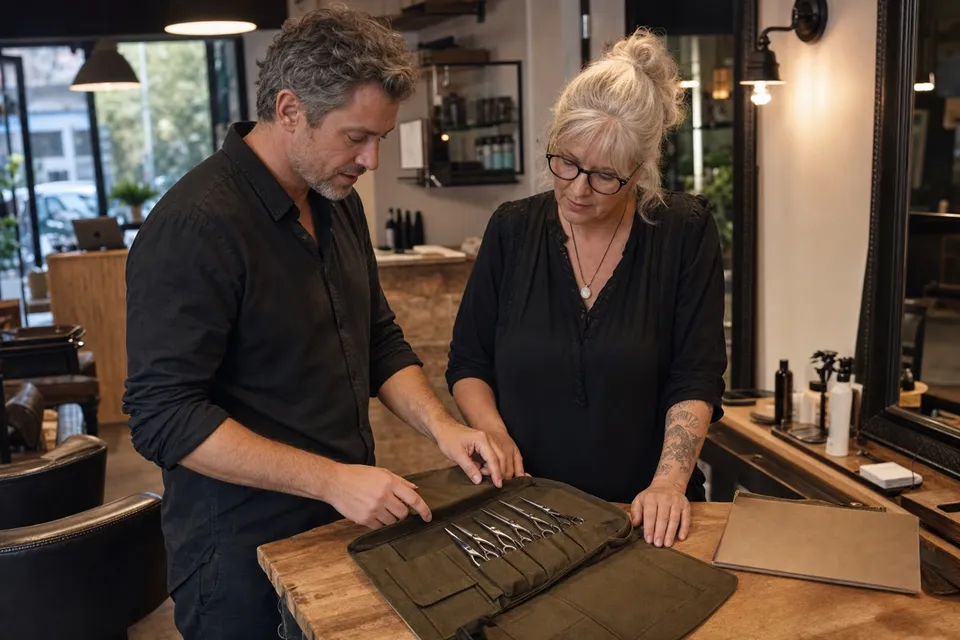
The Ichiro Offset Master is a real component example. The selected option pairs a 5.5-inch cutter with a 6.0-inch cutter and a fixed 6.0-inch V-tooth thinner. Its listing states 440C across the tools; this is a 440C kit, not a ZA-18 example.
What that selected option covers
| Piece | Question for your kit |
|---|---|
| 5.5-inch cutter | Does this keep the familiar reach you want for the main cutting job? |
| 6.0-inch cutter | Would extra nominal reach cover another job, or would a same-length backup suit you better? |
| Fixed 6.0-inch V-tooth thinner | Do you need a separate toothed tool for the weight or blending task? |
The two cutter sizes are selected together; the thinner’s size is its own field. Our set-reading guide explains that distinction. A tooth description also does not supply a universal removal rate: the thinning guide shows what else belongs in that comparison.
Keep material claims attached to each piece
Write down the hand, nominal size, edge or teeth and stated material for each tool. If another bundle advertises a grade, establish which components carry it. A ZA-18 claim needs a named model specification, not a substitute kit with another material.
A powder-polished finish is a different field again; the powder-label guide explains why it cannot identify the blade’s production route.
Caring for a three-piece kit
Each tool in a kit needs its own routine. Clean the two cutters and the thinner separately after each client, and dry the pivot area of each. Brush hair from between the thinner’s teeth before storing it.
Give every tool its own slot in the case, so blades and teeth never touch. Record each one under its own ID in your tool record. If one tool goes for service, the other two remain in use.
When a kit is the right purchase
A kit makes sense when every piece has a job you can name. If two of the three tools would sit unused, two single listings are the cleaner purchase.
Write the role of each piece before ordering: the main cutter, the second reach and the toothed tool. If you cannot fill in one of the three, that piece is not yet part of your brief. The set-reading guide applies the same test to two-piece sets.
Buy the coverage you will use
For a first kit, your educator’s requirements can keep the cutter choice focused. For an established kit, the second-tool playbook helps decide whether the gap is reach, a backup or a toothed tool. There is no need to add another cutter just to complete a material theme.
Give each tool its own place and record in the ownership routine. If one tool’s cut changes, identify that tool in the condition brief rather than treating the whole kit as one item.
A closer look at shears
Comparing two models? Send us their names or SKUs and the cutting work you have in mind.
Latest blog posts
Read all blog posts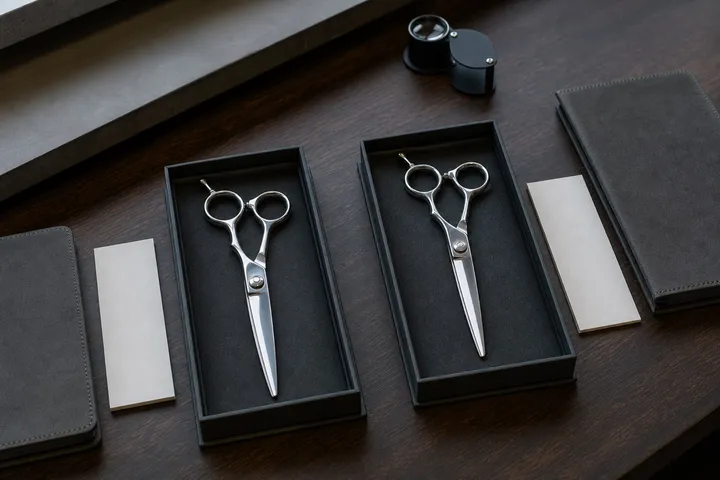
13 places to buy professional hair scissors online
Thirteen websites that sell professional hair scissors, listed A to Z, with a short box of things to check before you buy.
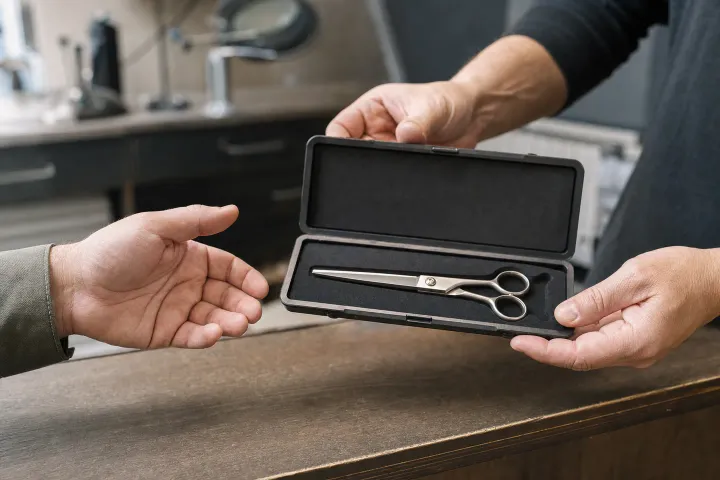
10 Christmas Gift Ideas for Hairdressers and Barbers
Ten gift ideas for a hairdresser, barber or apprentice, by situation: gift card, case, holster, care kit, combs, razor blades and a first-kit contribution.