Left- and Right-Handed Hair Shears: What Changes
Blade arrangement and cutting hand are separate from ring symmetry, finish and size.
By JapanShears EditorialUpdated
On this page
Choose for the hand that operates the shear
The handed build concerns the blade arrangement and the handle you operate. A dedicated left-handed shear uses a mirrored arrangement compared with a right-handed build. Choose that requirement first, then compare size, ring position and cutting edge within it.
A traditional handle can have equal-looking rings and still be made for one cutting hand. An offset cutter can be offered in separate left- and right-handed models. Those are two different construction fields, so keep both in view.
Look at the two halves, not only the rings
The halves cross at the pivot and carry the blades through closure. A left-handed construction reverses that arrangement. Jaguar’s left-handed construction explanation describes mirror-image blades; that is the mechanical distinction illustrated here.
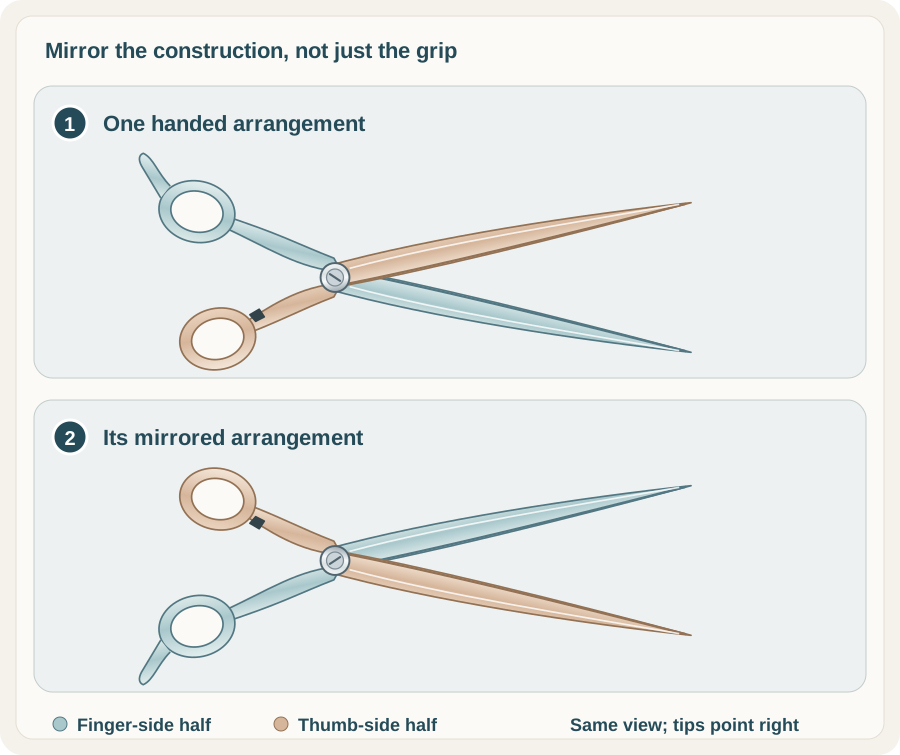 Open illustration at full size
 - One handed arrangementFollow each coloured half from its ring through the pivot to its blade.
- Its mirrorThe ring, shank and blade arrangement is mirrored together. Turning the first tool over in your grip does not rebuild it.
The fixed view in the schematic lets you compare the arrangements. A product photo can be taken from another side or angle, so use the maker’s named model and handed specification when identifying a real shear. The generic drawing is a vocabulary aid, rather than a test of an unknown tool’s authenticity.
Ring symmetry answers another question
In-line or traditional describes the relative ring positions. Offset staggers them. A compatible insert reduces the space within a ring. None of those terms establishes which blade arrangement the tool has.
For example, the Yasaka Traditional 5.5-inch option has in-line rings and is right-handed. The local Joewell LC Lefty offers an in-line layout built for the left hand. Similar ring positions can therefore belong to different handed builds.
The offset-versus-crane guide explains handle vocabulary. The fit guide then separates ring opening from the position of the whole handle.
Select the actual handed option
The Kasho Design Master range gives a clear example. Its right-handed offset listing offers local 5.0-, 5.5- and 6.0-inch sizes; its separate LEFTY listing offers 5.5 and 6.0 inches. Kasho’s series reference also distinguishes the left-handed models.
| Selected 5.5-inch option | Cutting hand |
|---|---|
| Design Master Offset, SCKDM55OS | Right |
| Design Master Offset LEFTY, SCKDM55OS L | Left |
The similar series name and nominal size help organise the comparison. They do not make the two options interchangeable. Keep the full selected option in your order and tool record.
Turning the tool over keeps the same construction
Rotating a right-handed shear changes the way you hold it and which face you can see. It leaves the same two halves, blade crossing and grind in place. A symmetric-looking grip or a movable thumb ring is also insufficient evidence that a cutter is built for either hand.
If you have trained with a particular tool or grip, take the proposed change to your educator. Describe the cutting hand and the existing tool, then compare a named candidate. A generic rule about where every stylist must put their fingers would miss the tool and technique being used.
Check every tool in a pair
A thinner needs its own handed specification, just as a cutter does. In the Ichiro Rose Lefty set, the cutter and thinner are two separate left-handed 6.0-inch tools. Read both components rather than applying one tool’s role or tooth details to the other.
Use the left-handed cutter shortlist for ten cutting models, or the left-hand thinning example for a toothed tool. The left-handed collection also includes pairs; check each component’s hand before comparing its reach and ring layout.