Your First Japanese Shears: A Kit in Stages
Buy one cutter first, add care next and leave the rest until your work asks for it.
By JapanShears EditorialUpdated

On this page
- What should an apprentice buy first?
- How do the stages work?
- How do you work out what your course wants?
- Which fields matter most for a first cutter?
- Is a set a good first purchase?
- How should an apprentice think about budget?
- Stage 2: what does care and storage include?
- When not to buy yet
- Common mistakes
- Questions people ask
- Further reading
Short answer. An apprentice usually needs one controllable cutter first, in the hand they cut with, matching what their course or educator asks for. Care and storage come next, a thinner only when the course introduces one, and a second length only when a specific job needs it. Buying in stages keeps the budget in step with what you can already use.
Key takeaways
- Ask your educator or course list before you shop. Their requirements outrank any general advice, including ours.
- One well-chosen cutter beats a bag of tools you cannot yet control.
- Hand comes first: confirm a true left-handed build if you cut left-handed.
- Care and a protective case are part of the first purchase, not extras for later.
- A set is a convenience only if you will use both tools soon.
What should an apprentice buy first?
One cutter, in your cutting hand, in a length your course accepts. It does not need to be the most advanced tool in the catalogue; it needs to be one you can control and look after. Check that the listing states the hand, nominal size, handle and edge for the option you select, using how to read a spec sheet.
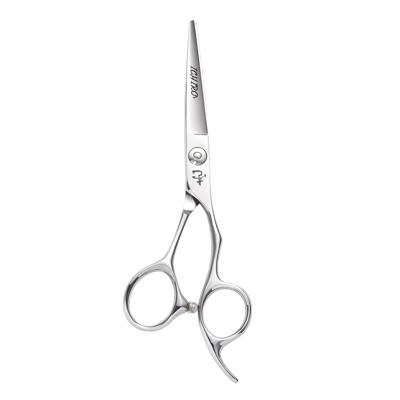
How do the stages work?
Work through these in order. Each stage waits for the one before it.
| Stage | What to do | Why in this order |
|---|---|---|
| 0. Before shopping | Read your course or workplace list; ask your educator what they require | Their list overrides everything else |
| 1. One cutter | Choose hand, nominal size, handle and edge, then buy one tool | You learn control on a single tool |
| 2. Care and storage | A protective case, a soft cloth and the maker’s recommended oil | The tool needs looking after from day one |
| 3. A thinner | Only when your course introduces thinning | Weight removal is a technique with supervision |
| 4. A second length | Only when a specific job needs different reach | It is an addition for a job, not a milestone |
How do you work out what your course wants?
Ask three questions before spending anything. Does the course supply shears, or must you bring your own? Is there a required size, a preferred handle or a named brand? Is a thinner expected in the first term? Write the answers down. If the course gives no guidance, the first-shears help page and the apprentice shortlist give a starting field to bring to your educator.
Which fields matter most for a first cutter?
In this order: hand, nominal size, handle, edge. Material and finish come after.
- Hand. If you cut left-handed, confirm a true left-handed build; see the left-handed checklist.
- Nominal size. Start from the length used in training; see choosing blade length by task.
- Handle. Opposing, offset, crane or swivel; use handle types explained and keep your course’s choice in view.
- Edge. Read the edge for your selected size; see edge geometry.
The Shear Finder filters the range by tool, hand, length and budget, and the cutting collection shows what is listed.
Is a set a good first purchase?
Sometimes. A set bundles a cutter and a thinner, which suits you if your course asks for both soon. If it does not, a set can leave you holding a tool you cannot yet use. Read the contents of each tool in the set: the cutter and thinner each have their own size, hand and description. The sets collection lists them, and our sets comparison shows contents side by side.
How should an apprentice think about budget?
Work out what you need now, and set that against what you can afford without stretching. A modest, well-matched cutter you look after is a sounder start than a more expensive tool that does not fit your course. Our budget guide explains how to compare options without chasing a price tier, and prices on the product pages come from the current record, so check them on the day.
Stage 2: what does care and storage include?
A protective case or sleeve, a soft cloth for wiping and the oil the maker recommends for your model. Read the oil, case and accessory guide and the maintenance routine. A shear dropped or left damp is a repair problem, so building the habit from the first week saves a lot of trouble.
When not to buy yet
Do not buy while your course list is unclear, while you are unsure of your cutting hand or while you cannot try a candidate in your grip. Waiting a week to ask a question costs less than a tool that does not suit. Also hold off on a second tool until you can say what job it does that the first cannot.
Common mistakes
- Buying before asking the educator. Their list may name a size or handle.
- Chasing a material name. Hand, size, handle and edge come first.
- Buying a set you will not use. Check that you need both tools now.
- Skipping the case. Storage is part of the tool.
- Using the new shear on anything but hair. Follow the maker’s care guidance.
Questions people ask
What size should my first shear be?
Start from the length your course uses, then compare blade lengths. See choosing blade length by task.
Do I need a thinner as a first-year apprentice?
Ask your educator. Many courses introduce one later. See thinners in plain English.
Should I buy the cheapest pair?
Choose the pair that matches your course and hand, and that fits your budget comfortably. Price alone does not tell you whether it suits you.
Where can I read more?
Start with the guides listed under Further reading below.
Further reading
- Beginner and apprentice shortlist, first-shears help page and the knowledge base.
- Start comparing Japanese shears and the beginner technique checklist.
- Buying online in Australia for returns and delivery.
- Scissorpedia for general scissor reference.
Scissorpedia is a fellow member of the ShearAlliance (see ShearAlliance).