Cobalt on a Shear Listing: What Each Name States
Which stocked cutters name a cobalt material, which only carry the word in the model name, and how to tell them apart.
By JapanShears EditorialUpdated
On this page
- What does cobalt mean on a shear listing?
- Which cutters name ATS314 cobalt stainless steel?
- Which cutters name the CBA-1 cobalt-base alloy?
- Which “Cobalt” model names need a second look?
- What does a cobalt label not tell you?
- How do you check a cobalt claim before you buy?
- Common mistakes
- Questions people ask
- Further reading
The word cobalt appears on shear listings in three different ways, and only two of them name a material. A model can state a cobalt stainless steel, state a cobalt-base alloy, or simply carry the word in its name. This page sorts the cutters from Japanese brands in the catalogue into those groups, so you can see what each listing actually states.
Short answer. Cobalt on a shear listing can mean cobalt-bearing stainless steel, such as ATS314, or a separate cobalt-base alloy, such as Joewell’s CBA-1. A model name that contains Cobalt may state neither. Read the material line on the exact model, and treat a cobalt label as a material statement, not a promise of edge life, sharpness or feel.
Key takeaways
- Cobalt-bearing stainless steel and a cobalt-base alloy are different descriptions. The cobalt guide explains the split.
- In this catalogue, Yasaka, Kasho and Juntetsu name ATS314 on some cutters, and Joewell names CBA-1.
- Four Juntetsu models carry Cobalt in the name or the material line with different details: read each one separately.
- A cobalt label does not state hardness, edge life or how a shear will feel in your hand.
- Compare the whole specification: blade, handle, pivot and size sit beside the material.
What does cobalt mean on a shear listing?
Cobalt on a listing is a word that describes a material, a model name or both, so the first job is to decide which. There are two material meanings:
- Cobalt-bearing stainless steel. Cobalt is one element in a stainless steel whose base is iron. Yasaka describes ATS314 as cobalt stainless steel, and Takefu’s VG10 reference includes cobalt in its representative composition.
- A cobalt-base alloy. Cobalt is the base metal of the alloy. Joewell names Cobalt Base Alloy CBA-1 as a distinct material.
Those are not the same thing, and VG10 and ATS314 are not the same grade either. The ATS314 guide, the VG10 guide and the steel library give each name its own context. The third use is a model name: Cobalt Apex or Cobalt Sword is a name first and a material statement only if the record says so.
Which cutters name ATS314 cobalt stainless steel?
Ten cutters across three brands name ATS314 in their records, and the way each record words it differs slightly. This table reports each record’s own wording, without ranking the models.
| Cutter | Material as listed | Blade and handle as listed | Sizes listed |
|---|---|---|---|
| Yasaka SL | ATS314 cobalt stainless steel | Clam-shaped convex edge, slim offset handle | 5.5 and 6.0 inches |
| Yasaka Traditional | ATS314 cobalt stainless steel | Clam-shaped convex edge, in-line rings | 4.5, 5.0, 5.5 and 6.0 inches |
| Yasaka Barber | ATS314 cobalt stainless steel | Clam-shaped convex edge, semi-offset handle | 7.0 inches |
| Yasaka Offset | ATS-314 listing | Convex edge, offset handle | 4.5, 5.0, 5.5 and 6.0 inches |
| Juntetsu Sword Professional | ATS314 cobalt stainless steel | Angled convex blade, offset handle, ball-bearing pivot | 6.0, 6.5 and 7.0 inches |
| Juntetsu Mastersmith Cobalt | ATS-314 cobalt steel | 45° convex edge, extended offset handle | 7.0 inches |
| Kasho Silver Offset | ATS314 steel | Mirror-polished hollow convex blades, offset handle | 5.5 to 7.0 inches |
| Kasho Silver Offset Black | ATS-314 | Convex blade, offset handle, black DLC coating | 5.5, 6.0 and 6.5 inches |
| Kasho Silver Straight | ATS-314 listing | Convex blade, classic straight handle | 5.5 and 6.0 inches |
| Kasho Sagano Offset | ATS314 cobalt-alloy stainless steel | Sword and hollow-ground upper blade over a convex lower, offset handle | 5.5, 6.0, 6.5 and 7.0 inches |
Two things stand out when you read the table. The same material name sits on cutters with different handles and edges, so the material does not decide the handle or the blade. And the wording varies from “cobalt stainless steel” to a bare “ATS-314 listing”. Where a record only says ATS-314 it states the grade and not what cobalt means, and the ATS314 guide fills in the context. Kamisori models are outside this list.
Which cutters name the CBA-1 cobalt-base alloy?
Three Joewell cutters name CBA-1, and the record’s wording is the safest guide to what that means. Joewell’s own materials reference names Cobalt Base Alloy CBA-1 as a distinct material term.
| Cutter | Material as listed | Blade and handle as listed | Sizes listed |
|---|---|---|---|
| Joewell Cobalt | CBA-1 alloy | Standard Joewell blade, traditional straight handle | 5.0, 5.5 and 6.0 inches |
| Joewell New Cobalt | CBA-1 cobalt alloy | Narrow standard blade, black finish, classic or offset handle | Classic 4.5 to 6.0; offset 5.5 and 6.0 inches |
| Joewell Supreme Convex | Cobalt Base Alloy CBA-1 | Convex PRO blade, offset handle, dry-bearing system | 5.7 and 6.0 inches |
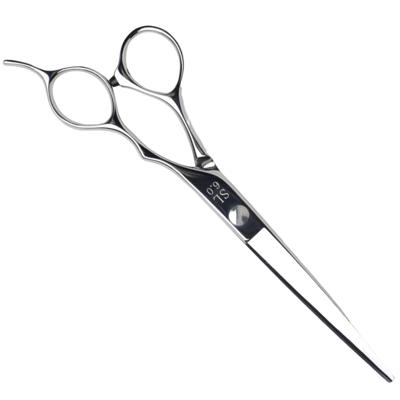
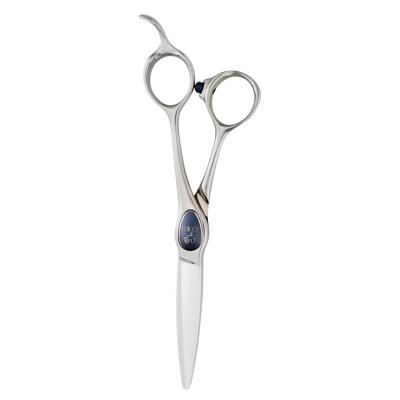
Note the size on the Supreme Convex: it lists 5.7 and 6.0 inches, not 5.5. A different nominal size is a different option, so do not round it into a 5.5-inch comparison.
Which “Cobalt” model names need a second look?
Four Juntetsu models carry cobalt in the name or the material line, and each record says something different. Read the line on each, and do not assume that the name sets the material.
| Model | What the name says | What the record states |
|---|---|---|
| Cobalt Apex | Cobalt | Takefu VG-10 Cobalt Steel, reinforced-tip blade, 45° convex edge, offset handle |
| Cobalt Vertex | Cobalt | Takefu VG-10 Cobalt Steel, slide-cutting blade, 45° convex edge, offset handle |
| Cobalt Sword | Cobalt | A sword-profile convex blade and 3D offset handle; the record does not state a steel grade |
| Aero-Pro Cobalt | Cobalt | Aluminium-cobalt alloy construction, stepped convex edge, offset handle |
The Apex and Vertex records state a VG-10 cobalt steel, which is a cobalt-bearing stainless description. The Aero-Pro Cobalt states an aluminium-cobalt alloy, which is a different material again. Cobalt Sword states a blade profile and a handle but no steel line, so its name alone tells you nothing about the material. The blade guide separates profile, edge and cutting-line curve, and the sword profile guide explains why a Sword blade profile is not a material.
What does a cobalt label not tell you?
A cobalt label states a material, and nothing more. These are the things it does not establish:
- Edge life or sharpness. A material name does not state how long an edge lasts or how it cuts. The edge retention guide covers what is, and is not, claimed.
- Hardness. A record may or may not list a hardness figure. Where it does, the figure belongs to that exact model and its maker.
- Handle, blade and pivot. Those are separate fields. The handle guide and tension systems guide describe them.
- Feel in your hand. Only your own hand, with the shear in it, answers that. See the fit guide.
How do you check a cobalt claim before you buy?
Check it in four steps, and stop at the first one that fails.
- Find the material line on the selected option. Do not use the model name or a headline.
- Name the type of claim. Is it cobalt-bearing stainless, a cobalt-base alloy or neither?
- Match it to the maker’s page. Yasaka describes ATS314 on its materials page, and Joewell names CBA-1 on the materials reference linked above.
- Keep the rest of the specification in view. Compare edge, handle, pivot and size beside the material, using how to compare two similar shears fairly.
If a record is silent about the material, ask before you order rather than guess.
Common mistakes
- Reading Cobalt in a model name as a material. Read the specification line.
- Treating all cobalt as one thing. Cobalt-bearing stainless steel and a cobalt-base alloy are different descriptions.
- Treating the label as a result. It states a material, not edge life or feel.
- Rounding a listed size. A 5.7-inch option is not a 5.5.
Questions people ask
Is ATS314 the same as cobalt steel?
ATS314 is described by Yasaka as cobalt stainless steel. That is a cobalt-bearing stainless steel, which is a different description from a cobalt-base alloy such as CBA-1.
Does Cobalt in a model name mean the shear is made of cobalt steel?
Not necessarily. The name is a name. Read the material line: for Juntetsu Cobalt Sword, for example, the record states a blade profile and handle but no steel grade.
Is a cobalt shear better than one without?
This page does not compare quality. A cobalt label is one line on a specification, and it does not state edge life, sharpness or feel. Compare the whole specification for your hand and work.
Further reading
- Cobalt in hair shears: two different material terms and the what alloying elements do guide.
- How Japanese shear steel names work.
- Scissorpedia, an information website on scissors in general.
JapanShears is part of the ShearAlliance, working with other trusted scissor websites.