Japanese and German Hair Shears: Compare the Build
Edge geometry, handle layout and service needs tell you more than the country label alone.
Start with the model, not the flag
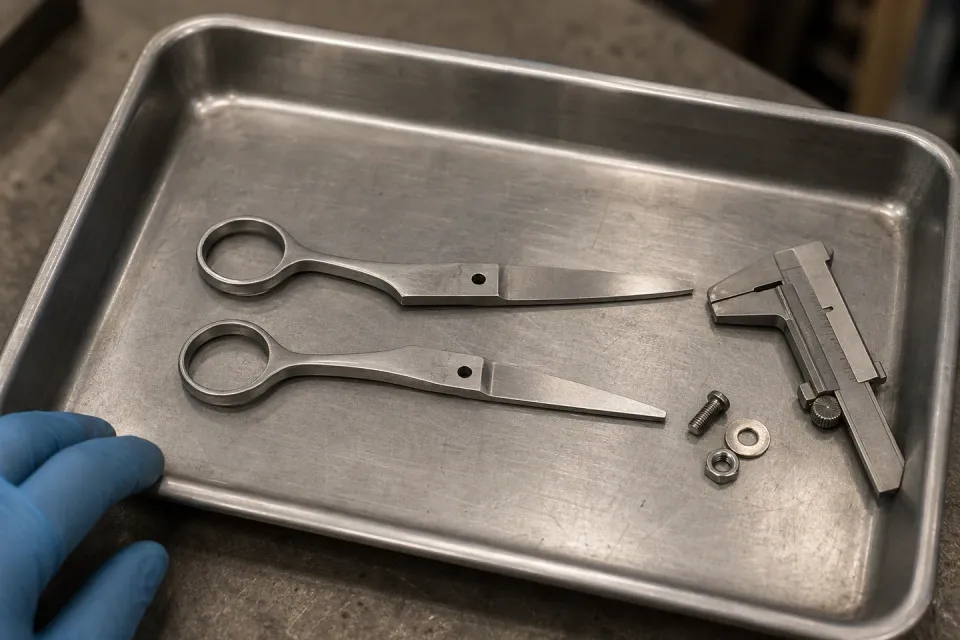
Japanese and German makers both offer several blade and handle designs. “Japanese” does not automatically mean convex, and “German” does not automatically mean bevelled. Use the actual model description to compare the edge, steel, length and pivot.
What to put side by side
| Check | Why it matters |
|---|---|
| Edge geometry | A convex, bevelled or micro-serrated edge has a different feel and service method. |
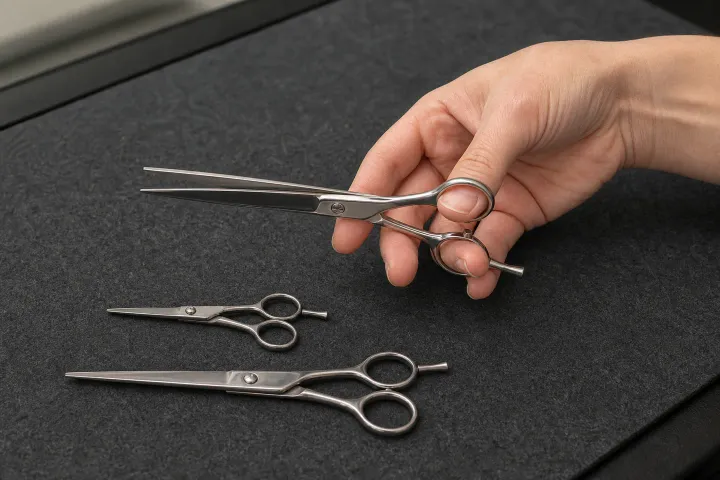
| Whole-shear length | Longer blades reach farther through sections; shorter ones keep tip work close. |
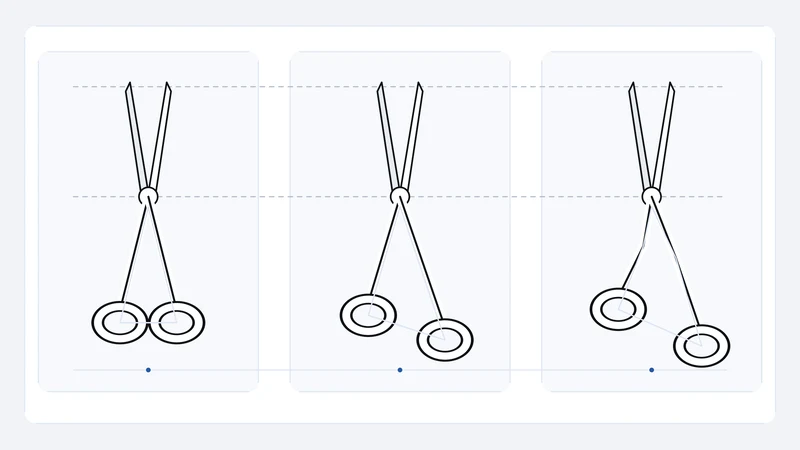
| Handle layout | Classic, offset and crane rings place the hand differently. |
| Handed build | Confirm the exact left- or right-handed variant. |
| Service support | Choose a technician who understands that particular edge and pivot. |
Our convex edge guide explains one common construction. The steel library explains grade names without treating hardness as a simple quality score.
Match the shear to your cutting work
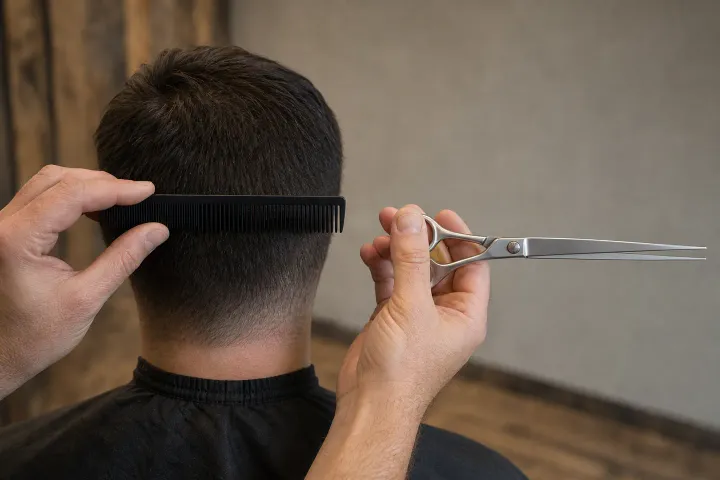
For slide work, compare the listed blade edge and how it closes through a small section. For blunt lines or comb work, compare blade length and the amount of control you have near the tips. For texturising, tooth layout matters more than a country label.
Try to compare two real models at the same time. The full range shows the Japanese shears available here; when looking at a German model elsewhere, use its maker’s exact specification rather than a generic national stereotype.
Keep whichever shear you choose clean and dry, and have a professional service the edge when it begins to push hair. The maintenance hub has the care route.
A closer look at shears
Comparing two models? Send us their names or SKUs and the cutting work you have in mind.