JapanShears Editorial · Published
Mina vs Juntetsu Shears: Compare Model by Model
Compare Mina and Juntetsu cutters at matched size and hand: steel labels, edge, handle layout, size menus, left-handed options and thinners as listed.
On this page
- How was this comparison made?
- What is the closest like-for-like pair?
- How do the steel labels differ at the same size?
- Which handle layouts does each brand list?
- Which brand lists left-handed cutters?
- How do the size menus compare?
- How do the thinners and sets compare?
- Which should you choose?
- Common mistakes
- Questions people ask
- Further reading
Mina and Juntetsu are both independent Japanese shear brands, and a stylist who has narrowed a search to these two is usually asking a narrow question: which model suits my hand, my length and my kit? Brand against brand will not answer it. Two named models, matched on size and hand, will.
Short answer. At matched size and hand, Mina and Juntetsu list closely related constructions: convex-edge, offset-handle cutters whose steel labels sometimes match (the 440C family) and sometimes differ (SUS440C against VG10). The other differences that show on the listings are the size menus, the handle layouts on offer, whether a left-handed build exists and how each brand builds its thinners. Mina lists left-handed cutters; Juntetsu lists right-handed cutters only. Neither brand is better than the other: choose by the fields below.
How was this comparison made?
This comparison reads the product records for both brands as they stood on 5 November 2026, and every specification is attributed to what the maker lists. We did not cut with these tools or test them, and nothing here is a ranking.
The method keeps everything but the brand the same. Each pairing below matches the tool type (single cutter), the cutting hand (right) and the nominal size (6.0 inches), then asks which listed fields differ. The inch label names the whole tool, not the blade; the size guide explains how. The principle is the one in comparing two similar shears fairly.
What is the closest like-for-like pair?
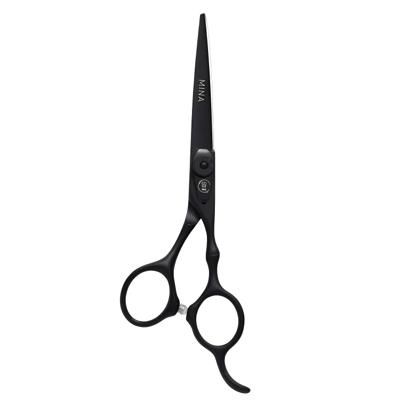
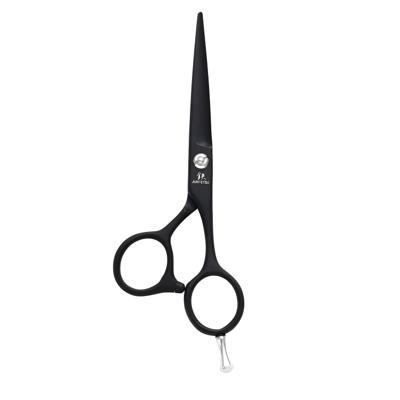
The closest match in the catalogue is the Mina Timeless and the Juntetsu Matte Black Ergo. Both are right-handed single cutters with an offset handle and a matte black finish, both list a convex slice edge, and both list a 440C-family steel. At 6.0 inches they overlap directly.
| Listed field | Mina Timeless | Juntetsu Matte Black Ergo |
|---|---|---|
| Tool | One right-handed cutter | One right-handed cutter |
| Steel as listed | SUS440C | 440C |
| Edge as listed | Convex slice edge | Convex slice edge |
| Handle | Offset | Offset |
| Finish | Matte black | Matte black |
| Sizes listed | 5.5, 6.0 and 6.5 inches | 5.0, 5.5 and 6.0 inches |
The steel labels differ in spelling, and a label is a material statement from the listing, not a difference in sharpness, edge life or feel. What does differ is the size menu: Timeless reaches 6.5 inches and Juntetsu starts at 5.0. If your reference shear is a 5.0 or a 6.5, that alone can settle the choice. The steel library and VG10 versus 440C explain what steel names do and do not tell you.
How do the steel labels differ at the same size?
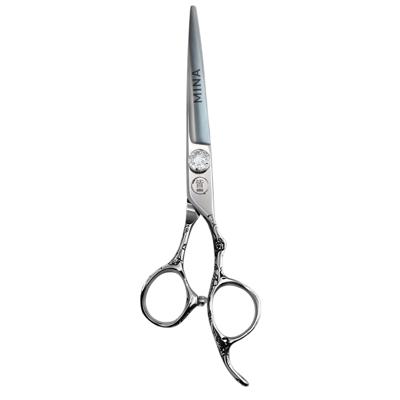
When the steel label differs, the rest of the specification often differs with it, so read the whole line. The Mina Sakura II and the Juntetsu VG10 Offset are another six-inch, right-handed, convex-edge, offset pairing, and here the steel labels are different grades.
| Listed field | Mina Sakura II | Juntetsu VG10 Offset |
|---|---|---|
| Steel as listed | SUS440C | VG10 |
| Edge as listed | Convex | Convex |
| Handle | Offset, with blossom engraving | 3D offset |
| Sizes listed | 5.0, 5.5, 6.0, 6.5 and 7.0 inches | 4.5, 5.0, 5.5, 6.0 and 7.0 inches |
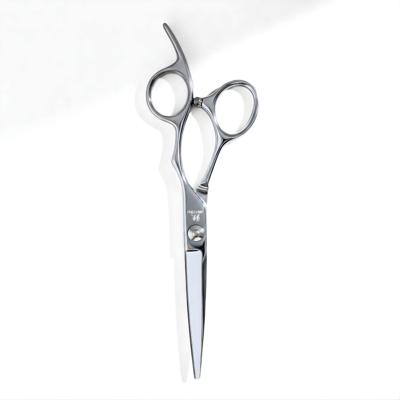
Two details matter more than the grade names. Juntetsu lists a 3D offset handle and Mina an offset handle with engraving: offset describes ring stagger and 3D describes shaping beyond a flat ring layout, so the actual contours belong to each model. And the size menus differ again: Sakura II has a 6.5-inch option that VG10 Offset lacks, while VG10 Offset has a 4.5. Our handle guide separates the vocabulary, and handle types explained shows each layout.
Which handle layouts does each brand list?
Both brands list offset handles on most cutters, and each also lists a layout the other emphasises. Juntetsu lists traditional opposing rings on the Classic, the Classic II and the Crystal Elite Classic. Mina’s Classic II uses a semi-offset handle, and its Sakura Double Swivel lists a separate movable thumb assembly.
The Mina Classic II and the Juntetsu Classic are not a matched pair, and that is the point. At 5.5 inches the Mina lists a micro-serrated bevel edge on a semi-offset handle, while the Juntetsu lists a convex edge on opposing rings in VG10. Handle, edge and steel all change together, so this compares builds rather than brands. For a micro-serrated edge, the Mina record is the one that lists it; for opposing rings with a convex edge, read the Juntetsu records. The fixed versus swivel thumb guide covers the movable-thumb option, and the blade guide separates edge, profile and cutting-line curve.
Which brand lists left-handed cutters?
Mina does, and Juntetsu does not. Mina’s Umi lists left-handed 5.5, 6.0 and 7.0-inch cutters, its Jay II lists left-handed 5.5 and 6.0, and its Rainbow II lists left-handed cutters from 4.5 to 7.0 inches. Every Juntetsu cutter in the catalogue lists a right-handed build.
A left-handed reader can therefore stop at Mina for these two brands, then check each option. A left-handed build mirrors the whole construction, not just the rings: read what makes a shear truly left-handed and the left-handed shortlist first.
How do the size menus compare?
The size menus are where the two brands differ most visibly, and the inch label is the whole tool, not the blade. These are the sizes the listings state.
| Size listed | Mina examples | Juntetsu examples |
|---|---|---|
| 4.5 inches | Rainbow II, Umi | VG10 Offset |
| 5.25 and 5.75 inches | Not listed | Classic II, Night, Precision VG10 |
| 6.25 inches | Not listed | Classic |
| 6.5 inches | Sakura II, Timeless, Rainbow II, Umi | Several, including Ergo Barber and Sword Professional |
| 6.75 inches | Not listed | Night |
| 7.0 inches | Sakura II, Rainbow II, Umi, Black Diamond | VG10 Offset, Sword Professional and others |
If a quarter-inch size matters, Juntetsu is where the records list them; cutters between the half-inches goes further. For whole and half inches, both brands cover the range. For longer barber lengths, see the barber reach guide.
How do the thinners and sets compare?
Mina builds its sets around one thinner, and Juntetsu lists a wider spread of tooth counts. Wherever Mina’s records state a tooth count for a thinner, it is 30 V-shaped teeth in a six-inch tool; the Classic II, Sakura II and Timeless sets each pair a cutter you select with that fixed thinner. Juntetsu’s thinners list 30 teeth on several models, 10, 16 and 21 on the three Chomper models, 31 on the Sword texturiser and 30 or 40 on the Aero-Pro.
Tooth count describes construction, not how much hair a tool removes; the thinning shear anatomy guide and same tooth count, different thinners explain why. A set is two purchases, so read each tool’s record, as the set guide shows.
Which should you choose?
Choose by the field that decides your purchase, and keep the other fields as tie-breakers. This table turns the differences above into reader needs.
| If you need… | Look first at |
|---|---|
| A left-handed cutter | Mina Umi, Jay II or Rainbow II |
| A quarter-inch size such as 5.25, 5.75 or 6.25 | Juntetsu Classic II, Night, Precision VG10 or Classic |
| Opposing rings with a convex edge | Juntetsu Classic or Classic II |
| A micro-serrated bevel edge on a semi-offset handle | Mina Classic II |
| A matte black offset cutter with a convex slice edge | Mina Timeless or Juntetsu Matte Black Ergo |
| A thinner with a lower tooth count | Juntetsu Chomper models |
| A cutter and thinner pair with a fixed six-inch thinner | Mina Classic II, Sakura II or Timeless sets |
When two models still look equal, name one thing the next tool must do differently from your current shear. Ten questions before adding a second shear helps you put that into words, and the similar-name guide keeps singles, pairs and Master sets apart.
Common mistakes
- Comparing brand against brand. Compare two named models at the same size and hand.
- Reading a steel label as a result. A label states a material, not an edge life or a feel.
- Treating a set as one tool. A cutter and thinner have separate sizes and tooth counts.
Questions people ask
Is Mina or Juntetsu better?
Neither. They are independent Japanese brands that list overlapping constructions, and this page compares the listed fields, not performance. Choose by hand, size, handle and edge.
Which brand has left-handed shears?
Mina lists left-handed cutters on Umi, Jay II and Rainbow II. Every Juntetsu cutter in the catalogue lists a right-handed build.
Which brand lists quarter-inch sizes?
Juntetsu does, on models such as Classic II, Night and Precision VG10. Mina’s records list whole and half inches only.
Further reading
- Mina vs Ichiro shears: compare the model, not just the brand, another same-size comparison.
- Mina shears: compare the family, Juntetsu shears: compare the models and their Mina and Juntetsu collections.
- Knowledge base for the reference guides and Top 10 lists.
- Scissorpedia, an information website on scissors in general.
JapanShears is part of the ShearAlliance, working with other trusted scissor websites.
A closer look at shears
Comparing two models? Send us their names or SKUs and the cutting work you have in mind.
Latest blog posts
Read all blog posts
10 Christmas Gift Ideas for Hairdressers and Barbers
Ten gift ideas for a hairdresser, barber or apprentice, by situation: gift card, case, holster, care kit, combs, razor blades and a first-kit contribution.
Top 9 Online Scissor Stores in Australia and NZ
A directory of nine online scissor stores in Australia and New Zealand, with five checks to run on any store before you order shears.