
Maker profile
Juntetsu Shears: Compare the Models
Brand origin: Japan
Compare Juntetsu cutters, thinners and sets by exact blade, handle, material and reach, including distinct Cobalt Sword and Sword Professional families.
Juntetsu is an independent Japanese shear brand with several cutting and texturising configurations. Compare the actual model: steel grade, edge, handle and available length can all change. A useful starting point is a familiar cutting hand and nominal size, then the feature you want the next tool to add.
Same material, different handle layout
The 5.5-inch Classic and 5.5-inch VG10 Offset both list VG10 steel and a convex edge. Classic has traditional opposing rings; Offset has a 3D offset handle. That makes the handle the useful difference to discuss at a familiar size.
Offset ring position and three-dimensional contours describe separate aspects of the grip. Our handle guide explains the vocabulary, while the fit guide helps you describe ring opening, action and tip placement against a reference tool.
Crystal Elite: a fixed layout and a separate central pivot
For another same-size comparison, read Crystal Elite at 5.5 inches. The Classic cutter uses opposing rings; the Offset cutter staggers them. Both are right-handed VG10 convex cutters with mirror polish and a rounded blade description. The rings belong to fixed handles in both cases.
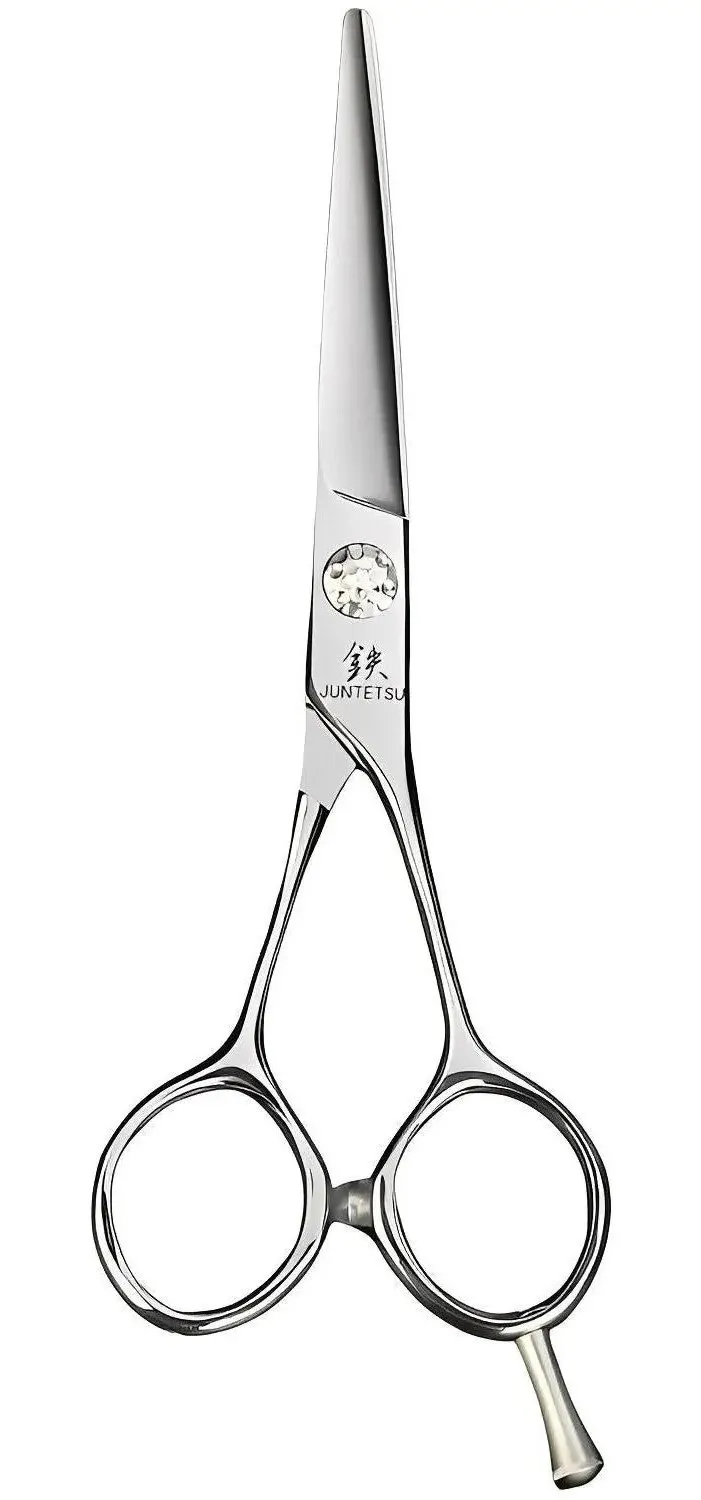
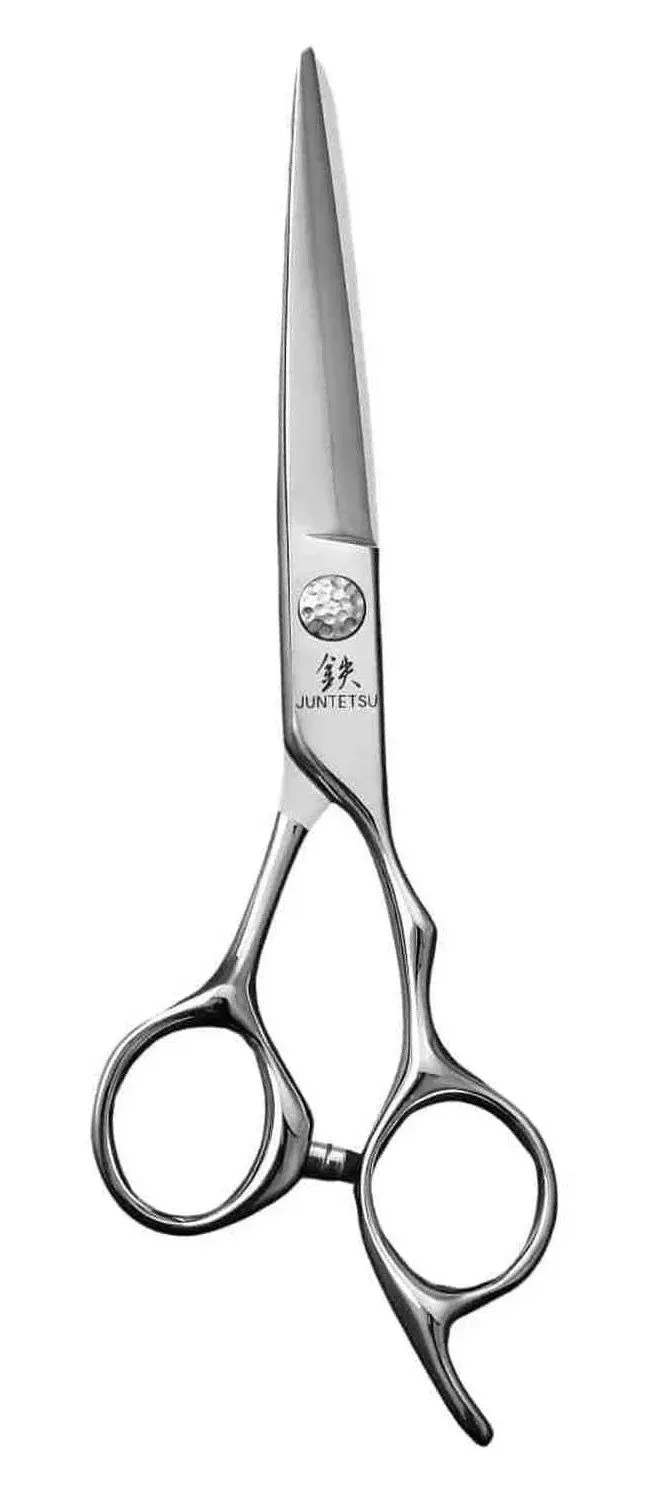
The faceted control sits at the main blade joint. It does not provide a separate movable thumb. Our fixed versus swivel guide identifies those parts, while the existing fit guide keeps ring opening and position in view.
The Crystal thinner is a separate right-handed, six-inch tool with 30 V-shaped teeth and a fixed offset handle. The 5.5-inch Crystal pair combines the Offset cutter with that thinner. Classic is a separate single cutter, not a handle choice within the pair.
440C and VG10 still need a model comparison
The six-inch KS names 440C steel, a convex edge and an offset handle. The six-inch VG10 Offset names VG10, a convex edge and a 3D offset handle. Keeping nominal reach fixed gives you a useful starting point; the handle contours and actual blades remain separate questions.
KS’s powder-polished finish describes its surface. It does not supply a powder-metal manufacturing statement. Our powder-material guide explains the difference, and the VG10 versus 440C comparison helps you identify what else changes between two real cutters.
For opposing rings, Classic II in 5.75 inches uses 440C. The VG10 Classic has a different size run, so changing between them also changes nominal reach. Keep the exact names and available sizes together rather than treating Classic II as an alloy option in the Classic selector.
Reach and tool role still need their own choice
The VG10 Offset cutter spans 4.5, 5.0, 5.5, 6.0 and 7.0 inches. The separate Ergo Barber in 6.5 inches provides a length that is not an option in that selector. Compare the models and their actual sizes rather than borrowing an option from one family for another.
The VG10 Offset thinner is a separate six-inch tool with 30 V-shaped teeth. Sharing a handle description with a cutter does not give it the same job. The tool-type guide separates cutting, thinning and texturising roles.
Two Sword families, with the names kept intact
The Cobalt Sword at 6.5 inches is a right-handed cutter with a sword profile, convex edge and 3D offset handle. Its selector also has 5.5, 6.0 and 7.0 inches. Read the profile and edge as separate construction terms through the blade guide; neither supplies a universal power or cutting-span figure.
The separate Sword Professional at 6.5 inches names an angled convex blade, offset handle, ATS314 steel and a ball-bearing pivot. Its menu runs from 6.0 to 7.0 inches. Shared nominal size and the word Sword help organise a comparison, while the actual models and available options remain distinct.
The barber reach guide puts whole-tool labels alongside exact maker blade measurements where they exist. If a different reach is the reason for the next purchase, use the two-length kit brief to explain what that cutter would do beside the one you already use.
Other construction differences across the range
| Model | Construction to compare | Cutting choice |
|---|---|---|
| Yuki | VG10, convex edge, offset handle | Longer 6.0”, 6.5” and 7.0” cutters |
| Akane | VG10, convex edge, classic symmetrical handle, matte rose-gold finish | Shorter 5.0”, 5.5” and 6.0” cutters |
| Balance | VG10, straight precision blade, offset handle, carbide inlay | Detail-led cutting in four listed sizes |
| Obsidian set | VG10, micro-channel edge, deep-offset handle, matte black finish | Cutter plus a 30-tooth thinner |
These examples show why a family-wide edge or handle claim would mislead. Akane uses classic rings; Balance and Yuki list offset handles. Obsidian is a matched set, while the others above are single cutters. Each selected product page carries its own components and current price.
VG10 appears on these models, but the stated blade treatment and hardness differ. The steel library explains the material terms. The premium checklist helps you judge what a particular handle, edge or pivot adds to your work before buying.
Keep blades dry and protected, clear the pivot and follow the model’s care instructions. If action or cutting changes, use the care and symptom guide to record it before arranging professional attention. Browse the Juntetsu collection to see the models together.
For a shortlist across makers, the ten exact cutter selections compare distinct blades, handles and working lengths. The salon-brand guide connects those named options to the tool roles you need in a working kit.